About the Lucilia mexicana
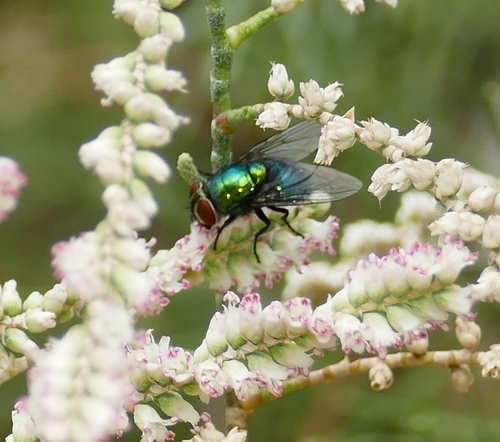
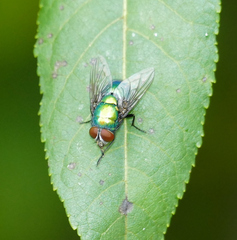
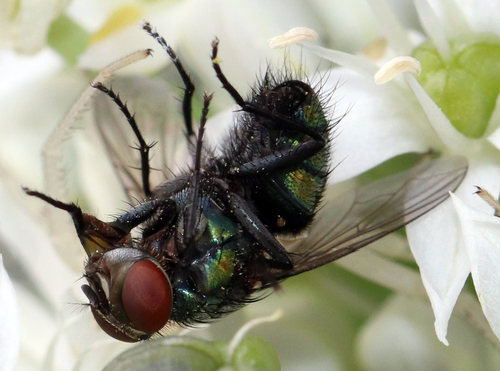
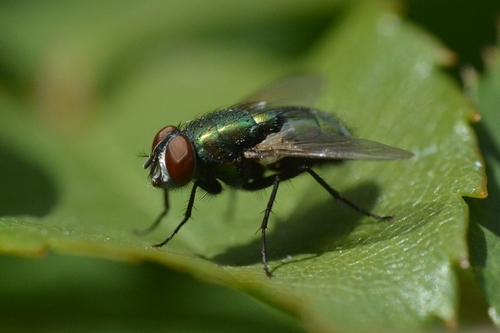
Lucilia mexicana is a species of blow fly of the family Calliphoridae, one of many species known as a green bottle fly. Its habitat range extends from southwestern North America to Brazil. L. mexicana is typically 6–9 mm in length with metallic blue-green coloring. This species is very similar in appearance to L. coeruleiviridis, the primary difference being that L. mexicana has two or more complete rows of post-ocular setae. L. mexicana has the potential to be forensically important in the stored-products and medicocriminal fields, but more research is needed for the fly to be used as evidence in criminal investigations.
Lucilia mexicana, a member of the family Calliphoridae, was first described by the French entomologist Pierre-Justin-Marie Macquart in 1843. The genera Phaenicia, Bufolucilia, and Francilia are now synonymous with the genus name Lucilia. In the 1940s, L. mexicana was expanded to include the species, L. unicolor, L. infuscata, and L. caesar. Disputes remain as to whether L. mexicana is also synonymous with L. coeruleiviridis, in which case the name mexicana holds priority.
As adults, the genus Lucilia is characterized by a shining green... Wikipedia →