About the European Crane Fly
Tipula paludosa, known as the European crane fly and its larva as leatherjacket, is a species in the genus Tipula, a genus of over 2,000 species distributed throughout the world. T. paludosa is native to northwestern Europe including Britain and Ireland, and also introduced to the northern aspects of North America, including Canada likely due to soil dispersion and other human-mediated activities. T. paludosa is often regarded as a pest of lawns, pastures, and hayfields, as its larvae cause significant damage to the roots, stems, and leaves of various plants, contributing to its invasiveness.
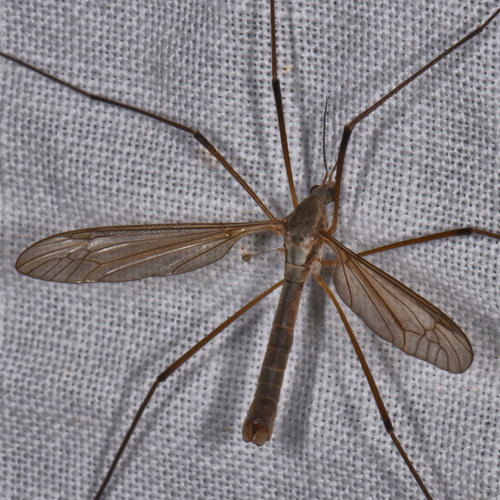
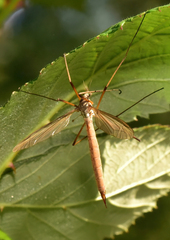
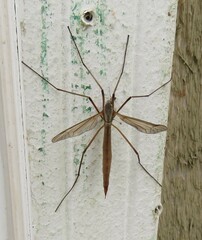
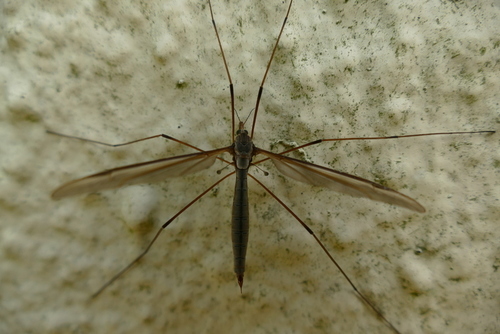
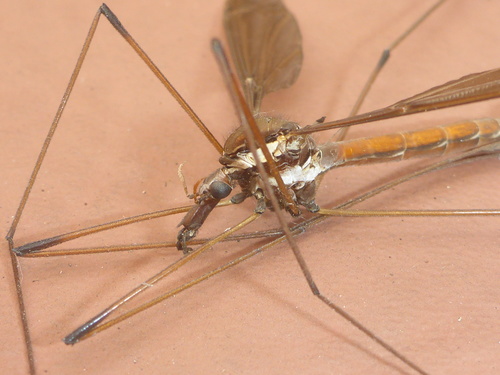
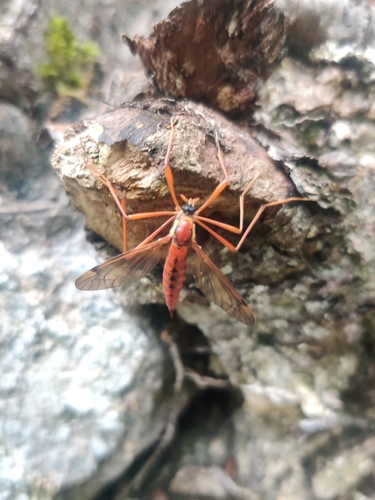
Tipula paludosa, at the adult stage, have greyish-brown bodies that are 1.5–2.5 cm long, with long, thin legs. Males have shorter bodies and large wings. The pupae are 3.0–3.5 cm long, with the mature being slightly larger at 3–4 cm. Females can lay about 200–300 eggs, which appear egg-shaped, are shiny black, and are about 1 mm long. Ventral spacing between the eyes of T. paludosa is twice the width in males and females compared to other species of Tipula. T. paludosa has 14 antennal segments for both males and females. The female abdominal length ratio is a... Wikipedia →