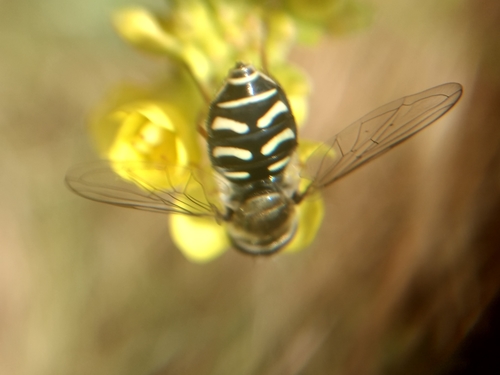
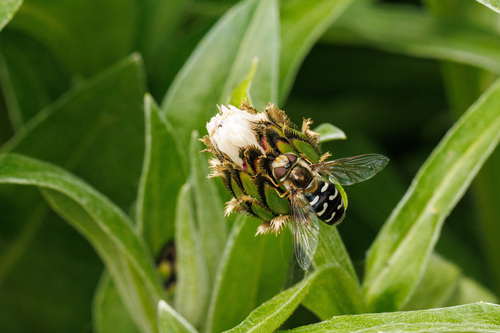
Orange-Spotted Drone Fly

Orange-Spotted Drone Fly

Eristalis anthophorina

Daily sighting probability <5% · Rare
at Seattle

In 3 days ~10% in a week ~20%

17 Verified sightings at Seattle
50 In all 3 parks From 2019 to 2026
July Best month
☀️ Diurnal When it's spotted

About the Orange-Spotted Drone Fly

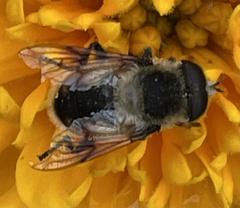
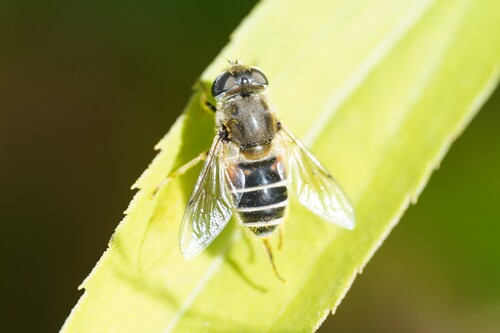
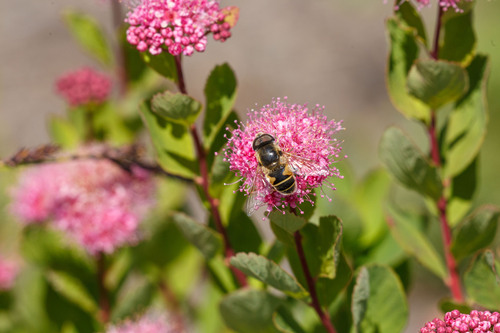
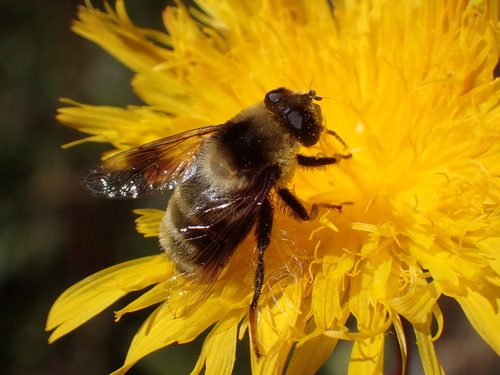
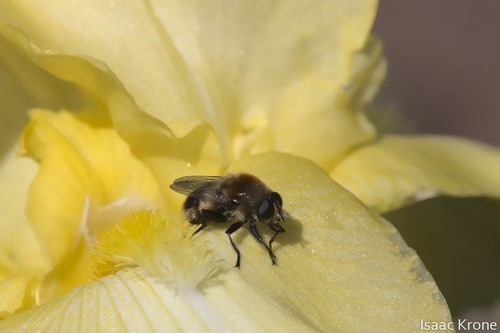
Eristalis anthophorina, the orange-spotted drone fly, is a species of syrphid fly with a Holarctic distribution. It is a common fly in wetlands, including bogs, fens, and woodland pools. In North America, it occurs throughout much of Canada and primarily in the northern parts of the United States. It may be introduced in North America.

This species is Holarctic in distribution. It is widely distributed worldwide in northern North American and Europe. It is a common in wetlands, including bogs, fens, and woodland pools. In North America, it occurs throughout much of Canada and primarily in the northern parts of the United States. It may be introduced in North America.

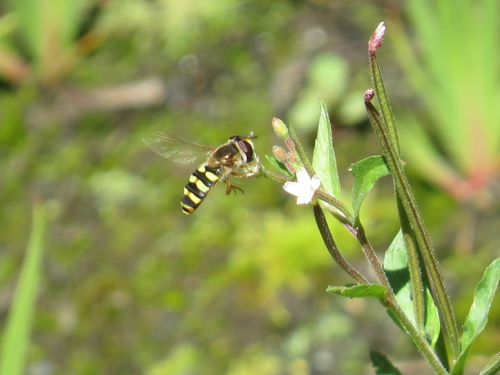
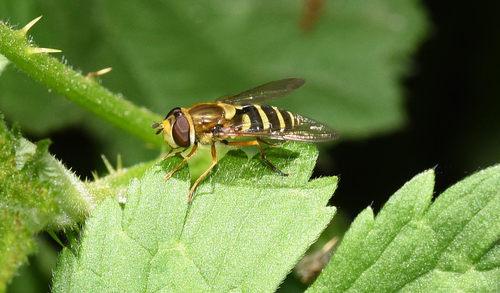
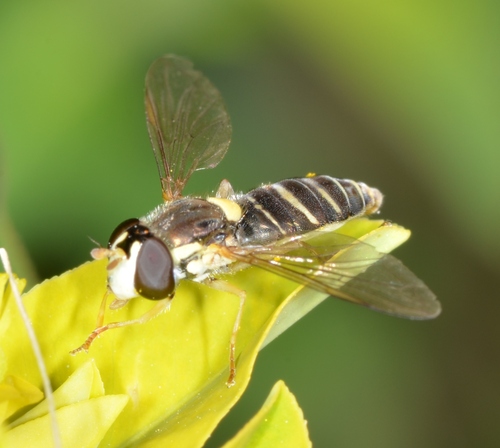
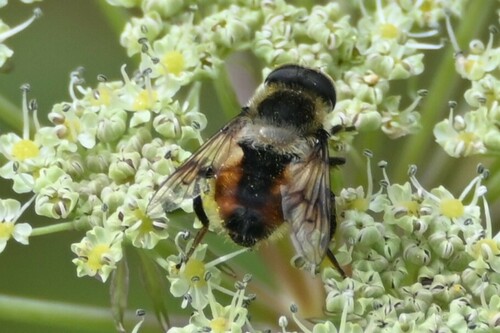
external map This fly can easily be confused with bumblebees. It reaches around 15 mm (0.6 in) in length. Head The face is reddish-yellow pollinose, with white pilose sides and a shining black median stripe and with black broadly on the cheeks (gena). The antennae are black with the arista reddish and pubescent near the base. The eyes are completely pilose, holoptic in the male.

Thorax The thorax is black with long yellow hairs. The scutellum is wholly yellow, densely covered with... Wikipedia →
Global Distribution

Parks Where Found

# Park Country Daily sighting probability
1 Kluane National Park 🇨🇦 Canada
~20%
2 Pacific Rim National Park Reserve 🇨🇦 Canada
~10%
3 Great Bear Rainforest 🇨🇦 Canada
~10%

Cities Where Found

# City Country Daily sighting probability
1 Anchorage 🇺🇸 United States
~10%
2 Vancouver 🇨🇦 Canada
<5%
3 Portland 🇺🇸 United States
<5%
4 Seattle 🇺🇸 United States
<5%
5 Edmonton 🇨🇦 Canada
<5%
6 Minneapolis [Saint Paul] 🇺🇸 United States
<5%
7 Toronto 🇨🇦 Canada
<5%
8 Moscow 🇷🇺 Russia
<5%

Before you go

What are the chances of seeing an Orange-Spotted Drone Fly in Seattle?

Rare

Under 5% of wildlife watchers report an Orange-Spotted Drone Fly sighting in Seattle on a given day, based on 17 verified sightings from GBIF citizen-science data. It is the 199th most-seen of the 428 insects we can rate there. Over three days the chance rises to about 10%, and over a week to about 20%, if each day is a fresh chance.

When is the best time to see an Orange-Spotted Drone Fly in Seattle?

July

In that month about 10% of wildlife watchers report an Orange-Spotted Drone Fly in Seattle on a given day, against under 5% in August to June, the lowest months. That is one of Seattle's driest months, with about 20 mm of rain against 190 mm in November.

What time of day is best to see an Orange-Spotted Drone Fly?

Between 1 and 4 pm

Across all the parks we cover, that three-hour window holds the most Orange-Spotted Drone Fly sightings with a recorded time, and about 9 in 10 of them come between 6 am and 6 pm: it is a daytime animal.

Is Seattle the best place to see an Orange-Spotted Drone Fly?

4th of 8

Of the 8 cities where we can rate Orange-Spotted Drone Fly sightings, Seattle ranks 4th at under 5%. The best odds are in Anchorage (United States, about 10%), Vancouver (Canada, under 5%) and Portland (United States, under 5%).

Which relatives of the Orange-Spotted Drone Fly live in Seattle?

Same genus: Eristalis

The closest relatives of the Orange-Spotted Drone Fly that you can see in Seattle (genus Eristalis, Drone Flies) are Eurasian Drone Fly (about 10%) and Common Drone Fly (about 10%), with each one's daily chance of a sighting.

Where does the Orange-Spotted Drone Fly sighting chance come from?

GBIF citizen-science records

It is estimated from how often the Orange-Spotted Drone Fly is recorded against all the insects logged in Seattle (17 verified sightings), calibrated against known sighting rates. Figures are rounded to the nearest 10% because citizen-science data supports honest approximations, not decimals, and months with records from fewer than five people show "—". How it works.

← Back to Seattle