About the Greenhouse Camel Cricket
Tachycines asynamorus is a cave cricket and the type species of the genus Tachycines (Rhaphidophoridae). In English-speaking countries it is known as the greenhouse camel cricket or greenhouse stone cricket for its propensity for living in greenhouses. It was first described in 1902 by Russian entomologist Nicolai Adelung on the basis of specimens caught in the palm houses of St. Petersburg. Some authorities have placed this species in the genus Diestrammena, but it has now restored to its basonym.
The warmth-loving, tropical species was introduced worldwide by humans and today often occurs synanthropically in the vicinity of humans, especially in greenhouses. The animals are crepuscular and nocturnal. They feed carnivorously on various small insects as well as on plant material such as fruits, seeds, seedlings or young leaves and flowers.
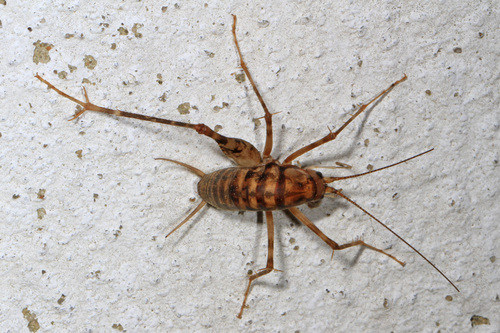
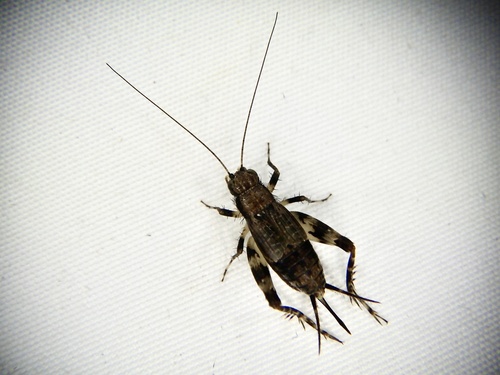
Tachycines asynamorus is a medium-sized, apterous camel cricket. Its body length ranges from 11.3–14.6 mm (0.4–0.6 in). It has very long antennae, palps, and cerci. The female has a long, gently upcurved ovipositor, 10.7–12 mm (0.4–0.5 in) in length.
Their coloration is gray to yellow-brown or even reddish-brown ground color, with... Wikipedia →