Rice Leaf-Roller

Rice Leaf-Roller

Cnaphalocrocis medinalis

Daily sighting probability ~10% · With luck
at Seoul

In 3 days ~20% in a week ~30%

17 Verified sightings at Seoul
6 In 1 park From 2019 to 2026
September Best month
🌙 Nocturnal When it's spotted

About the Rice Leaf-Roller

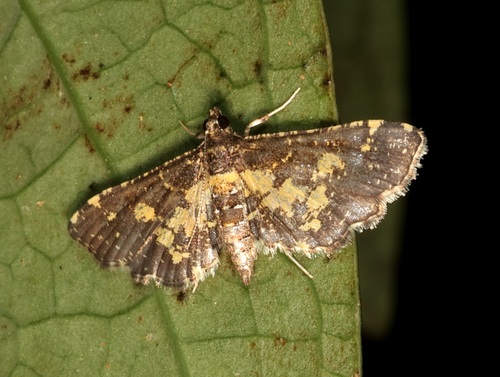
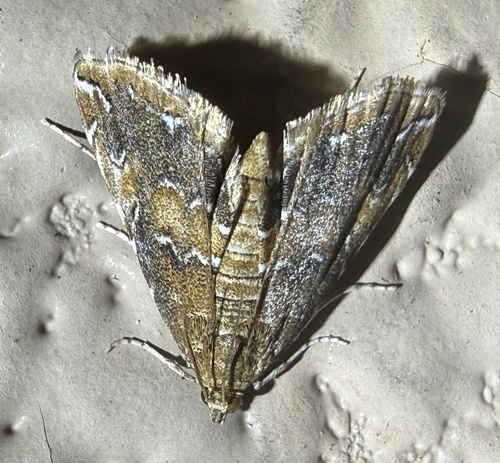
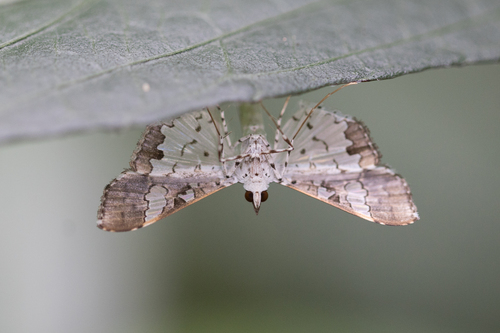
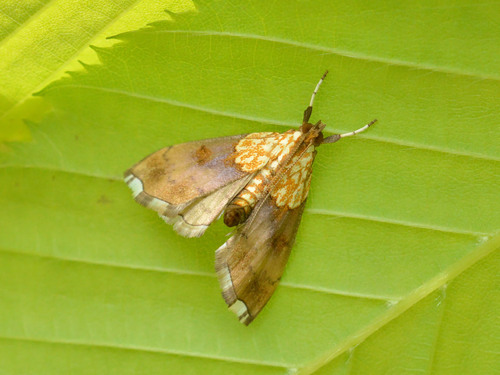
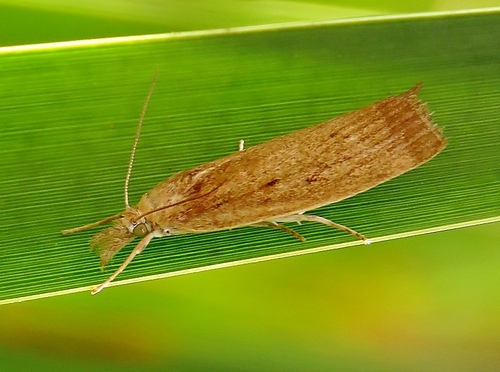
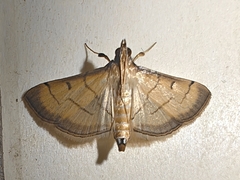
Cnaphalocrocis medinalis, the rice leafroller, is a species of moth of the family Crambidae. It is found in south-east Asia, including Hong Kong, Sri Lanka, Taiwan, Thailand and most of Australia. This moth typically has a wingspan of approximately 16 millimeters.

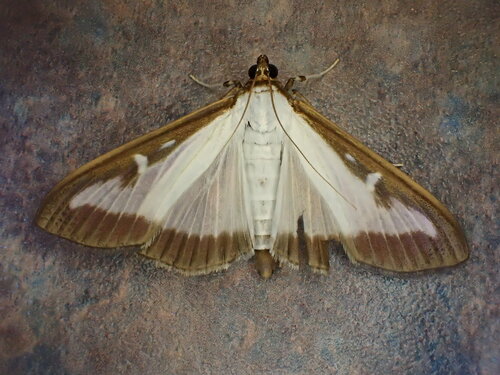
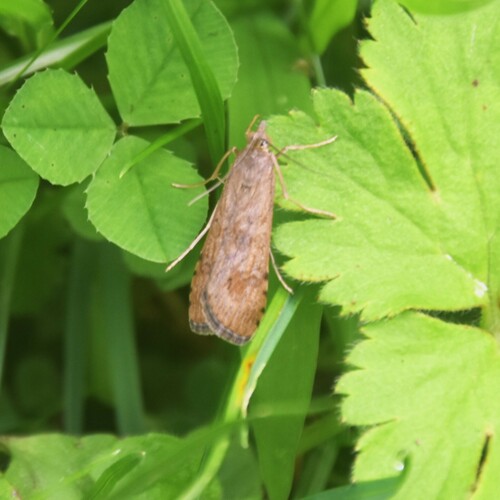
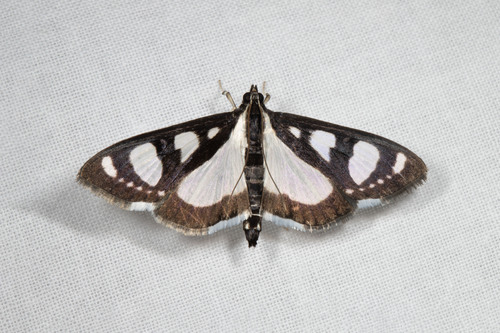
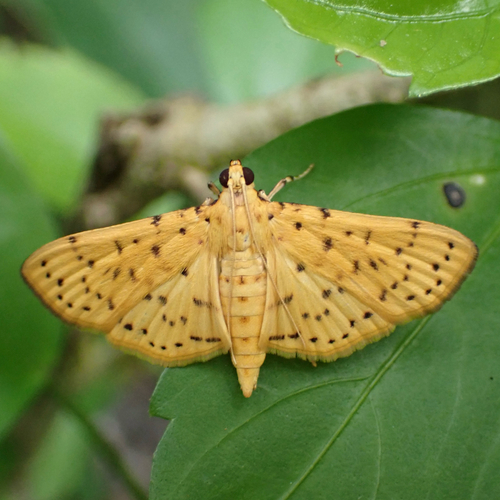
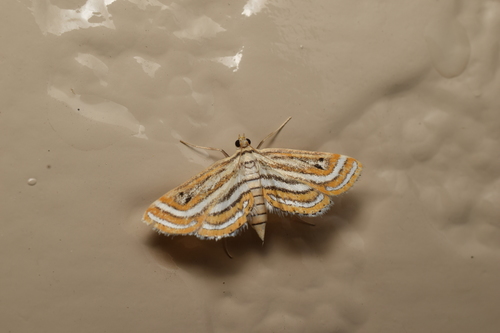
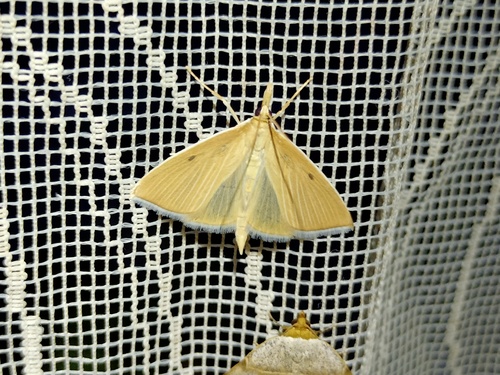
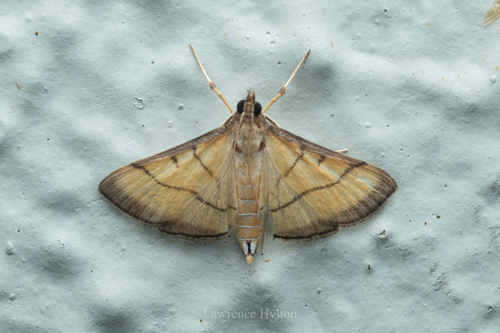
Its larvae are recognized as pests of various crops, including Oryza sativa, Zea mays, and Triticum, Saccharum and Sorghum species. The adult moth is characterized by its vibrant yellow or straw coloration, with distinct wavy lines visible on its forewings and hindwings. Eggs are usually laid individually or in groups on the undersides of leaves, appearing scaly and white. A female moth can lay around 56 eggs, with an incubation period lasting between 4 and 8 days. Larvae go through 5 to 6 instars over a period of approximately 22 to 23 days before pupating within folded leaves for about 6 to 7 days. Fully grown caterpillars are green and measure around 16.5 millimeters in length. The entire life cycle of this moth spans about 5 weeks.

Throughout its life stages, the rice leafroller can cause significant damage to crops. Newly hatched caterpillars initiate damage by cutting leaf edges and folding them. In the case of young seedlings, they may fold multiple adjacent leaves and consume the green tissue, leaving affected leaves with a whitish appearance. A single caterpillar can damage numerous leaves, leading to reduced plant vigor and eventual crop yield loss, which can range from 10% to 50%. This pest poses a more severe threat during the boot leaf stage of crop development. Wikipedia →
Global Distribution

Parks Where Found

# Park Country Daily sighting probability
1 Lamington National Park 🇦🇺 Australia
~10%

More parks will be added in future updates.

Cities Where Found

# City Country Daily sighting probability
1 Jabalpur 🇮🇳 India
~20%
2 Vadodara 🇮🇳 India
~20%
3 Prayagraj 🇮🇳 India
~10%
4 Kolkata 🇮🇳 India
~10%
5 Chennai 🇮🇳 India
~10%
6 Hyderabad 🇮🇳 India
~10%
7 New Delhi 🇮🇳 India
~10%
8 Kochi 🇮🇳 India
~10%
9 Taichung 🇹🇼 Taiwan
~10%
10 Bengaluru 🇮🇳 India
~10%

Before you go

What are the chances of seeing a Rice Leaf-Roller in Seoul?

With luck

About 10% of wildlife watchers report a Rice Leaf-Roller sighting in Seoul on a given day, based on 17 verified sightings from GBIF citizen-science data. It is the 188th most-seen of the 525 insects we can rate there. Over three days the chance rises to about 20%, and over a week to about 30%, if each day is a fresh chance.

When is the best time to see a Rice Leaf-Roller in Seoul?

August and September

In those months about 10% of wildlife watchers report a Rice Leaf-Roller in Seoul on a given day, against under 5% in October to July, the lowest months. Those are among Seoul's wettest months, with about 200 mm of rain a month against 20 mm in January.

What time of day is best to see a Rice Leaf-Roller?

Between 7 and 10 pm

Across all the parks we cover, that three-hour window holds the most Rice Leaf-Roller sightings with a recorded time, and nearly all of them come between 6 pm and 6 am: it is mostly seen at night.

Is Seoul the best place to see a Rice Leaf-Roller?

11th of 16

Of the 16 cities where we can rate Rice Leaf-Roller sightings, Seoul ranks 11th at about 10%. The best odds are in Jabalpur (India, about 20%), Vadodara (India, about 20%) and Prayagraj (India, about 10%).

Which relatives of the Rice Leaf-Roller live in Seoul?

Same family: Crambidae

The closest relatives of the Rice Leaf-Roller that you can see in Seoul (family Crambidae, Crambid Snout Moths) are Box Tree Moth (about 10%), Hawaiian Beet Webworm Moth (about 10%) and Rush Veneer (about 10%), with each one's daily chance of a sighting.

Where does the Rice Leaf-Roller sighting chance come from?

GBIF citizen-science records

It is estimated from how often the Rice Leaf-Roller is recorded against all the insects logged in Seoul (17 verified sightings), calibrated against known sighting rates. Figures are rounded to the nearest 10% because citizen-science data supports honest approximations, not decimals, and months with records from fewer than five people show "—". How it works.

← Back to Seoul