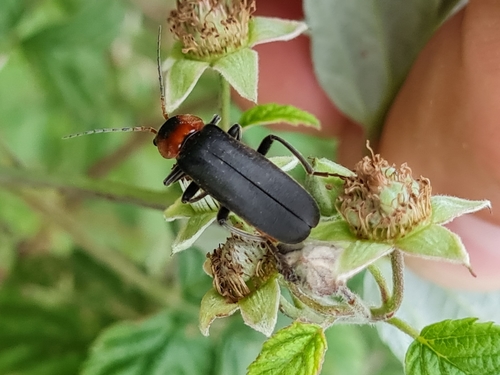
Summer Chafer

Summer Chafer

Amphimallon solstitiale

Daily sighting probability ~10% · With luck
at Stockholm

In 3 days ~20% in a week ~40%

11 Verified sightings at Stockholm
28 In all 2 parks From 2019 to 2026
July Best month
☀️🌙 Day & Night When it's spotted

About the Summer Chafer

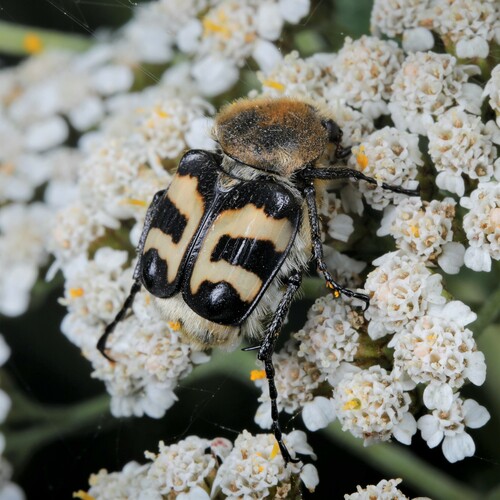
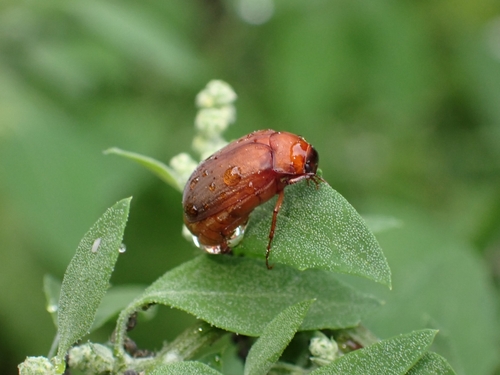
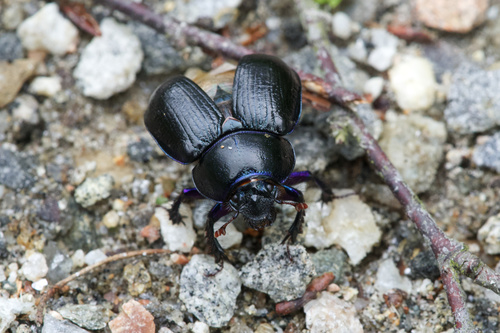
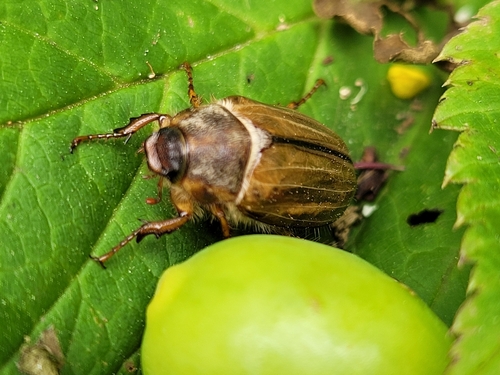
Amphimallon solstitiale, also known as the summer chafer or European june beetle, is a beetle similar to the cockchafer but much smaller, approximately 20 millimetres (0.79 in) in length. They are declining in numbers now, but where found they are often seen in large numbers. At dusk they actively fly around tree tops looking for a mate and can often be found drowning in pools of water the following morning. They are also attracted to light and come in through open, lit windows and fly around lamps, making quite a racket while bumping into lights. They are found throughout the Palearctic region (and North America) and, commonly seen from June to August, living in meadows, hedgerows, and gardens, and eating plants and tree foliage.

The larva of summer chafer undergo a two to three-year period of development underground, feeding upon host plants. Carabid beetles, such as Poecilus cupreus, hunt and consume larvae and serve as a primary predator in arable fields.

These June beetles act as root pests for a number of economically important crops including potatoes, rape, legumes, chestnuts, and turfgrass. As generalist herbivores, they primarily feed upon secondary roots with smaller amounts of anti-herbivore chemicals across many different species. Several chemical and bio-control agents have been developed to control their populations, including their endemic bacteria and entomopathogenic nematodes. Wikipedia →
Global Distribution

Parks Where Found

# Park Country Daily sighting probability
1 Triglav National Park 🇸🇮 Slovenia
~10%
2 Bavarian Forest National Park 🇩🇪 Germany
~10%

Cities Where Found

# City Country Daily sighting probability
1 Copenhagen 🇩🇰 Denmark
~20%
2 Minsk 🇧🇾 Belarus
~10%
3 Kyiv 🇺🇦 Ukraine
~10%
4 Warsaw 🇵🇱 Poland
~10%
5 London 🇬🇧 United Kingdom
~10%
6 Prague 🇨🇿 Czechia
~10%
7 Berlin 🇩🇪 Germany
~10%
8 Birmingham 🇬🇧 United Kingdom
~10%
9 Helsinki 🇫🇮 Finland
~10%
10 Hamburg 🇩🇪 Germany
~10%

Before you go

What are the chances of seeing a Summer Chafer in Stockholm?

With luck

About 10% of wildlife watchers report a Summer Chafer sighting in Stockholm on a given day, based on 11 verified sightings from GBIF citizen-science data. It is the 73rd most-seen of the 202 insects we can rate there. Over three days the chance rises to about 20%, and over a week to about 40%, if each day is a fresh chance.

When is the best time to see a Summer Chafer in Stockholm?

June and July

In those months about 10% of wildlife watchers report a Summer Chafer in Stockholm on a given day, against under 5% in August to May, the lowest months.

What time of day is best to see a Summer Chafer?

Between 8 and 11 pm

Across all the parks we cover, that three-hour window holds the most Summer Chafer sightings with a recorded time, and about 6 in 10 of them come between 6 pm and 6 am: it is seen both by day and at night.

Is Stockholm the best place to see a Summer Chafer?

12th of 23

Of the 23 cities where we can rate Summer Chafer sightings, Stockholm ranks 12th at about 10%. The best odds are in Copenhagen (Denmark, about 20%), Minsk (Belarus, about 10%) and Kyiv (Ukraine, about 10%).

Which relatives of the Summer Chafer live in Stockholm?

Same family: Scarabaeidae

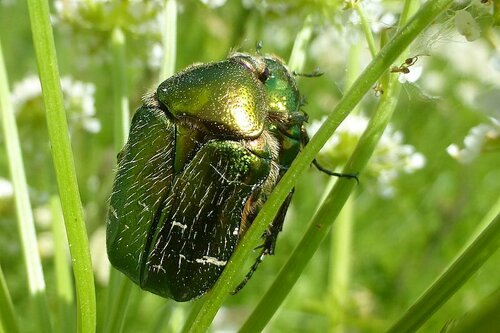
The closest relatives of the Summer Chafer that you can see in Stockholm (family Scarabaeidae, Scarabs) are European Rose Chafer (about 10%) and Eurasian Bee Beetle (about 10%), with each one's daily chance of a sighting.

Where does the Summer Chafer sighting chance come from?

GBIF citizen-science records

It is estimated from how often the Summer Chafer is recorded against all the insects logged in Stockholm (11 verified sightings), calibrated against known sighting rates. Figures are rounded to the nearest 10% because citizen-science data supports honest approximations, not decimals, and months with records from fewer than five people show "—". How it works.

← Back to Stockholm