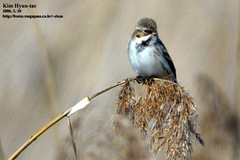
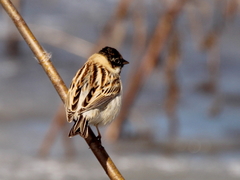

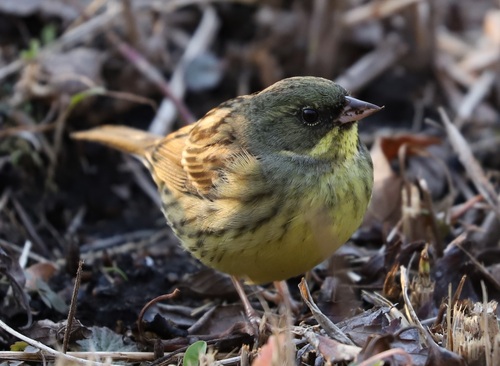
Pallas's Bunting

Pallas's Bunting

Emberiza pallasi

Silhouette: L. Shyamal · PhyloPic

LCLeast ConcernNTVUENCR
Daily sighting probability <5% · Rare
at Suzhou

In 3 days <5% in a week ~10%

16 Verified sightings at Suzhou
35 In 1 park From 2019 to 2026
November Best month
☀️ Diurnal When it's spotted

About the Pallas's Bunting

Pallas's reed bunting (Emberiza pallasi), also known as Pallas's bunting, is a passerine bird in the Old World bunting family, Emberizidae. The bird family Emberizidae contains around 300 seed-eating species, most of which are found in the Americas. The genus Emberiza, with more than 40 members, is confined to the Old World. Within the genus Emberiza, Pallas's reed bunting is most closely related to the Japanese reed bunting and the reed bunting, sometimes classified in their own genus Schoeniclus.

The genus name Emberiza comes from the Old German word Embritz, meaning "bunting". The English name and the specific pallasii commemorate German naturalist and explorer Peter Simon Pallas. It breeds across northern and central Asia to Mongolia. It is a migrant species, wintering in southeast Asia. It is a very rare vagrant to western Europe, but has occurred as far west as Great Britain. Wikipedia →

Sounds

Call1:09

Mongolia · 2022

© Stanislas Wroza · XC766222 · CC BY-NC-SA 4.0

Subsong1:05

China · 2020

© Bo Shunqi · XC720554 · CC BY-NC-SA 4.0

Song0:09

Russian Federation · 2021

© Albert Lastukhin · XC673107 · CC BY-NC-ND 4.0

Global Distribution

Parks Where Found

# Park Country Daily sighting probability
1 Gobi Gurvansaikhan National Park 🇲🇳 Mongolia
~10%

More parks will be added in future updates.

Cities Where Found

# City Country Daily sighting probability
1 Lanzhou 🇨🇳 China
~10%
2 Beijing 🇨🇳 China
~10%
3 Novosibirsk 🇷🇺 Russia
~10%
4 Tianjin 🇨🇳 China
~10%
5 Shenyang 🇨🇳 China
<5%
6 Seoul 🇰🇷 South Korea
<5%
7 Suzhou 🇨🇳 China
<5%
8 Shanghai 🇨🇳 China
<5%
9 Tokyo 🇯🇵 Japan
<5%
10 Taipei 🇹🇼 Taiwan
<5%

Zoos & Centres Where Found

# Zoo / Centre Country
1 Beijing Wildlife Park 🇨🇳 China In captivity

Before you go

What are the chances of seeing a Pallas's Bunting in Suzhou?

Rare

Under 5% of wildlife watchers report a Pallas's Bunting sighting in Suzhou on a given day, based on 16 verified sightings from GBIF citizen-science data. It is the 121st most-seen of the 171 birds we can rate there. Over three days the chance rises to under 5%, and over a week to about 10%, if each day is a fresh chance.

When is the best time to see a Pallas's Bunting in Suzhou?

November

In that month about 10% of wildlife watchers report a Pallas's Bunting in Suzhou on a given day, against under 5% in December to October, the lowest months.

What time of day is best to see a Pallas's Bunting?

Between 9 am and noon

Across all the parks we cover, that three-hour window holds the most Pallas's Bunting sightings with a recorded time, and about 9 in 10 of them come between 6 am and 6 pm: it is a daytime animal.

Is Suzhou the best place to see a Pallas's Bunting?

7th of 10

Of the 10 cities where we can rate Pallas's Bunting sightings, Suzhou ranks 7th at under 5%. The best odds are in Lanzhou (China, about 10%), Beijing (China, about 10%) and Novosibirsk (Russia, about 10%).

Where does the Pallas's Bunting sighting chance come from?

GBIF citizen-science records

It is estimated from how often the Pallas's Bunting is recorded against all the birds logged in Suzhou (16 verified sightings), calibrated against known sighting rates. Figures are rounded to the nearest 10% because citizen-science data supports honest approximations, not decimals, and months with records from fewer than five people show "—". How it works.

← Back to Suzhou