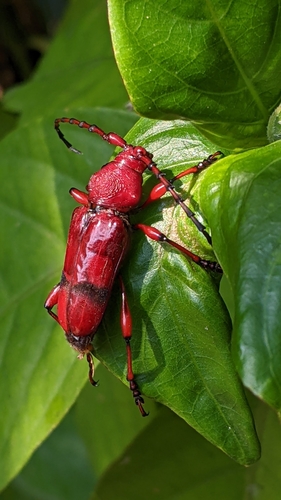
Japanese Rhinoceros Beetle

Japanese Rhinoceros Beetle

Trypoxylus dichotomus

Daily sighting probability ~20% · Possible
at Taichung

In 3 days ~50% in a week ~80%

43 Verified sightings at Taichung
10 In 1 park From 2019 to 2026
June Best month
☀️🌙 Day & Night When it's spotted

About the Japanese Rhinoceros Beetle

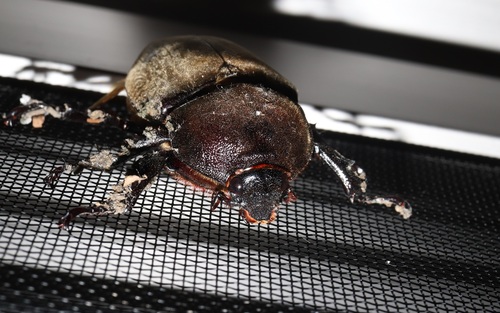
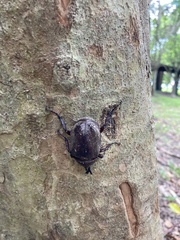
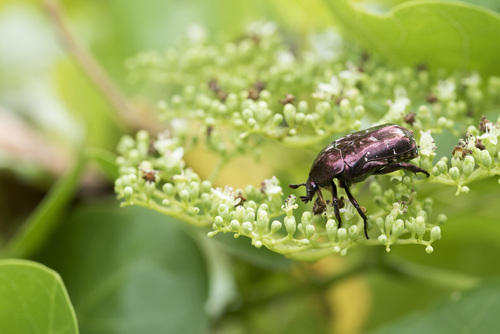
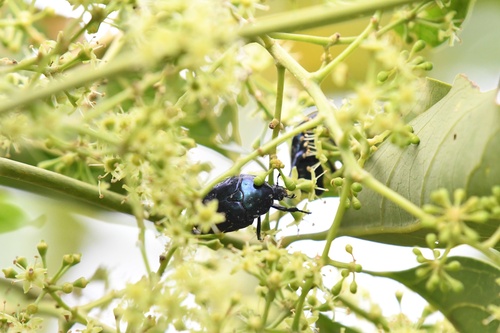
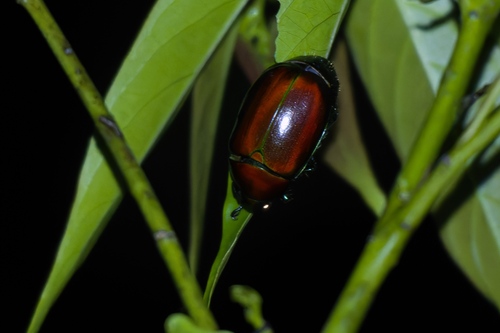
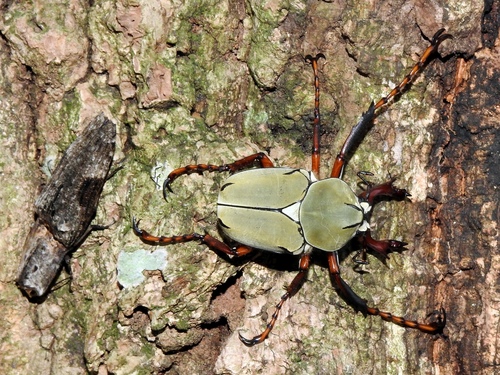
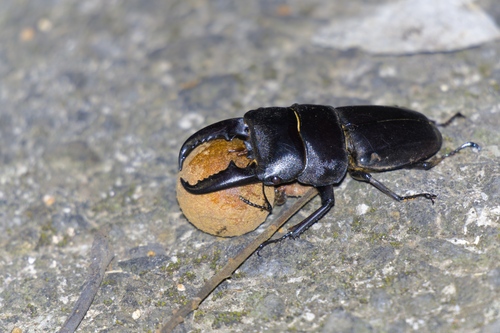
The Japanese rhinoceros beetle (Trypoxylus dichotomus), also known as the Japanese rhino beetle, the Japanese horned beetle, or by its Japanese name kabutomushi (兜虫, 甲虫 or カブトムシ), is a species of rhinoceros beetle. They are commonly found in continental Asia in countries such as China, the Korean peninsula, Japan, Vietnam, Burma, Thailand, and Taiwan. In these areas, this species of beetle is often found in broad-leaved forests with tropical or sub-tropical climates. This beetle is well known for the prominent cephalic horn found on males. Male Japanese rhinoceros beetles will use this horn to fight other males for territory and access to female mating partners. Upon contact, males will attempt to flip each other onto their backs or off of their feeding tree. In response to selective pressures, smaller male T. dichotomus have adapted a "sneak-like behavior". These smaller beetles will attempt to avoid physical confrontation with larger males and try to mate with females.

Trypoxylus dichotomus corniculatus Trypoxylus dichotomus dichotomus: Mainland China, the Korean Peninsula Trypoxylus dichotomus septentrionalis: Honshu, Shikoku, Kyushu, Tsushima Island Trypoxylus... Wikipedia →

Global Distribution

Parks Where Found

# Park Country Daily sighting probability
1 Taroko National Park 🇹🇼 Taiwan
~10%

More parks will be added in future updates.

Cities Where Found

# City Country Daily sighting probability
1 Hefei 🇨🇳 China
~30%
2 Nagoya 🇯🇵 Japan
~20%
3 Taipei 🇹🇼 Taiwan
~20%
4 Nanjing 🇨🇳 China
~20%
5 Taichung 🇹🇼 Taiwan
~20%
6 Wuhan 🇨🇳 China
~20%
7 Hangzhou 🇨🇳 China
~10%
8 Osaka 🇯🇵 Japan
~10%
9 Daejeon 🇰🇷 South Korea
~10%
10 Tokyo 🇯🇵 Japan
~10%

Before you go

What are the chances of seeing a Japanese Rhinoceros Beetle in Taichung?

Possible

About 20% of wildlife watchers report a Japanese Rhinoceros Beetle sighting in Taichung on a given day, based on 43 verified sightings from GBIF citizen-science data. It is the 20th most-seen of the 197 insects we can rate there. Over three days the chance rises to about 50%, and over a week to about 80%, if each day is a fresh chance.

When is the best time to see a Japanese Rhinoceros Beetle in Taichung?

June

In that month about 50% of wildlife watchers report a Japanese Rhinoceros Beetle in Taichung on a given day, against under 5% in March–April and September–January, the lowest months. That is one of Taichung's wettest months, with about 310 mm of rain against 40 mm in December.

What time of day is best to see a Japanese Rhinoceros Beetle?

Between 8 and 11 am

Across all the parks we cover, that three-hour window holds the most Japanese Rhinoceros Beetle sightings with a recorded time, and about 6 in 10 of them come between 6 am and 6 pm: it is seen both by day and at night.

Is Taichung the best place to see a Japanese Rhinoceros Beetle?

5th of 14

Of the 14 cities where we can rate Japanese Rhinoceros Beetle sightings, Taichung ranks 5th at about 20%. The best odds are in Hefei (China, about 30%), Nagoya (Japan, about 20%) and Taipei (Taiwan, about 20%).

Which relatives of the Japanese Rhinoceros Beetle live in Taichung?

Same family: Scarabaeidae

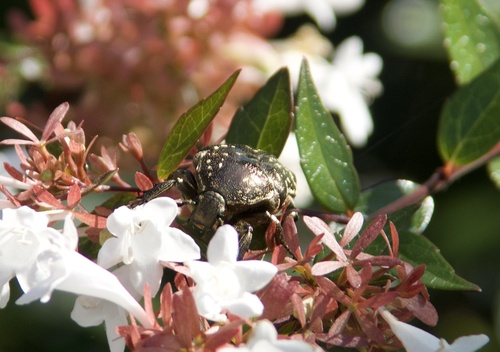
The closest relatives of the Japanese Rhinoceros Beetle that you can see in Taichung (family Scarabaeidae, Scarabs) are Oriental Flower Beetle (about 10%), Macronota shangaicus (about 10%) and Protaetia culta (about 10%), with each one's daily chance of a sighting.

Where does the Japanese Rhinoceros Beetle sighting chance come from?

GBIF citizen-science records

It is estimated from how often the Japanese Rhinoceros Beetle is recorded against all the insects logged in Taichung (43 verified sightings), calibrated against known sighting rates. Figures are rounded to the nearest 10% because citizen-science data supports honest approximations, not decimals, and months with records from fewer than five people show "—". How it works.

← Back to Taichung