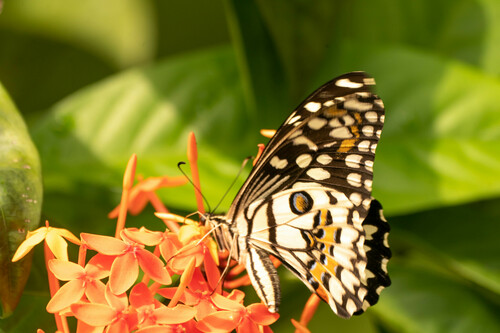
Banana Skipper

Banana Skipper

Erionota thrax

Daily sighting probability ~20% · Possible
at Tasikmalaya

In 3 days ~40% in a week ~70%

11 Verified sightings at Tasikmalaya
July Best month

About the Banana Skipper

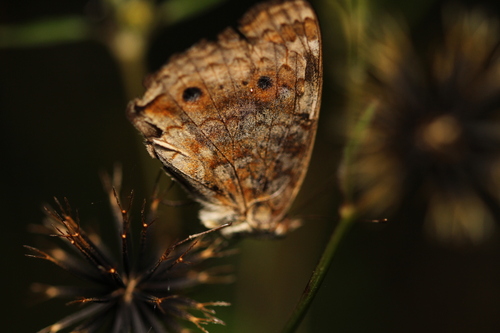
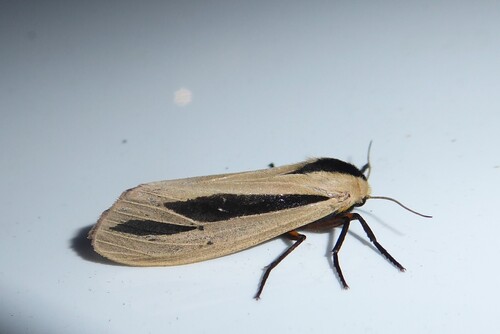
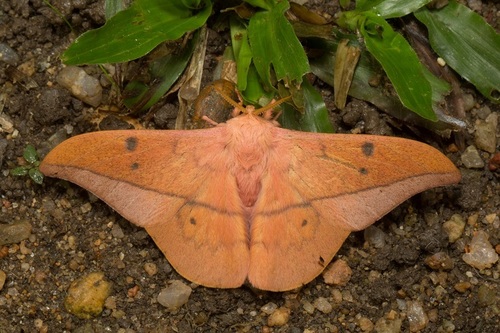
Erionota thrax, the palm redeye or the banana skipper, is a species of butterfly belonging to the family Hesperiidae. It is found from India, through south-eastern Asia to Papua New Guinea. In the north it is found up to southern China. It is an introduced species on various Pacific islands, including the Solomon Islands and Hawaii. It has also been recorded from Mauritius.

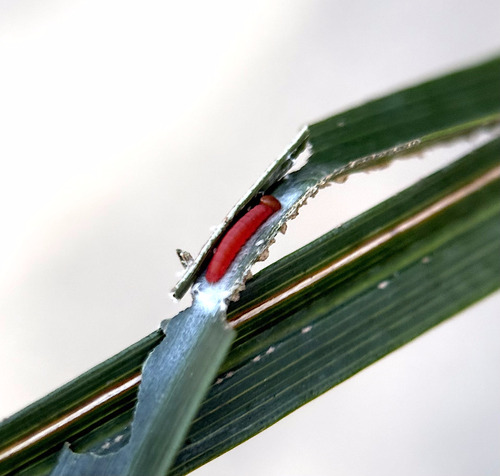
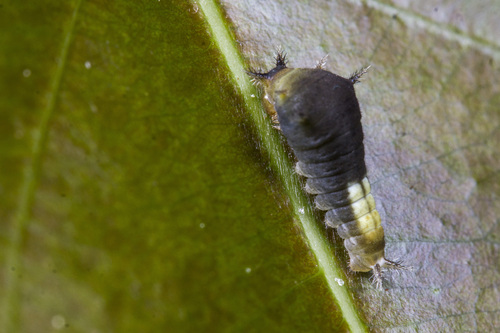
The wingspan is 70–77 mm. There are multiple generations per year. The larvae feed on the leaves of Musa species, especially Musa textilis. It has also been recorded on Cocos nucifera and other palm species. The rolls in banana leaves that E. thrax larvae create when feeding have been used as overwintering shelters for wasp species Polistes japonicus in Okinawa, Japan.

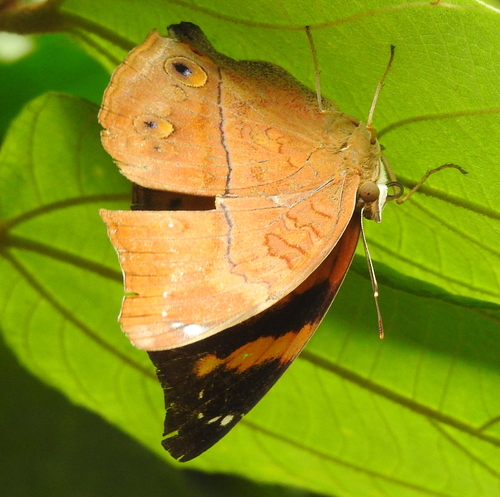
Male and female. Wings above chocolate-brown; anterior wings with three discal pale ochraceous spots, situate one crossing cell, another beneath cell and between the two lower median nervules, and the third and smallest between the first and second median nervules; posterior wings with the fringe greyish-ochraceous. Wings beneath paler than above; posterior wings with a discal, rounded, macular, darker fascia. Body and legs more... Wikipedia →

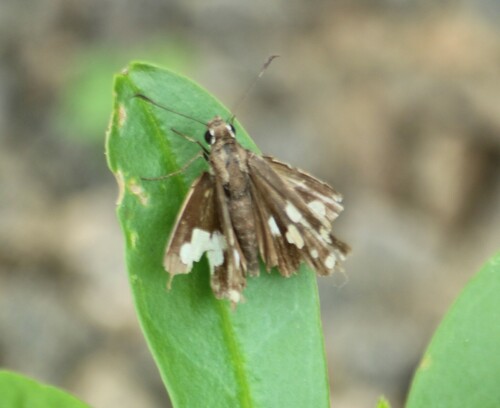
Global Distribution

Parks Where Found

# Park Country Daily sighting probability

More parks will be added in future updates.

Cities Where Found

# City Country Daily sighting probability
1 Yogyakarta 🇮🇩 Indonesia
~20%
2 Tasikmalaya 🇮🇩 Indonesia
~20%
3 Singapore 🇸🇬 Singapore
<5%

Before you go

What are the chances of seeing a Banana Skipper in Tasikmalaya?

Possible

About 20% of wildlife watchers report a Banana Skipper sighting in Tasikmalaya on a given day, based on 11 verified sightings from GBIF citizen-science data. It is the 33rd most-seen of the 76 insects we can rate there. Over three days the chance rises to about 40%, and over a week to about 70%, if each day is a fresh chance.

When is the best time to see a Banana Skipper in Tasikmalaya?

July and September

In those months about 40% of wildlife watchers report a Banana Skipper in Tasikmalaya on a given day, against under 5% in August and December–June, the lowest months. Those are among Tasikmalaya's driest months, with about 100 mm of rain a month against 380 mm in December.

Is Tasikmalaya the best place to see a Banana Skipper?

Among the best

Of the 3 cities where we can rate Banana Skipper sightings, Tasikmalaya ranks 2nd at about 20%, level with the leaders once rounded. The best odds are in Yogyakarta (Indonesia, about 20%).

Which relatives of the Banana Skipper live in Tasikmalaya?

Same family: Hesperiidae

The closest relatives of the Banana Skipper that you can see in Tasikmalaya (family Hesperiidae, Skippers) are Grass Demon (about 20%) and Indian Palm Bob (about 10%), with each one's daily chance of a sighting.

Where does the Banana Skipper sighting chance come from?

GBIF citizen-science records

It is estimated from how often the Banana Skipper is recorded against all the insects logged in Tasikmalaya (11 verified sightings), calibrated against known sighting rates. Figures are rounded to the nearest 10% because citizen-science data supports honest approximations, not decimals, and months with records from fewer than five people show "—". How it works.

← Back to Tasikmalaya