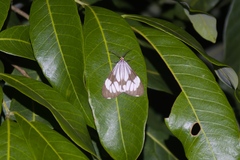
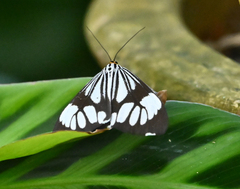
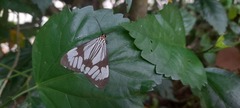
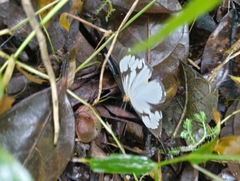
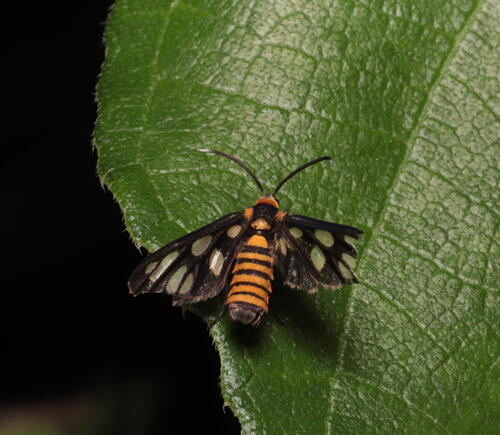
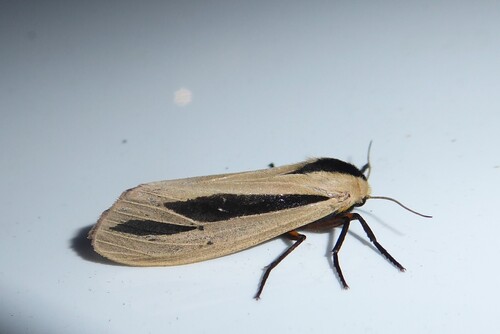
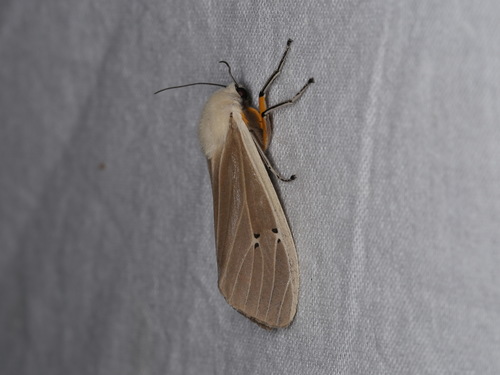
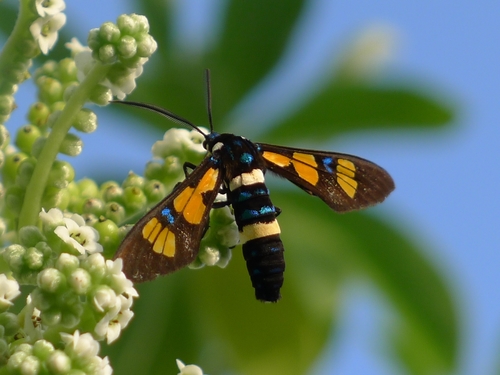
Marbled White Moth
Daily sighting probability ~20% · Possible
at Tasikmalaya

In 3 days ~40% in a week ~70%

11 Verified sightings at Tasikmalaya
72 In all 5 parks From 2019 to 2026
September Best month
☀️ Diurnal When it's spotted

About the Marbled White Moth

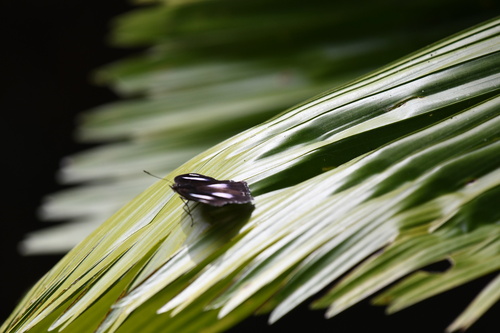
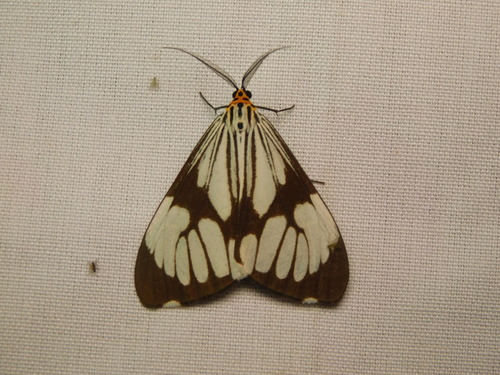
Nyctemera coleta, the marbled white moth or white tiger moth, is a moth found from India to the Philippines, and from Japan to Papua New Guinea. It is classified under the subgenus Coleta of the genus Nyctemera in the family Arctiidae. The species was first described by Caspar Stoll in 1782. It contains four subspecies.

The male has a large tuft of hair arising from the base of the tibia of the foreleg. It differs from Nyctemera tripunctaria in the lower three spots of the post-medial band of forewing being separated and having another spot below them towards outer angle. Cilia white below the apex and at outer angle. Hindwing with the cilia white below the apex, and in most specimens at anal angle. The Sri Lankan subspecies has black veins 3 and 4 of hindwing and the spots of the postmedial band of forewing are smaller than other subspecies.

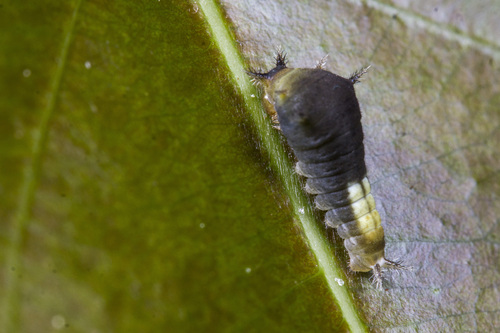
The larvae are purplish and hairy. Anterior somites yellowish. Each somite is black and marked with short dorsal and lateral white streaks. Pupa yellowish and spotted with black. Nyctemera coleta coleta (Malacca, Singapore, Sumatra, Java)

Nyctemera coleta melaneura (Butler, 1883) (Nias) Nyctemera coleta melas... Wikipedia →
Global Distribution

Parks Where Found

# Park Country Daily sighting probability
1 Periyar National Park 🇮🇳 India
~50%
2 Sinharaja Forest Reserve 🇱🇰 Sri Lanka
~30%
3 Nagarhole National Park 🇮🇳 India
~20%
4 Gunung Leuser National Park 🇮🇩 Indonesia
~20%
5 Khao Yai National Park 🇹🇭 Thailand
~10%

Cities Where Found

# City Country Daily sighting probability
1 Tasikmalaya 🇮🇩 Indonesia
~20%
2 Bengaluru 🇮🇳 India
~20%
3 Jakarta 🇮🇩 Indonesia
~10%
4 Bandung 🇮🇩 Indonesia
~10%

Before you go

What are the chances of seeing a Marbled White Moth in Tasikmalaya?

Possible

About 20% of wildlife watchers report a Marbled White Moth sighting in Tasikmalaya on a given day, based on 11 verified sightings from GBIF citizen-science data. It is the 33rd most-seen of the 76 insects we can rate there. Over three days the chance rises to about 40%, and over a week to about 70%, if each day is a fresh chance.

When is the best time to see a Marbled White Moth in Tasikmalaya?

September

In that month about 30% of wildlife watchers report a Marbled White Moth in Tasikmalaya on a given day, against under 5% in March–April, July–August, October and December–January, the lowest months. That is one of Tasikmalaya's driest months, with about 110 mm of rain against 380 mm in December.

What time of day is best to see a Marbled White Moth?

Between noon and 3 pm

Across all the parks we cover, that three-hour window holds the most Marbled White Moth sightings with a recorded time, and about 9 in 10 of them come between 6 am and 6 pm: it is a daytime animal.

Is Tasikmalaya the best place to see a Marbled White Moth?

Yes

Of the 4 cities where we can rate Marbled White Moth sightings, Tasikmalaya has the highest daily chance: about 20%. Next come Bengaluru (India, about 20%) and Jakarta (Indonesia, about 10%).

Which relatives of the Marbled White Moth live in Tasikmalaya?

Same family: Erebidae

The closest relatives of the Marbled White Moth that you can see in Tasikmalaya (family Erebidae, Underwing, Tiger, Tussock, and Allied Moths) are Hübner's Wasp Moth (about 30%), Baphomet Moth (about 20%) and Clouded Tiger Moth (about 10%), with each one's daily chance of a sighting.

Where does the Marbled White Moth sighting chance come from?

GBIF citizen-science records

It is estimated from how often the Marbled White Moth is recorded against all the insects logged in Tasikmalaya (11 verified sightings), calibrated against known sighting rates. Figures are rounded to the nearest 10% because citizen-science data supports honest approximations, not decimals, and months with records from fewer than five people show "—". How it works.

← Back to Tasikmalaya