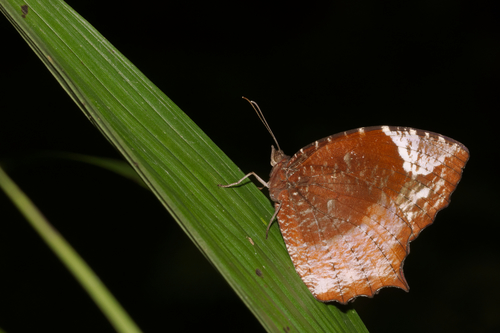
Common Mime Swallowtail

Common Mime Swallowtail

Chilasa clytia

Daily sighting probability ~20% · Possible
at Thiruvananthapuram

In 3 days ~50% in a week ~80%

11 Verified sightings at Thiruvananthapuram
12 In 1 park From 2019 to 2026
December Best month
☀️ Diurnal When it's spotted

About the Common Mime Swallowtail

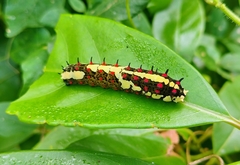
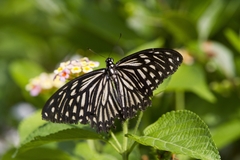
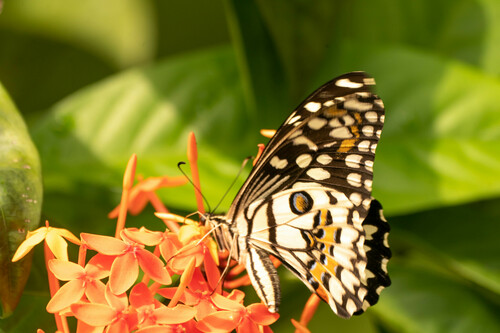
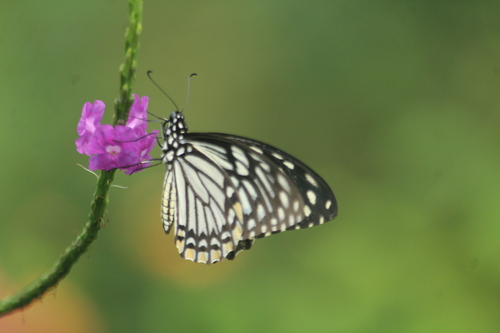
Papilio clytia, the common mime, is a swallowtail butterfly found in south and southeast Asia. The butterfly belongs to the subgenus Chilasa, the black-bodied swallowtails. It serves as an excellent example of a Batesian mimic among the Indian butterflies.

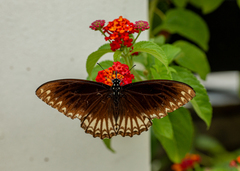
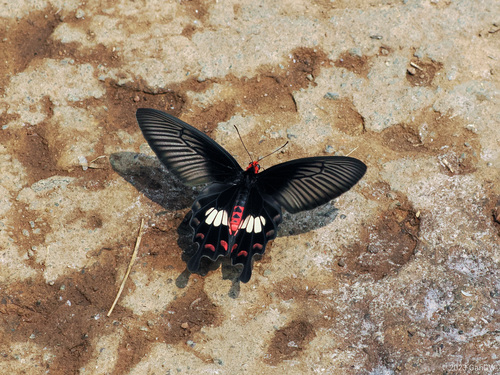
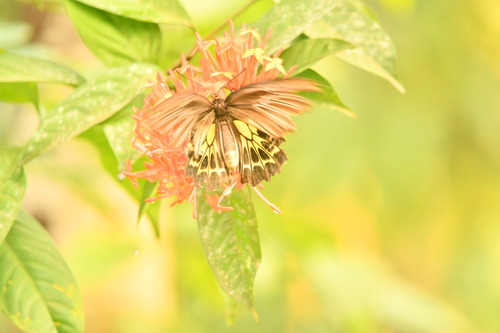
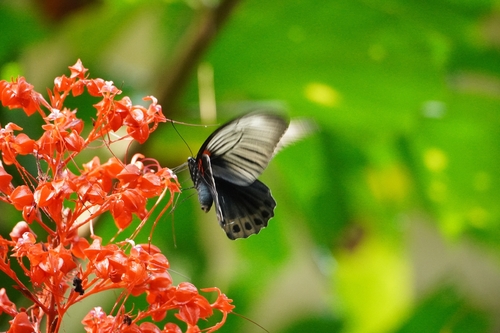
Both males and females have the upperside velvety black or soft dark brown. Forewing: a subterminal series of outwardly truncate or emarginate white spots; the spot in interspace 4 shifted inwards out of line; those in interspaces 6, 7 and 8 oblique to the costa, the lowest and the upper two spots elongate; this is followed by a terminal series of smaller white spots, two in interspace 1, one above the outer, and two in interspaces 8; lastly, a single spot between the subterminal and terminal series.

Hindwing: a discal series of inwardly conical and outwardly emarginate, triangular, elongate white spots; a prominent tornal yellow spot broadly divided across the middle by a bar of the ground colour. The cilia touched with white in the interspaces; sometimes one or more of these specks on the cilia are broad and prominent and yellow in colour.

Underside: from soft pale brown to rich dark velvety brown... Wikipedia →
Global Distribution

Parks Where Found

# Park Country Daily sighting probability
1 Kaeng Krachan National Park 🇹🇭 Thailand
~10%

More parks will be added in future updates.

Cities Where Found

# City Country Daily sighting probability
1 Tamluk 🇮🇳 India
~40%
2 Kozhikode 🇮🇳 India
~20%
3 Thiruvananthapuram 🇮🇳 India
~20%
4 Kolkata 🇮🇳 India
~20%
5 Kochi 🇮🇳 India
~20%
6 Xiuying District 🇨🇳 China
~20%
7 Jabalpur 🇮🇳 India
~20%
8 Tuen Mun 🇨🇳 China
~20%
9 Dhaka 🇧🇩 Bangladesh
~20%
10 Guwahati 🇮🇳 India
~20%

Before you go

What are the chances of seeing a Common Mime Swallowtail in Thiruvananthapuram?

Possible

About 20% of wildlife watchers report a Common Mime Swallowtail sighting in Thiruvananthapuram on a given day, based on 11 verified sightings from GBIF citizen-science data. It is the 37th most-seen of the 112 insects we can rate there. Over three days the chance rises to about 50%, and over a week to about 80%, if each day is a fresh chance.

When is the best time to see a Common Mime Swallowtail in Thiruvananthapuram?

December

In that month about 40% of wildlife watchers report a Common Mime Swallowtail in Thiruvananthapuram on a given day, against under 5% in March, June–August and October–November, the lowest months. That is one of Thiruvananthapuram's driest months, with about 60 mm of rain against 290 mm in October.

What time of day is best to see a Common Mime Swallowtail?

Between 8 and 11 am

Across all the parks we cover, that three-hour window holds the most Common Mime Swallowtail sightings with a recorded time, and nearly all of them come between 6 am and 6 pm: it is a daytime animal.

Is Thiruvananthapuram the best place to see a Common Mime Swallowtail?

3rd of 23

Of the 23 cities where we can rate Common Mime Swallowtail sightings, Thiruvananthapuram ranks 3rd at about 20%. The best odds are in Tamluk (India, about 40%) and Kozhikode (India, about 20%).

Which relatives of the Common Mime Swallowtail live in Thiruvananthapuram?

Same family: Papilionidae

The closest relatives of the Common Mime Swallowtail that you can see in Thiruvananthapuram (family Papilionidae, Swallowtails and Parnassians) are Common Mormon Swallowtail (about 40%), Common Jay (about 30%) and Common Rose Swallowtail (about 20%), with each one's daily chance of a sighting.

Where does the Common Mime Swallowtail sighting chance come from?

GBIF citizen-science records

It is estimated from how often the Common Mime Swallowtail is recorded against all the insects logged in Thiruvananthapuram (11 verified sightings), calibrated against known sighting rates. Figures are rounded to the nearest 10% because citizen-science data supports honest approximations, not decimals, and months with records from fewer than five people show "—". How it works.

← Back to Thiruvananthapuram