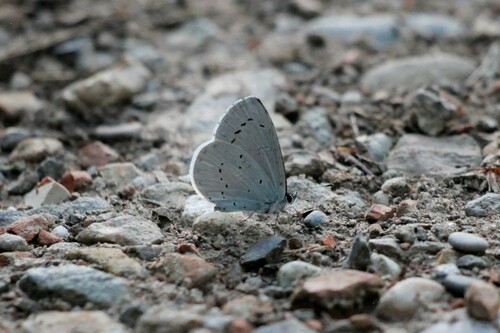
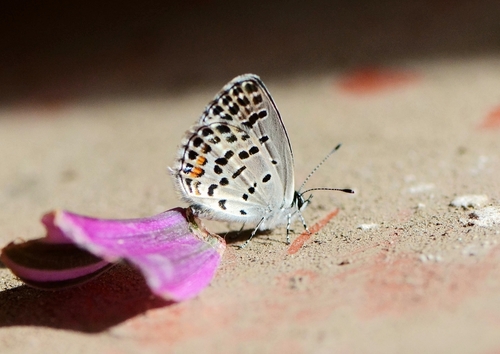
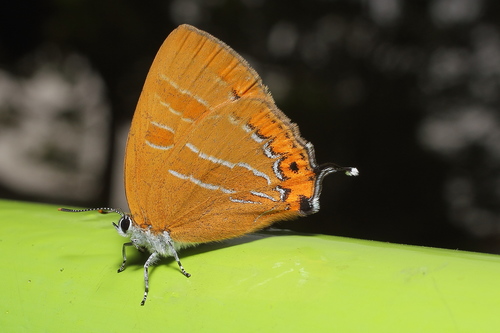
Black-Banded Hairstreak

Black-Banded Hairstreak

Antigius attilia

Daily sighting probability <5% · Rare
at Tokyo

In 3 days ~10% in a week ~20%

38 Verified sightings at Tokyo
May Best month

About the Black-Banded Hairstreak

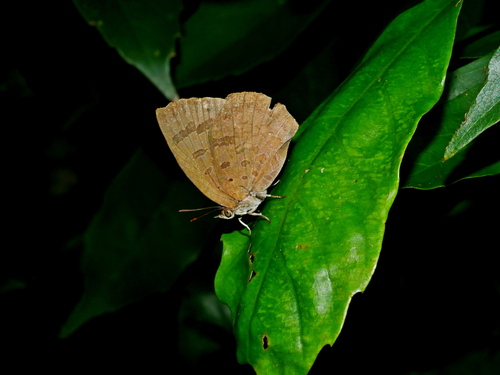
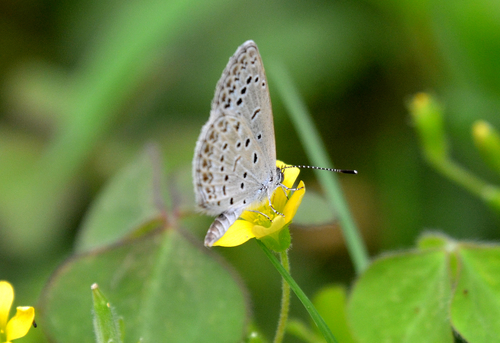
Antigius attilia is a butterfly of the family Lycaenidae. It is widespread from Japan, the Korean Peninsula, the Russian Far East throughout northern, central and western China to Taiwan. The wingspan is 14–16 millimetres (0.55–0.63 in).The upper side of the wings of both sexes is the same - black brown.The male is unicolorous. In the female the hind wings on the upper side with one or two chains of small, faintly visible whitish submarginal spots along the outer edge. The underside of the wings is greyish-white with black marginal spots and a brown transverse stripe. The spot at the apex of the central cell of the fore wing is rectangular in shape, with distinct edges. At the posterior corner of the hindwing there are two pairs of small orange-black spots. The tail on the hind wings is thin, black, 3–4 mm long

The larvae feed on Quercus serrata, Quercus acutissima, Quercus variabilis, Quercus mongolica, Quercus dentate and Quercus aliena. Subspecies yamanakashoji has been recorded on Quercus acutissima. Wikipedia →
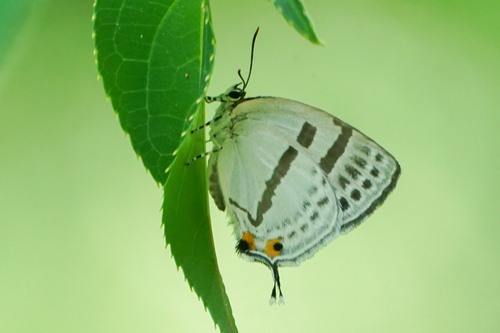
Global Distribution

Parks Where Found

# Park Country Daily sighting probability

More parks will be added in future updates.

Cities Where Found

# City Country Daily sighting probability
1 Tokyo 🇯🇵 Japan
<5%

Before you go

What are the chances of seeing a Black-Banded Hairstreak in Tokyo?

Rare

Under 5% of wildlife watchers report a Black-Banded Hairstreak sighting in Tokyo on a given day, based on 38 verified sightings from GBIF citizen-science data. It is the 320th most-seen of the 1013 insects we can rate there. Over three days the chance rises to about 10%, and over a week to about 20%, if each day is a fresh chance.

When is the best time to see a Black-Banded Hairstreak in Tokyo?

May and June

In those months about 10% of wildlife watchers report a Black-Banded Hairstreak in Tokyo on a given day, against under 5% in July to April, the lowest months.

Where else can you see a Black-Banded Hairstreak?

Only Tokyo, in our data

Tokyo is the only city on Wallace's Line with enough records to rate Black-Banded Hairstreak sightings: under 5% of wildlife watchers there report one on a given day.

Which relatives of the Black-Banded Hairstreak live in Tokyo?

Same family: Lycaenidae

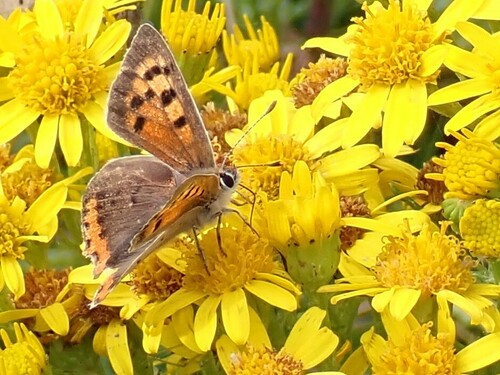
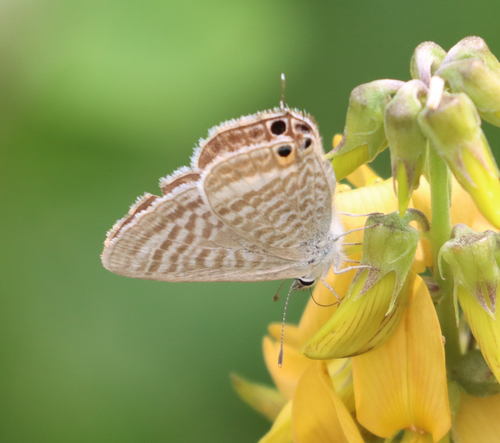
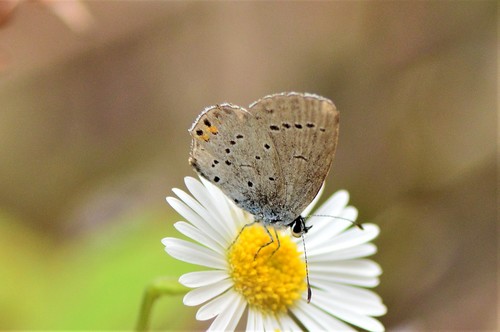
The closest relatives of the Black-Banded Hairstreak that you can see in Tokyo (family Lycaenidae, Gossamer-winged Butterflies) are Pale Grass Blue (about 30%), Small Copper (about 20%) and Pea Blue (about 10%), with each one's daily chance of a sighting.

Where does the Black-Banded Hairstreak sighting chance come from?

GBIF citizen-science records

It is estimated from how often the Black-Banded Hairstreak is recorded against all the insects logged in Tokyo (38 verified sightings), calibrated against known sighting rates. Figures are rounded to the nearest 10% because citizen-science data supports honest approximations, not decimals, and months with records from fewer than five people show "—". How it works.

← Back to Tokyo