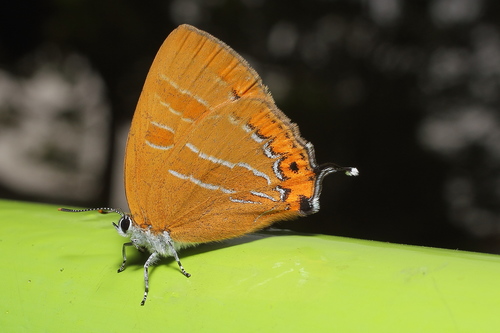
Angled Sunbeam
Daily sighting probability ~10% · With luck
at Tokyo

In 3 days ~30% in a week ~50%

262 Verified sightings at Tokyo
November Best month
☀️ Diurnal When it's spotted

About the Angled Sunbeam

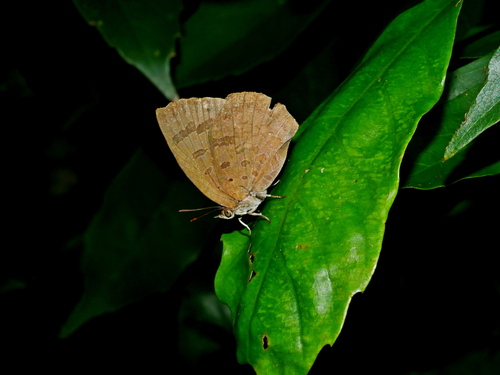
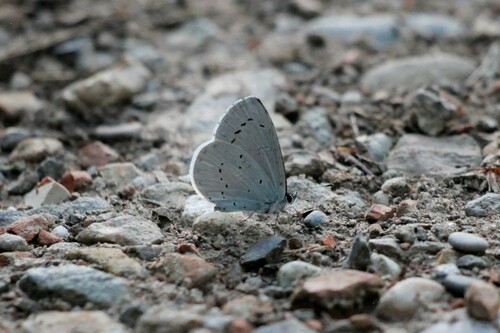
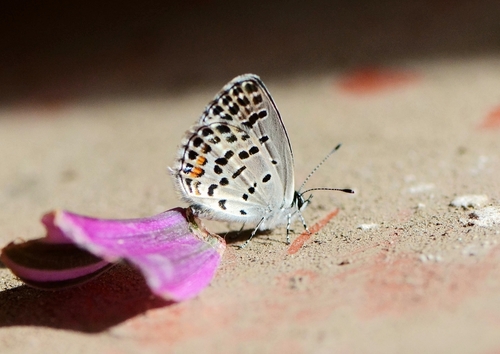
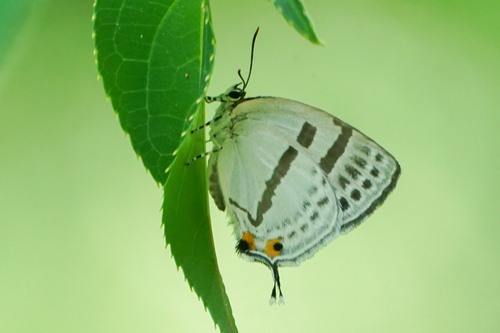
Curetis acuta, the angled sunbeam, is a species of butterfly belonging to the lycaenid family. It is found in Indomalayan realm. Curetis acuta is sexually dimorphic, the sexes differing in dorsal coloration of the wings, however their ventral wings are similar and of silver color which reflects sunlight. The reflection of light by silver ventral wings plays a role of signalling during flight, camouflage while at rest or during hibernation, and lowering body temperatures by reflecting the sunlight.

Forewing with broad black margins, broadest at the apex and at the hinder angle; the inner border of the black margin almost evenly rounded, the black marginal band running inwards also on the hinder margin, narrowing rapidly basally and terminating about the middle; a black spot at the end of the cell running into the costal black band; some greenish-brown irrorations at the base of the wing; apex very acute, the outer margin being somewhat concave below it, hinder angle triangular, hinder margin nearly as long as the costa, the outer margin consequently erect, though slightly sinuous. Hindwing with greenish-brown irrorations at the base and broadly on the abdominal area... Wikipedia →

Global Distribution

Parks Where Found

# Park Country Daily sighting probability

More parks will be added in future updates.

Cities Where Found

# City Country Daily sighting probability
1 Nanjing 🇨🇳 China
~20%
2 Nagoya 🇯🇵 Japan
~10%
3 Sendai 🇯🇵 Japan
~10%
4 Suzhou 🇨🇳 China
~10%
5 Osaka 🇯🇵 Japan
~10%
6 Tokyo 🇯🇵 Japan
~10%
7 Hangzhou 🇨🇳 China
~10%
8 Tuen Mun 🇨🇳 China
~10%
9 Hong Kong 🇨🇳 China
<5%
10 Taipei 🇹🇼 Taiwan
<5%

Before you go

What are the chances of seeing an Angled Sunbeam in Tokyo?

With luck

About 10% of wildlife watchers report an Angled Sunbeam sighting in Tokyo on a given day, based on 262 verified sightings from GBIF citizen-science data. It is the 63rd most-seen of the 1013 insects we can rate there. Over three days the chance rises to about 30%, and over a week to about 50%, if each day is a fresh chance.

When is the best time to see an Angled Sunbeam in Tokyo?

September to November

In those months about 20% of wildlife watchers report an Angled Sunbeam in Tokyo on a given day, against under 5% in January–February and April–June, the lowest months.

What time of day is best to see an Angled Sunbeam?

Between 8 and 11 am

Across all the parks we cover, that three-hour window holds the most Angled Sunbeam sightings with a recorded time, and about 8 in 10 of them come between 6 am and 6 pm: it is a daytime animal.

Is Tokyo the best place to see an Angled Sunbeam?

6th of 11

Of the 11 cities where we can rate Angled Sunbeam sightings, Tokyo ranks 6th at about 10%. The best odds are in Nanjing (China, about 20%), Nagoya (Japan, about 10%) and Sendai (Japan, about 10%).

Which relatives of the Angled Sunbeam live in Tokyo?

Same family: Lycaenidae

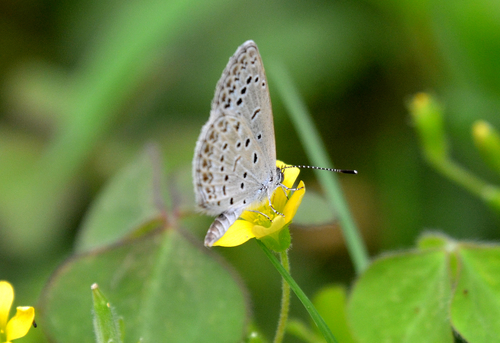
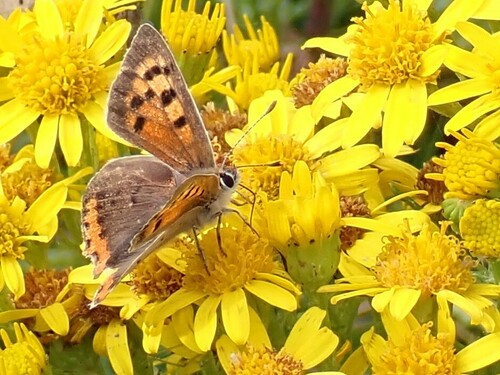
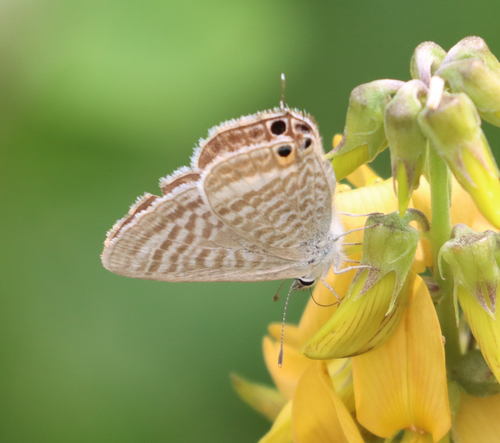
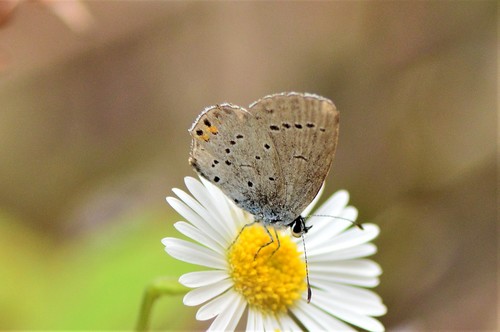
The closest relatives of the Angled Sunbeam that you can see in Tokyo (family Lycaenidae, Gossamer-winged Butterflies) are Pale Grass Blue (about 30%), Small Copper (about 20%) and Pea Blue (about 10%), with each one's daily chance of a sighting.

Where does the Angled Sunbeam sighting chance come from?

GBIF citizen-science records

It is estimated from how often the Angled Sunbeam is recorded against all the insects logged in Tokyo (262 verified sightings), calibrated against known sighting rates. Figures are rounded to the nearest 10% because citizen-science data supports honest approximations, not decimals, and months with records from fewer than five people show "—". How it works.

← Back to Tokyo