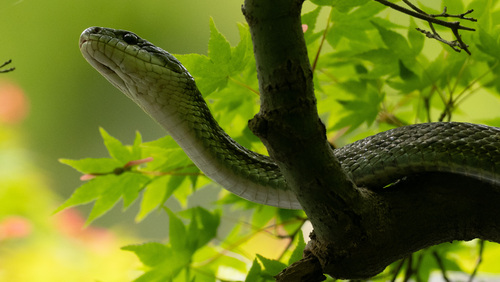
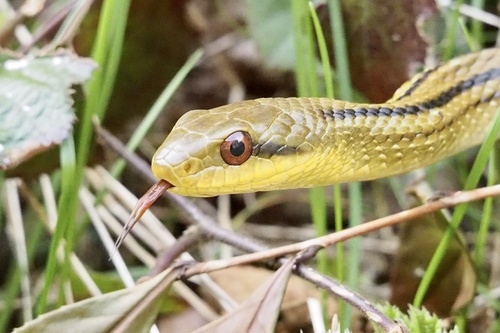
Short-tailed Mamushi

Short-tailed Mamushi

Gloydius blomhoffii

Silhouette: Steven Traver · PhyloPic

LCLeast ConcernNTVUENCR
Daily sighting probability <5% · Rare
at Tokyo

In 3 days ~10% in a week ~30%

23 Verified sightings at Tokyo
September Best month
☀️🌙 Day & Night When it's spotted

About the Short-tailed Mamushi

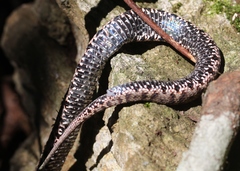
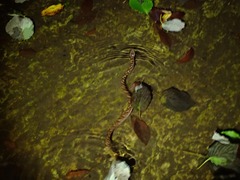
Gloydius blomhoffii, commonly known as the mamushi, Japanese moccasin, Japanese pit viper, Qichun snake, Salmusa or Japanese mamushi, is a pit viper species found in Japan. It was once considered to have 4 subspecies, but it is now considered monotypic.

This species, along with the yamakagashi (Rhabdophis tigrinus) and the Okinawan habu (Protobothrops flavoviridis), are the most venomous snakes in Japan. Every year, 2000–3000 people in Japan are bitten by a mamushi. Bitten victims typically require one week of treatment in a hospital. Severe bites require intensive care, and approximately 10 victims die annually.

This species is similar to the cottonmouths and copperheads (Agkistrodon sp.) of the Americas, and it was long considered part of the same group. The specific name, blomhoffii, is in honor of Jan Cock Blomhoff, who was director of the Dutch trading colony in Nagasaki, Japan from 1817 to 1824. The common name in English is mamushi, or Japanese mamushi.

The average length of mature individuals is 45–81 cm (17+3⁄4-31+7⁄8 inches); the longest specimen ever recorded had a length of 91 cm (36 in). The body pattern consists of a pale... Wikipedia →

Global Distribution

Parks Where Found

# Park Country Daily sighting probability

More parks will be added in future updates.

Cities Where Found

# City Country Daily sighting probability
1 Nagoya 🇯🇵 Japan
~20%
2 Osaka 🇯🇵 Japan
~10%
3 Tokyo 🇯🇵 Japan
<5%

Zoos & Centres Where Found

# Zoo / Centre Country
1 Sapporo Maruyama Zoo 🇯🇵 Japan In captivity
2 Asahiyama Zoo 🇯🇵 Japan In captivity
3 Ueno Zoological Gardens (West Garden) 🇯🇵 Japan In captivity
4 Kōchi Prefectural Ashizuri Aquarium Satoumi 🇯🇵 Japan In captivity

Closest Relatives at Tokyo

No species of the same family or order lives in Tokyo, so these are its closest relatives here: other reptiles.

Before you go

What are the chances of seeing a Short-tailed Mamushi in Tokyo?

Rare

Under 5% of wildlife watchers report a Short-tailed Mamushi sighting in Tokyo on a given day, based on 23 verified sightings from GBIF citizen-science data. It is the 11th most-seen of the 15 reptiles we can rate there. Over three days the chance rises to about 10%, and over a week to about 30%, if each day is a fresh chance.

When is the best time to see a Short-tailed Mamushi in Tokyo?

April, July and September

In those months about 10% of wildlife watchers report a Short-tailed Mamushi in Tokyo on a given day, against under 5% in May–June, August and October–March, the lowest months.

What time of day is best to see a Short-tailed Mamushi?

Between 10 am and 1 pm

Across all the parks we cover, that three-hour window holds the most Short-tailed Mamushi sightings with a recorded time, and about 6 in 10 of them come between 6 am and 6 pm: it is seen both by day and at night.

Is Tokyo the best place to see a Short-tailed Mamushi?

3rd of 3

Of the 3 cities where we can rate Short-tailed Mamushi sightings, Tokyo ranks 3rd at under 5%. The best odds are in Nagoya (Japan, about 20%) and Osaka (Japan, about 10%).

Where does the Short-tailed Mamushi sighting chance come from?

GBIF citizen-science records

It is estimated from how often the Short-tailed Mamushi is recorded against all the reptiles logged in Tokyo (23 verified sightings), calibrated against known sighting rates. Figures are rounded to the nearest 10% because citizen-science data supports honest approximations, not decimals, and months with records from fewer than five people show "—". How it works.

← Back to Tokyo