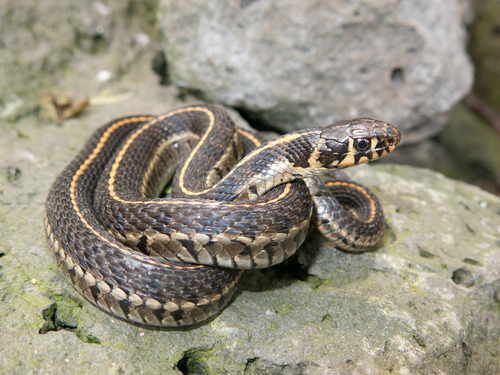
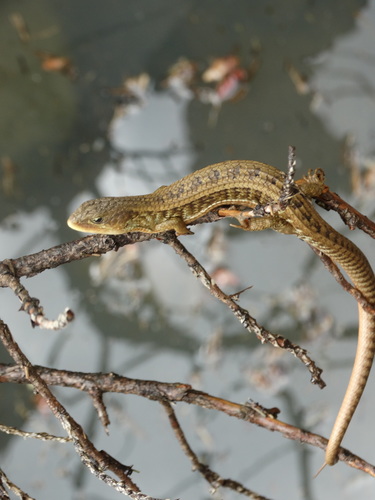
Transvolcanic Alligator Lizard

Transvolcanic Alligator Lizard

Barisia imbricata

Silhouette: SeismicShrimp · PhyloPic

LCLeast ConcernNTVUENCR Endemic
Daily sighting probability ~20% · Possible
at Toluca

In 3 days ~50% in a week ~80%

14 Verified sightings at Toluca
August Best month
☀️ Diurnal When it's spotted

About the Transvolcanic Alligator Lizard

Barisia imbricata, also known commonly as the imbricate alligator lizard, the transvolcanic alligator lizard, and el escorpión de transvolcánico in Mexican Spanish, is a species of medium-sized lizard in the family Anguidae. The species is endemic to Mexico.

B. imbricata is found in the Mexican states of Aguascalientes, Chihuahua, Guanajuato, Guerrero, Hidalgo, Jalisco, México, Michoacán, Morelos, Nayarit, Oaxaca, Puebla, Veracruz, and Zacatecas. The preferred natural habitats of B. imbricata are forest and grassland, at altitudes of 1,200–3,000 m (3,900–9,800 ft).

B. imbricata is terrestrial. B. imbricata preys predominately upon insects but will also kill and eat small vertebrates. The mode of reproduction of B. imbricata has been described as viviparous and ovoviviparous. Litter size is up to 11 newborns.

Females demonstrate a summer/autumn activity pattern with follicular growth starting in spring (June) and ovulation occurring in Autumn (late August–September). Within the Río Frío, Mexico, Mexico area, ovarian activity is positively correlated with precipitation, however there is no correlation with... Wikipedia →

Global Distribution

Parks Where Found

# Park Country Daily sighting probability

More parks will be added in future updates.

Cities Where Found

# City Country Daily sighting probability
1 Toluca 🇲🇽 México
~20%
2 Mexico City 🇲🇽 México
~10%
3 Puebla 🇲🇽 México
~10%

Zoos & Centres Where Found

# Zoo / Centre Country
1 Denver Zoo 🇺🇸 United States In captivity

Before you go

What are the chances of seeing a Transvolcanic Alligator Lizard in Toluca?

Possible

About 20% of wildlife watchers report a Transvolcanic Alligator Lizard sighting in Toluca on a given day, based on 14 verified sightings from GBIF citizen-science data. It is the 8th most-seen of the 9 reptiles we can rate there. Over three days the chance rises to about 50%, and over a week to about 80%, if each day is a fresh chance.

When is the best time to see a Transvolcanic Alligator Lizard in Toluca?

August

In that month about 50% of wildlife watchers report a Transvolcanic Alligator Lizard in Toluca on a given day, against under 5% in February, April–May and October–December, the lowest months. That is one of Toluca's wettest months, with about 150 mm of rain against 5 mm in December.

What time of day is best to see a Transvolcanic Alligator Lizard?

Between 10 am and 1 pm

Across all the parks we cover, that three-hour window holds the most Transvolcanic Alligator Lizard sightings with a recorded time, and nearly all of them come between 6 am and 6 pm: it is a daytime animal.

Is Toluca the best place to see a Transvolcanic Alligator Lizard?

Yes

Of the 3 cities where we can rate Transvolcanic Alligator Lizard sightings, Toluca has the highest daily chance: about 20%. Next come Mexico City (México, about 10%) and Puebla (México, about 10%).

Where does the Transvolcanic Alligator Lizard sighting chance come from?

GBIF citizen-science records

It is estimated from how often the Transvolcanic Alligator Lizard is recorded against all the reptiles logged in Toluca (14 verified sightings), calibrated against known sighting rates. Figures are rounded to the nearest 10% because citizen-science data supports honest approximations, not decimals, and months with records from fewer than five people show "—". How it works.

← Back to Toluca