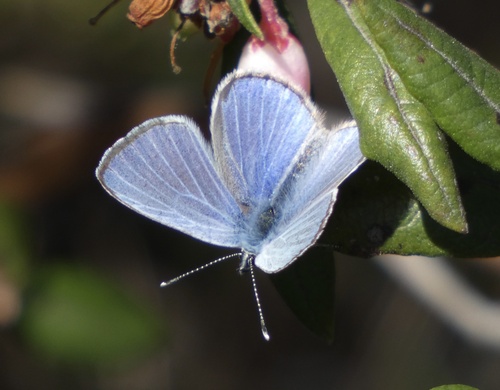
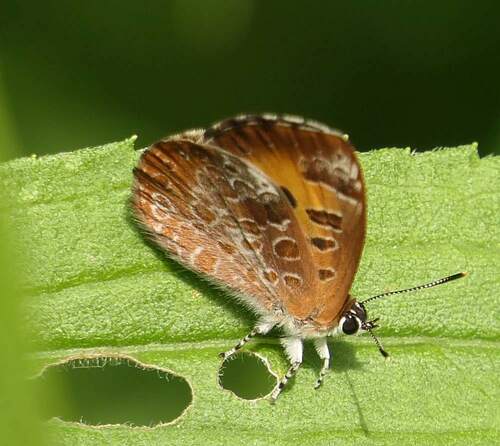
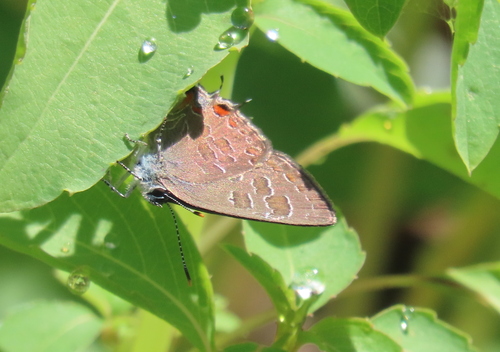
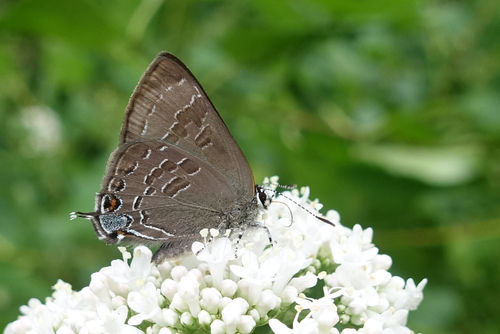
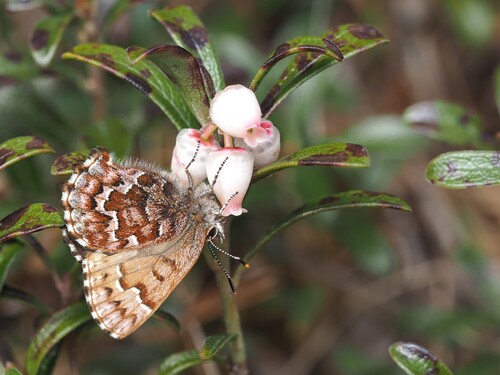
Northern Azure

Northern Azure

Celastrina lucia

Daily sighting probability ~10% · With luck
at Toronto

In 3 days ~20% in a week ~40%

194 Verified sightings at Toronto
109 In all 7 parks From 2019 to 2026
May Best month
☀️ Diurnal When it's spotted

About the Northern Azure

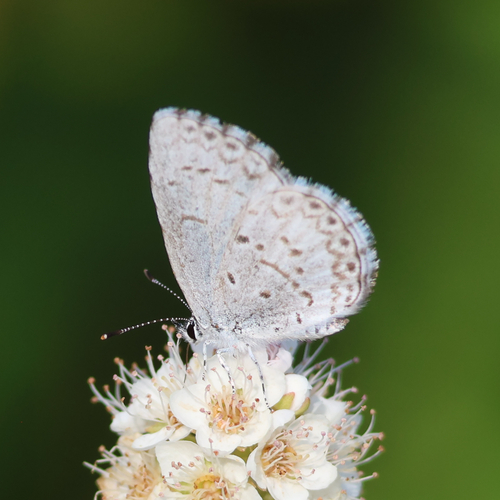
Celastrina lucia, the lucia azure, northern azure, eastern spring azure or northern spring azure, is a species of butterfly of the family Lycaenidae. It is found eastern North America, ranging from the Maritimes south through the Appalachian Mountains to West Virginia.

The wingspan is between 22–35 mm. Adults are sexually dimorphic. They are on wing from April to July. The larvae feed on Vaccinium species, including V. pallidum. Until the early 1990s, most North American azures were thought to be a single species, Celastrina ladon. More recently, research has revealed that there are many different species of azures, including C. lucia, which had been treated as a subspecies of C. ladon.

Cherry gall azure (C. serotina) Holly azure (C. idella) Spring azure (C. ladon) Summer azure (C. neglecta) Data related to Celastrina lucia at Wikispecies Media related to Celastrina lucia at Wikimedia Commons Wikipedia →
Global Distribution

Parks Where Found

# Park Country Daily sighting probability
1 Isle Royale National Park 🇺🇸 United States
~40%
2 Cape Breton Highlands National Park 🇨🇦 Canada
~20%
3 Riding Mountain National Park 🇨🇦 Canada
~10%
4 Elk Island National Park 🇨🇦 Canada
~10%
5 Gros Morne National Park 🇨🇦 Canada
~10%
6 Jasper National Park 🇨🇦 Canada
~10%
7 Acadia National Park 🇺🇸 United States
~10%

Cities Where Found

# City Country Daily sighting probability
1 Edmonton 🇨🇦 Canada
~20%
2 Toronto 🇨🇦 Canada
~10%
3 Calgary 🇨🇦 Canada
~10%
4 Montreal 🇨🇦 Canada
<5%
5 New York City 🇺🇸 United States
<5%

Before you go

What are the chances of seeing a Northern Azure in Toronto?

With luck

About 10% of wildlife watchers report a Northern Azure sighting in Toronto on a given day, based on 194 verified sightings from GBIF citizen-science data. It is the 128th most-seen of the 1689 insects we can rate there. Over three days the chance rises to about 20%, and over a week to about 40%, if each day is a fresh chance.

When is the best time to see a Northern Azure in Toronto?

April–May and July

In those months about 10% of wildlife watchers report a Northern Azure in Toronto on a given day, against under 5% in June and August–March, the lowest months.

What time of day is best to see a Northern Azure?

Between noon and 3 pm

Across all the parks we cover, that three-hour window holds the most Northern Azure sightings with a recorded time, and nearly all of them come between 6 am and 6 pm: it is a daytime animal.

Is Toronto the best place to see a Northern Azure?

2nd of 5

Of the 5 cities where we can rate Northern Azure sightings, Toronto ranks 2nd at about 10%. The best odds are in Edmonton (Canada, about 20%).

Which relatives of the Northern Azure live in Toronto?

Same family: Lycaenidae

The closest relatives of the Northern Azure that you can see in Toronto (family Lycaenidae, Gossamer-winged Butterflies) are Common Blue (about 30%), Elkalyce comyntas (about 10%) and Silvery Blue (about 10%), with each one's daily chance of a sighting.

Where does the Northern Azure sighting chance come from?

GBIF citizen-science records

It is estimated from how often the Northern Azure is recorded against all the insects logged in Toronto (194 verified sightings), calibrated against known sighting rates. Figures are rounded to the nearest 10% because citizen-science data supports honest approximations, not decimals, and months with records from fewer than five people show "—". How it works.

← Back to Toronto