About the Common Butterfly Moth
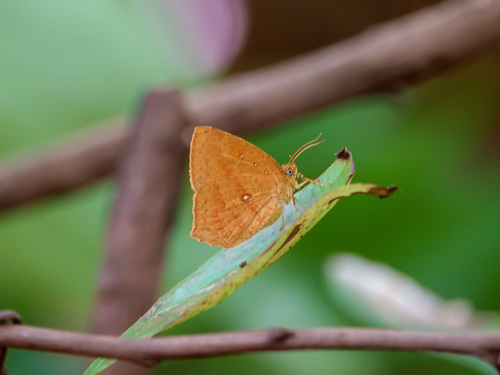
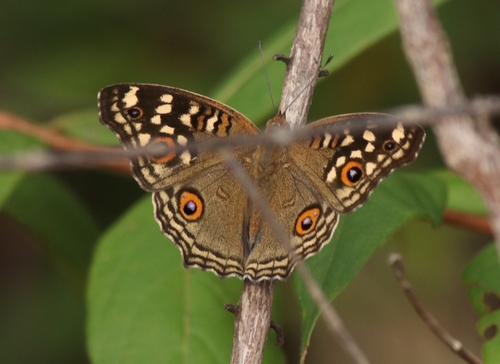
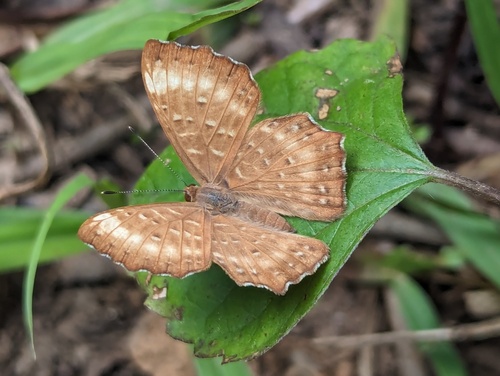
Tetragonus catamitus, the common butterfly moth, or Philippine callidulid moth, is a moth of the family Callidulidae. It was first described by Carl Geyer in 1832. Noted from Taiwan, north-eastern India, south-west India, the Andaman and Nicobar Islands, Sri Lanka, the Tenasserim Hills of Myanmar and from Java. They are day-flying moths that can be easily mistaken for a butterfly due to the position in which they hold their wings.
The head, thorax and abdomen are dark yellowish and reddish brown. The wings are yellowish and reddish brown. The hindwings are more uniform reddish brown. On the underside, there are dark striations and both the forewing and hindwing have three grey spots in the discal cell. There are four pale rufous bands along the medial, postmedial, submarginal region.
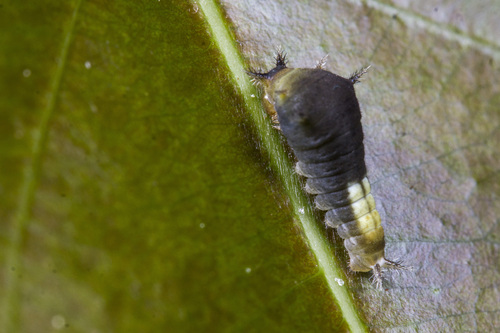
The species was named Tetragonus catamitus by Carl Geyer in 1832 based on a specimen from Java and later described under the name of Cleosiris fasciata by Frederic Moore. The larvae were described later as being translucent green with a dark black semi-prognathous head and a prothorax with a well-developed prothoracic shield. Young instar larvae live in a rolled leaf, and... Wikipedia →