About the Cottony Cushion Scale
Icerya purchasi (common name: cottony cushion scale) is a scale insect that feeds on more than 80 families of woody plants, most notably on Citrus and Pittosporum. Originally described in 1878 from specimens collected in New Zealand as pests of kangaroo acacia and named by W.M. Maskell "after the Rev. Dr. Purchas who, [he] believe[d], first found it", it is now found worldwide where citrus crops are grown. The cottony cushion scale originates from Australia.
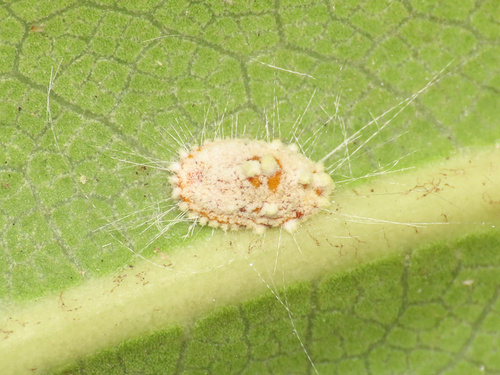
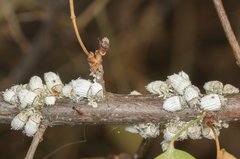
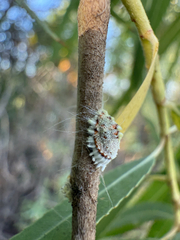
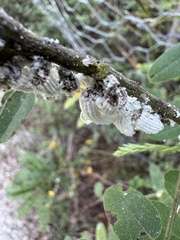
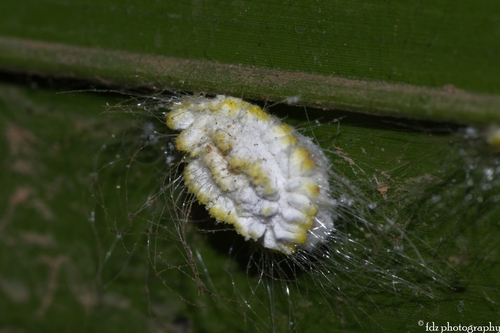
This scale infests twigs and branches. The mature hermaphrodite is oval in shape, reddish-brown with black hairs, 5 mm long. When mature, the insect remains stationary, attaches itself to the plant by waxy secretions, and produces a white egg sac in grooves, by extrusion, in the body which encases hundreds of red eggs. The egg sac will grow to be two to three times as long as the body. Newly hatched nymphs are the primary dispersal stage, with dispersion known to occur by wind and by crawling. Early stage nymphs feed from the midrib veins of leaves and small twigs, and do the bulk of the damage. At each molt, they leave at the old feeding point the former skin and the waxy secretions in which they had covered themselves... Wikipedia →