Chapman's Blue

Chapman's Blue

Polyommatus thersites

Daily sighting probability <5% · Rare
at Vienna

In 3 days ~10% in a week ~20%

5 Verified sightings at Vienna
19 In all 2 parks From 2019 to 2026
October Best month
☀️ Diurnal When it's spotted

About the Chapman's Blue

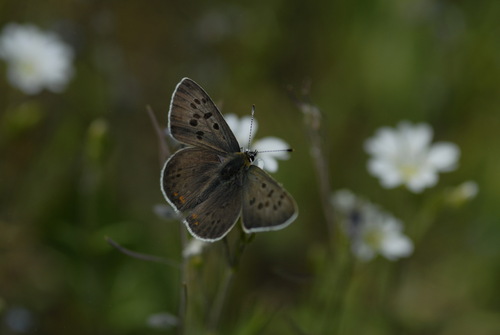
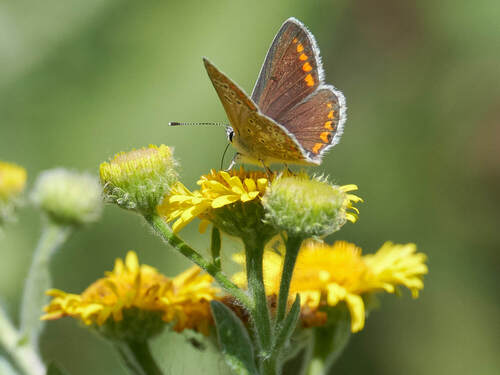
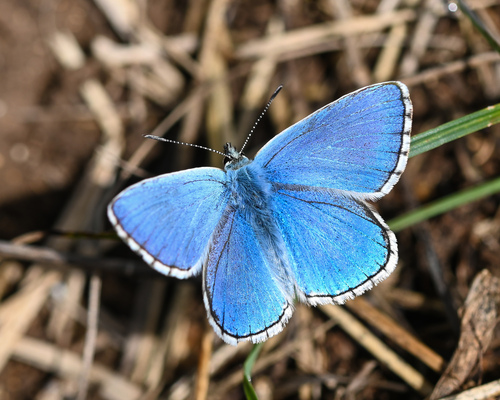
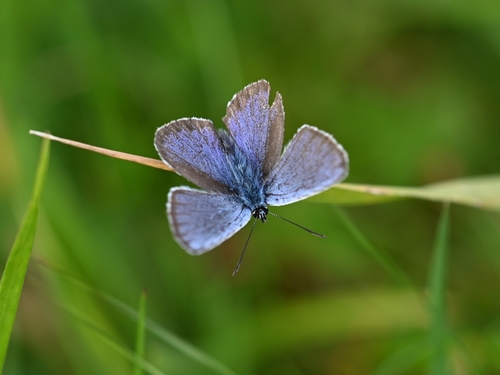
Polyommatus thersites, the Chapman's blue, is a butterfly in the family Lycaenidae. It is found in southern Europe, Morocco, Lebanon, Asia Minor, Iran and across the Palearctic to Siberia and Tian Shan. It is a small butterfly with both generation dimorphism and sexual dimorphism. For the first generation the upperside is blue with grey hind-wings and in the female a sub-marginal line of orange spots. The summer generation of the female is brown with the same sub-marginal line of orange spots while they are absent in the lighter male.

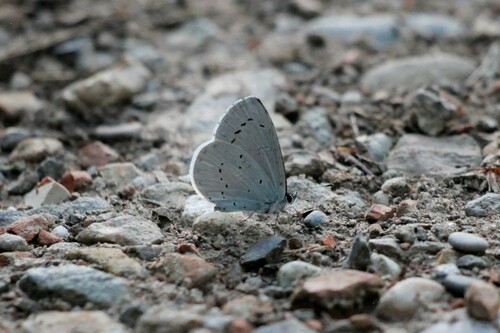
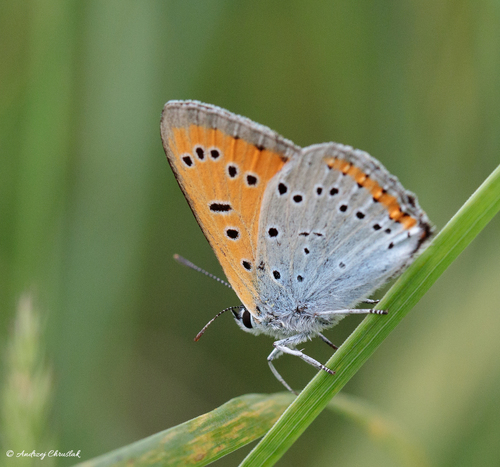
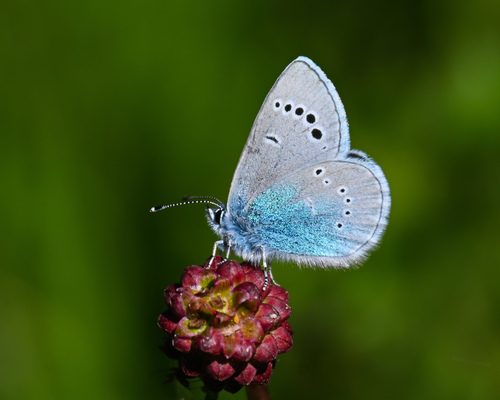
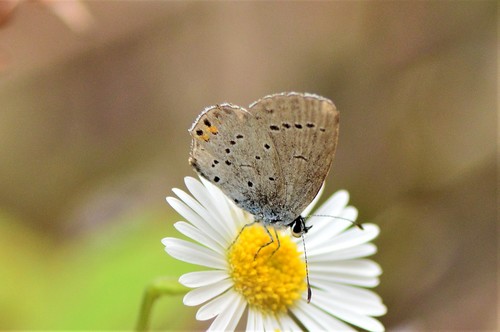
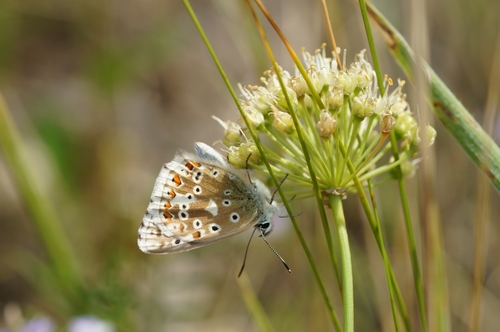
Representatives of both sexes have in the spring generation grey-colored hindwing undersides while (sandy brown in the summer generation). The underside is ochre marked with black dots circled in white and decorated with a sub-marginal line of orange spots. The forewing underside is yellow grey in summer females.

Polyommatus thersites is similar to Polyommatus icarus, but they are smaller and both sexes have no basal spots on the underside of the forewing. The larva feeds on Onobrychis species (O. arenaria, O. peduncularis, O. sativa and O. viciifolia) Wikipedia →

Global Distribution

Parks Where Found

# Park Country Daily sighting probability
1 Vanoise National Park 🇫🇷 France
~10%
2 Cévennes National Park 🇫🇷 France
~10%

Cities Where Found

# City Country Daily sighting probability
1 Prague 🇨🇿 Czechia
<5%
2 Vienna 🇦🇹 Austria
<5%

Before you go

What are the chances of seeing a Chapman's Blue in Vienna?

Rare

Under 5% of wildlife watchers report a Chapman's Blue sighting in Vienna on a given day, based on 5 verified sightings from GBIF citizen-science data. It is the 1286th most-seen of the 1406 insects we can rate there. Over three days the chance rises to about 10%, and over a week to about 20%, if each day is a fresh chance.

When is the best time to see a Chapman's Blue in Vienna?

Any time of year

In every month with enough records, under 5% of wildlife watchers report a Chapman's Blue in Vienna on a given day, so our monthly data shows no clear season.

What time of day is best to see a Chapman's Blue?

Between 10 am and 1 pm

Across all the parks we cover, that three-hour window holds the most Chapman's Blue sightings with a recorded time, and about 9 in 10 of them come between 6 am and 6 pm: it is a daytime animal.

Is Vienna the best place to see a Chapman's Blue?

Among the best

Of the 2 cities where we can rate Chapman's Blue sightings, Vienna ranks 2nd at under 5%, level with the leaders once rounded. The best odds are in Prague (Czechia, under 5%).

Where does the Chapman's Blue sighting chance come from?

GBIF citizen-science records

It is estimated from how often the Chapman's Blue is recorded against all the insects logged in Vienna (5 verified sightings), calibrated against known sighting rates. Figures are rounded to the nearest 10% because citizen-science data supports honest approximations, not decimals, and months with records from fewer than five people show "—". How it works.

← Back to Vienna