About the Potter Spider Wasp
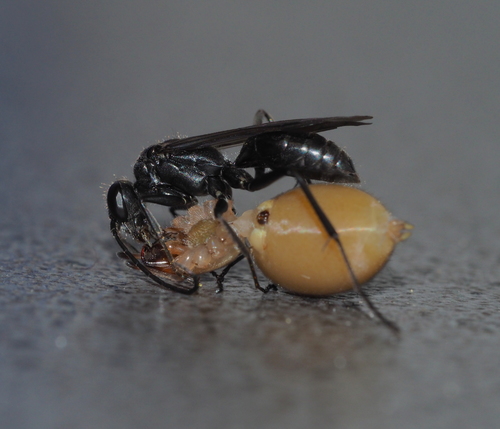
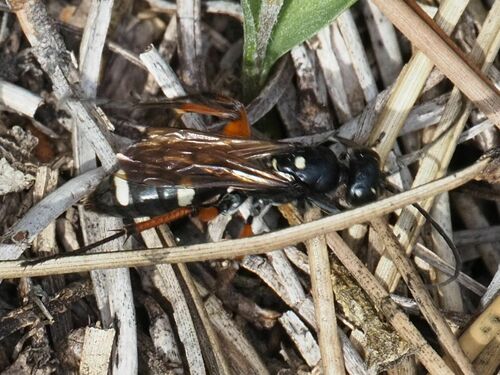
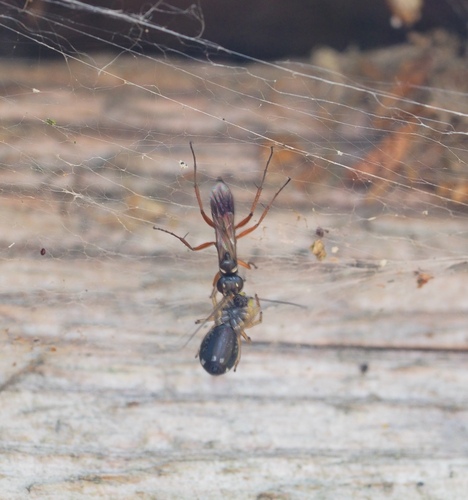
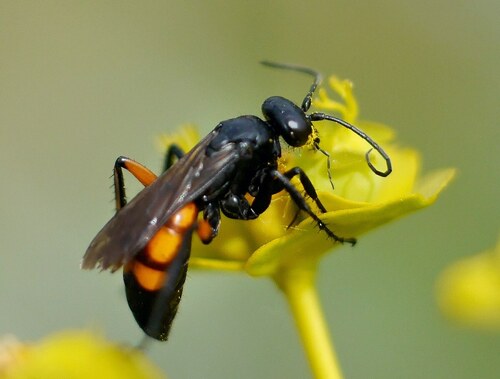
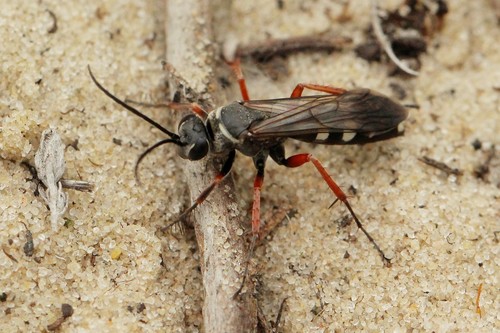
Auplopus carbonarius is a spider wasp of the family Pompilidae. Uniquely among the British group it constructs a nest of barrel-shaped cells in which spiders are stored and the larvae develop. The British common name is sometimes given as the potter spider wasp or the yellow-faced spider wasp.
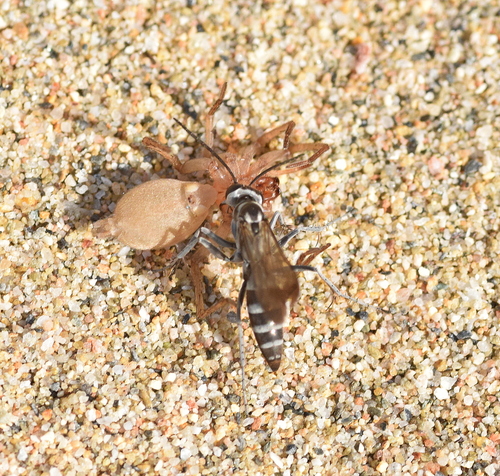
Approximately 10 millimetres (0.39 in) (male 8 mm or 0.31 in) in length, the male is distinguished by the ivory-coloured maculae alongside the eyes. The flight period in Great Britain is June to August, during which the females construct a nest of barrel-shaped cells in which spiders are stored and the larvae develop. There can be as many as ten cells in a nest and the prey often has its legs amputated to make it easier to carry either by flight or more often by crawling along the ground.
The nesting behaviour is quite complex compared to most other spider wasps and shows the behavioural versatility of the female wasp. The nests are constructed in pre-existing holes in various situations, with reports citing nests beneath stones, in masonry, in tree stumps (often in old beetle burrows), under bark and in crevices of tree trunks, in empty galls of cynipid wasps... Wikipedia →