About the Black-Banded Spider Wasp
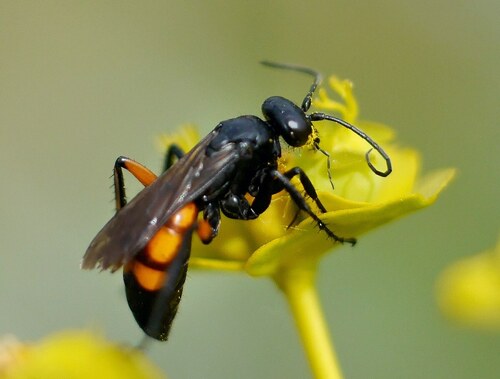
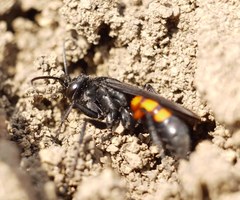
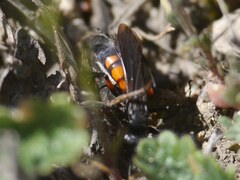
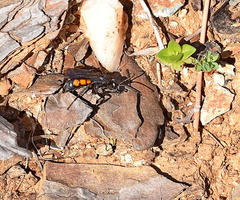
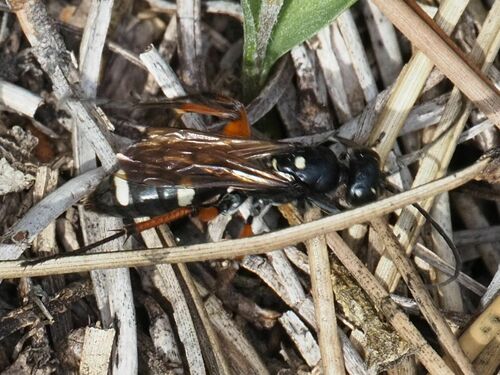
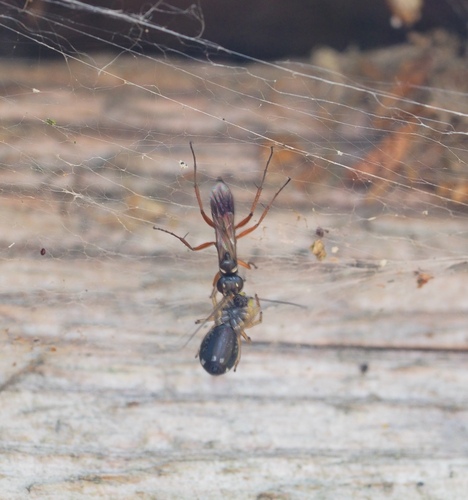
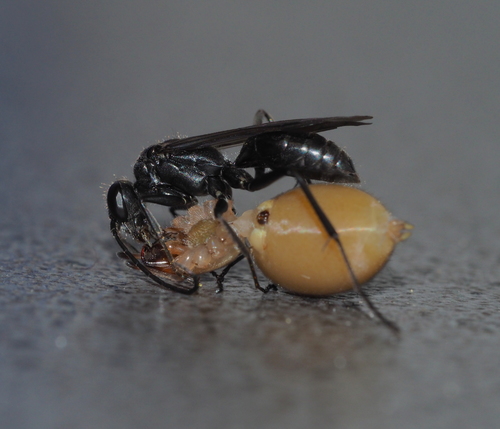
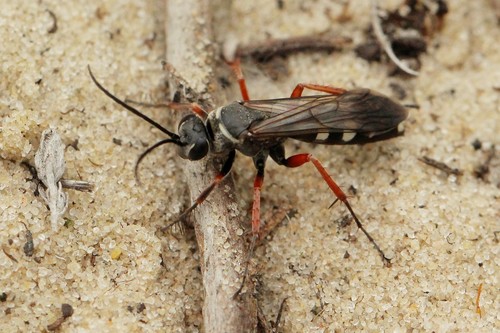
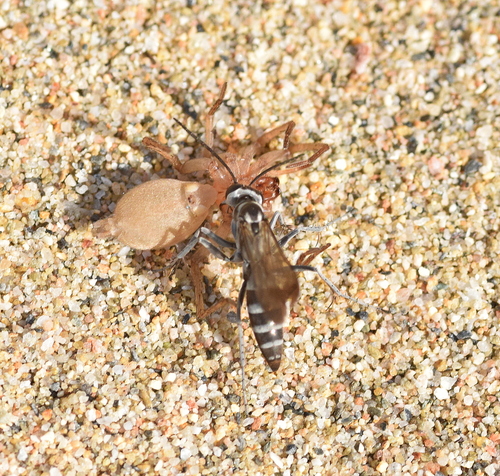
Anoplius viaticus, commonly known as the black-banded spider wasp, is a species of spider wasp. These wasps are known as spider wasps because the females capture spiders to provide their offspring with food. The paralysed spider is cached in a burrow, the wasp lays an egg on it, and when this hatches, the developing wasp larva consumes the spider. This species is found in sandy heathland across most of Europe, and also the mountainous parts of eastern Africa and the temperate parts of South Africa.
A. viaticus is a large species of spider-hunting wasp and measures about 14 millimetres (0.55 in) in length. The head and thorax are black and the propodeum is fused to the thorax and bears erect black hairs. The first three tergites of the abdomen are red with black rear margins and the remainder of the abdomen is black. In Africa, the species is quite variable and Arnold described a number of varieties; in particular, the extent of the red colours on the abdomen varies, with the first two or three tergites of some specimens being entirely red or orange.
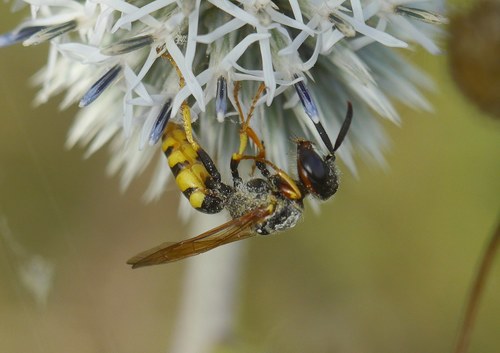
Adult A. viaticus feed on nectar from flowers. Wasps in this species predominantly prey on spiders from the... Wikipedia →