Red-Tailed Mason Bee
Daily sighting probability ~10% · With luck
at Warsaw

In 3 days ~20% in a week ~50%

40 Verified sightings at Warsaw
April Best month

About the Red-Tailed Mason Bee

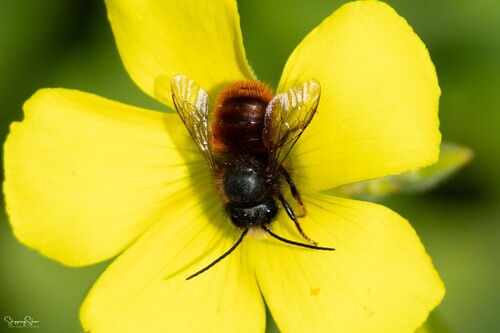
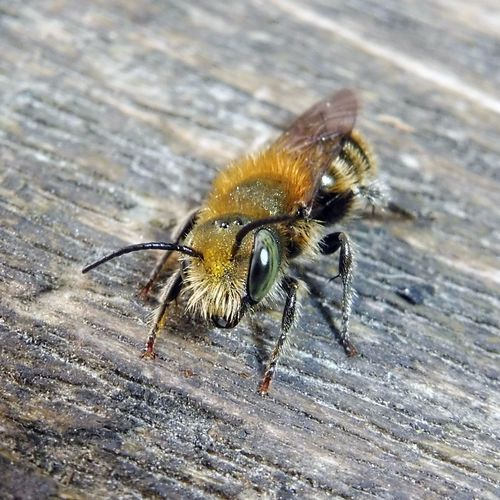
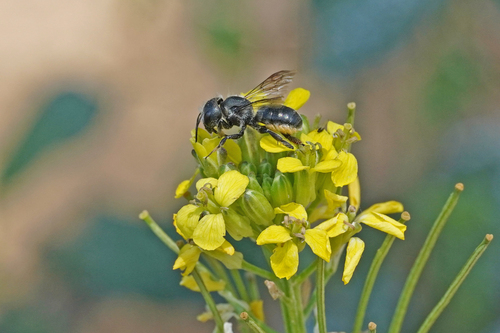
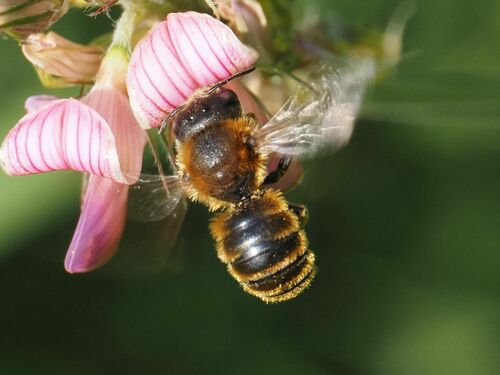
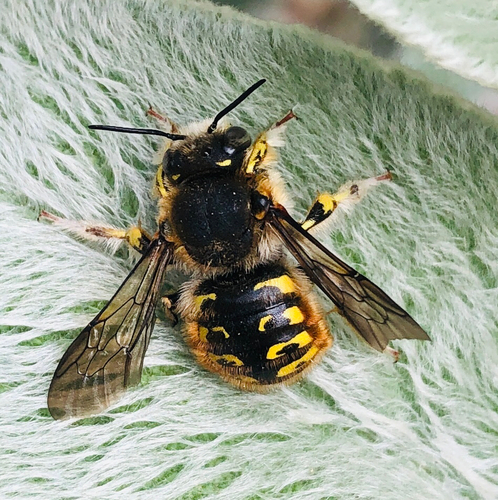
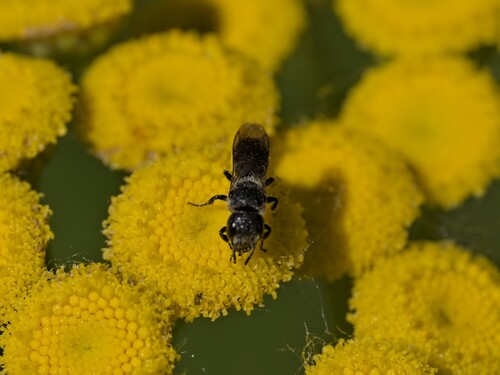
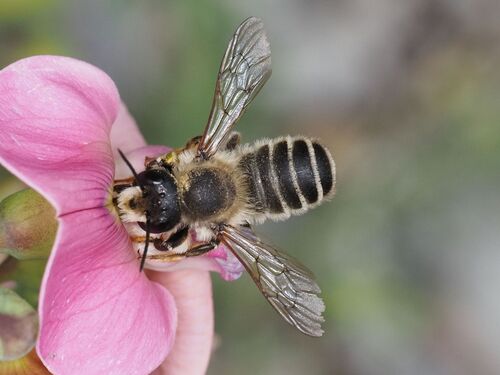
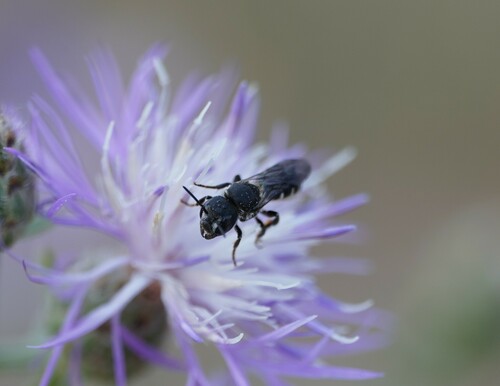
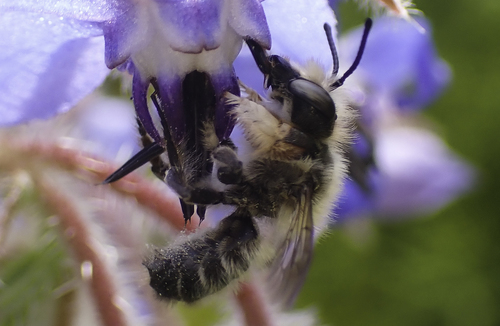
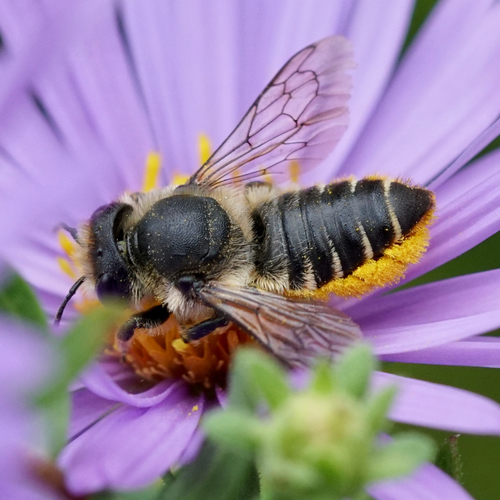
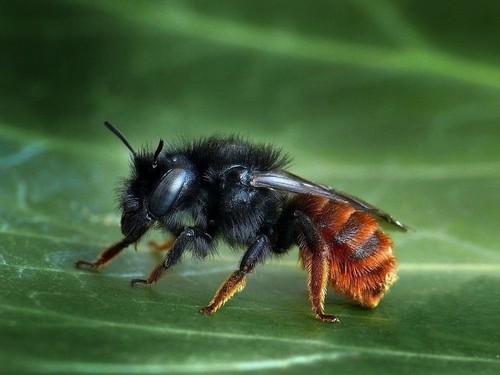
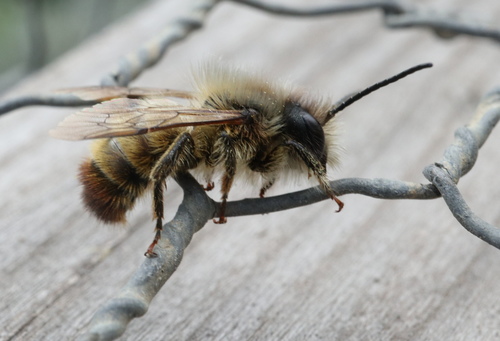
Osmia bicolor, the two-coloured mason-bee, is a Palearctic species of bee in the genus Osmia. It is outstanding amongst other megachilid bees in that it nests in empty snail shells. Osmia bicolor females are small bees, 12 mm in length, with a black head and thorax and an abdomen covered in bright ginger hair. In the males the ginger colour of the abdomen is less intense.

Osmia bicolor is found in Europe and western Asia from southern Great Britain in the west east to Turkestan, it is found as far north as southern Scandinavia and Finland, and south as far as Spain and Romania. It occurs in grasslands and open deciduous woodland over calcareous soils underlain by rocks such as limestone and chalk.

Osmia bicolor is univoltine in western Europe and is among the first bees to emerge in the spring, males can be seen as early as February, although the normal flight period is from April to July. The females emerge a few weeks after the males and are quickly mated. Compared to females the males have a very short life. Once mated the female O. bicolor seeks out the empty shells of snails, In Britain it has been recorded using the... Wikipedia →
Global Distribution

Parks Where Found

# Park Country Daily sighting probability

More parks will be added in future updates.

Cities Where Found

# City Country Daily sighting probability
1 Warsaw 🇵🇱 Poland
~10%
2 Prague 🇨🇿 Czechia
<5%
3 Vienna 🇦🇹 Austria
<5%

Before you go

What are the chances of seeing a Red-Tailed Mason Bee in Warsaw?

With luck

About 10% of wildlife watchers report a Red-Tailed Mason Bee sighting in Warsaw on a given day, based on 40 verified sightings from GBIF citizen-science data. It is the 143rd most-seen of the 580 insects we can rate there. Over three days the chance rises to about 20%, and over a week to about 50%, if each day is a fresh chance.

When is the best time to see a Red-Tailed Mason Bee in Warsaw?

April and May

In those months about 20% of wildlife watchers report a Red-Tailed Mason Bee in Warsaw on a given day, against under 5% in July to February, the lowest months.

Is Warsaw the best place to see a Red-Tailed Mason Bee?

Yes

Of the 3 cities where we can rate Red-Tailed Mason Bee sightings, Warsaw has the highest daily chance: about 10%. Next come Prague (Czechia, under 5%) and Vienna (Austria, under 5%).

Which relatives of the Red-Tailed Mason Bee live in Warsaw?

Same genus: Osmia

The closest relatives of the Red-Tailed Mason Bee that you can see in Warsaw (genus Osmia, Mason Bees) are Red Mason Bee (about 20%), European Orchard Bee (about 10%) and Blue Mason Bee (about 10%), with each one's daily chance of a sighting.

Where does the Red-Tailed Mason Bee sighting chance come from?

GBIF citizen-science records

It is estimated from how often the Red-Tailed Mason Bee is recorded against all the insects logged in Warsaw (40 verified sightings), calibrated against known sighting rates. Figures are rounded to the nearest 10% because citizen-science data supports honest approximations, not decimals, and months with records from fewer than five people show "—". How it works.

← Back to Warsaw