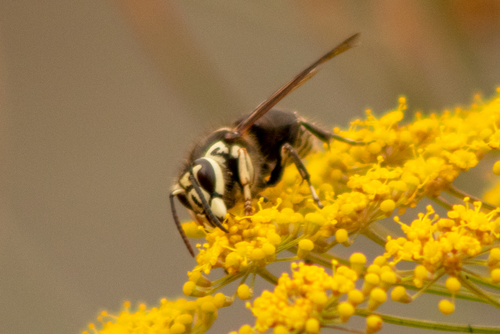
Butternut Woollyworm Sawfly

Butternut Woollyworm Sawfly

Eriocampa juglandis

Daily sighting probability <5% · Rare
at Washington

In 3 days ~10% in a week ~20%

14 Verified sightings at Washington
7 In 1 park From 2019 to 2026
August Best month
☀️ Diurnal When it's spotted

About the Butternut Woollyworm Sawfly

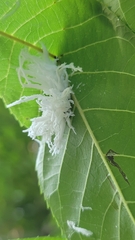
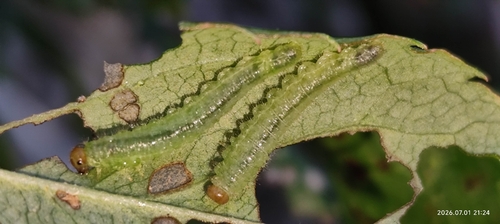
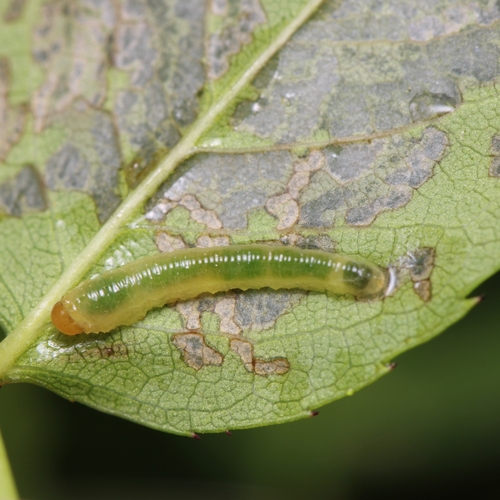
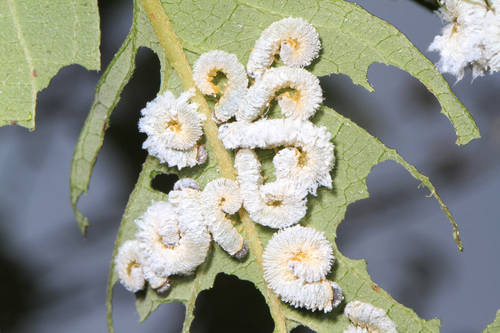
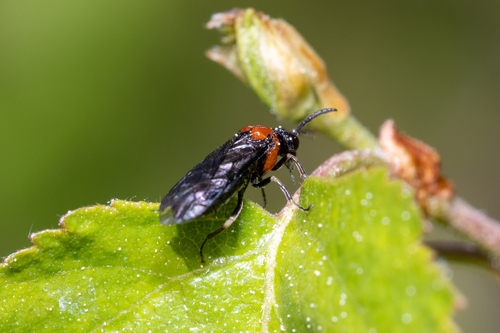
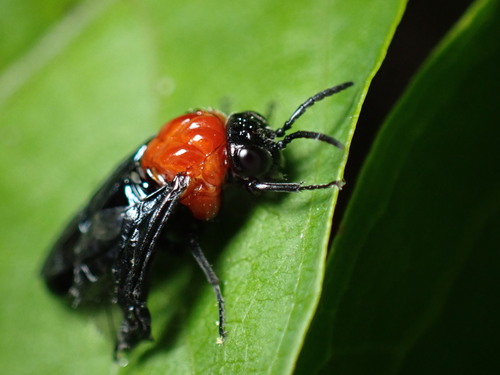
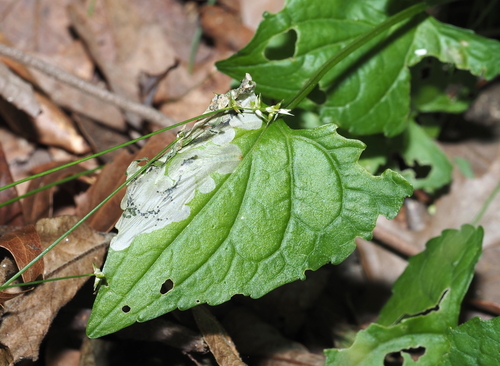
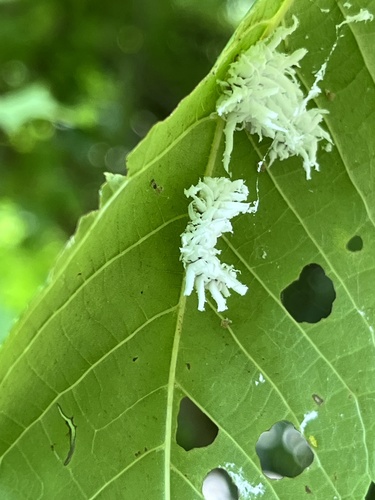
Eriocampa juglandis, the butternut woollyworm, is a species of sawfly that lives and feeds on butternuts, black walnuts and hickory. It is in the Hymenoptera order, that of ants, wasps, and bees. The larvae will grow to 0.87 inches (22 mm) long and the adult sawfly is 0.47 in (12 mm). The young of this species is covered in white wool which is believed to protect it from predators. Though the larva resembles a caterpillar, sawfly larvae have a pair of legs for every body segment, while caterpillars have a gap between some legs. Sawflies often curl up when disturbed.

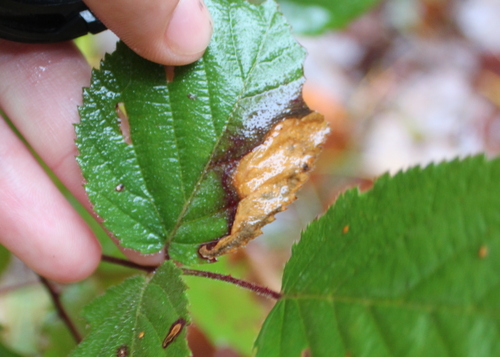
The adult is a flying insect with a saw-toothed ovipositor, giving the genus its common name. Females saw into the mid-rib of leaflets and deposit 20 to 30 eggs, one at a time, which eventually causes the leaflet to droop or fold and the midrib to turn pale. While small larvae chew random holes in leaves, larger ones may finish them off entirely, leaving bits of the larger veins behind. Once fully grown larvae pupate in the soil throughout the winter until spring when they reemerge as adults and mate.

The range of this insect follows the historical range of the butternut... Wikipedia →
Global Distribution

Parks Where Found

# Park Country Daily sighting probability
1 Great Smoky Mountains National Park 🇺🇸 United States
<5%

More parks will be added in future updates.

Cities Where Found

# City Country Daily sighting probability
1 Washington 🇺🇸 United States
<5%

Before you go

What are the chances of seeing a Butternut Woollyworm Sawfly in Washington?

Rare

Under 5% of wildlife watchers report a Butternut Woollyworm Sawfly sighting in Washington on a given day, based on 14 verified sightings from GBIF citizen-science data. It is the 990th most-seen of the 1807 insects we can rate there. Over three days the chance rises to about 10%, and over a week to about 20%, if each day is a fresh chance.

When is the best time to see a Butternut Woollyworm Sawfly in Washington?

Any time of year

In every month with enough records, under 5% of wildlife watchers report a Butternut Woollyworm Sawfly in Washington on a given day, so our monthly data shows no clear season.

What time of day is best to see a Butternut Woollyworm Sawfly?

Between 10 am and 1 pm

Across all the parks we cover, that three-hour window holds the most Butternut Woollyworm Sawfly sightings with a recorded time, and about 9 in 10 of them come between 6 am and 6 pm: it is a daytime animal.

Where else can you see a Butternut Woollyworm Sawfly?

Only Washington, in our data

Washington is the only city on Wallace's Line with enough records to rate Butternut Woollyworm Sawfly sightings: under 5% of wildlife watchers there report one on a given day.

Where does the Butternut Woollyworm Sawfly sighting chance come from?

GBIF citizen-science records

It is estimated from how often the Butternut Woollyworm Sawfly is recorded against all the insects logged in Washington (14 verified sightings), calibrated against known sighting rates. Figures are rounded to the nearest 10% because citizen-science data supports honest approximations, not decimals, and months with records from fewer than five people show "—". How it works.

← Back to Washington