About the Illustrious Greenbottle Fly
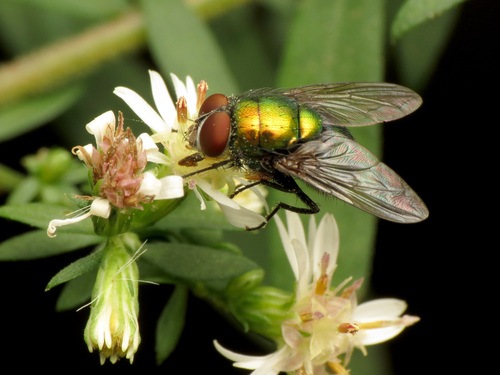
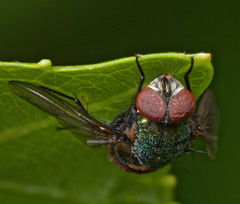
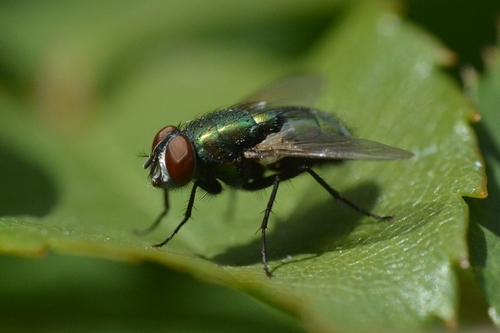
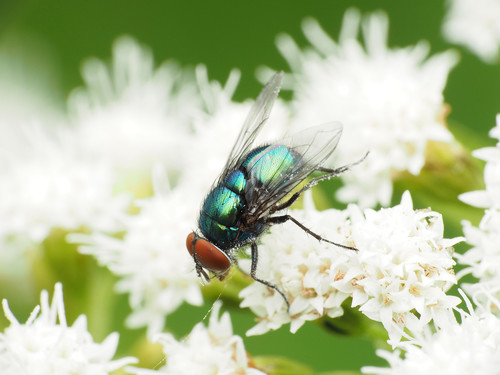
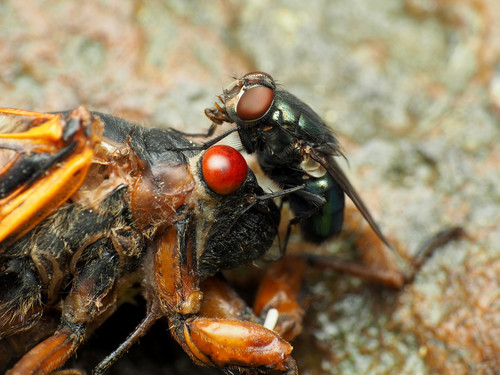
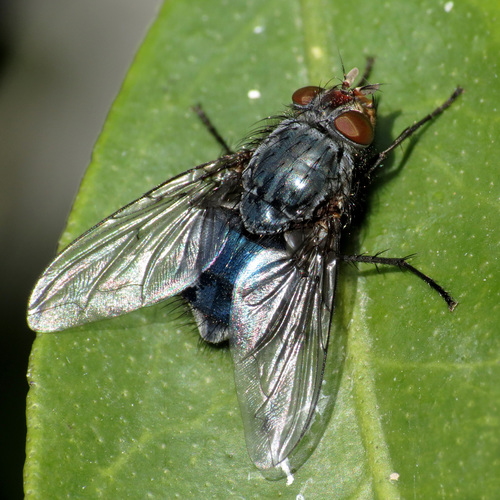
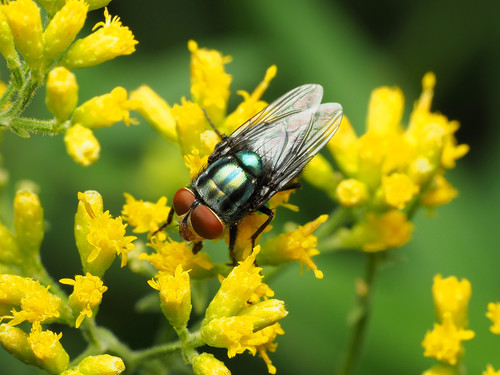
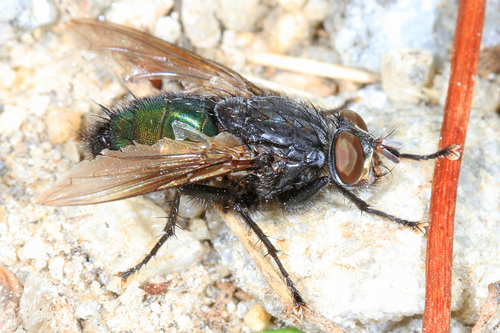
Lucilia illustris is a member of the fly family Calliphoridae, commonly known as a blow fly. Along with several other species, L. illustris is commonly referred to as a green bottle fly. Lucilia illustris is typically 6–9 mm in length and has a metallic blue-green thorax. The larvae develop in three instars, each with unique developmental properties. The adult fly typically will feed on flowers, but the females need some sort of carrion protein in order to breed and lay eggs.
Due to the predictable nature of development, L. illustris is often used by forensic entomologists to determine time and place of death. Medically, L. illustris is often used for maggot debridement therapy because it only causes myiasis in necrotic tissue. Lucilia illustris was first described by the German entomologist Johann Wilhelm Meigen in 1826. Its specific epithet is derived from the Latin word "illustris", meaning "brilliant".
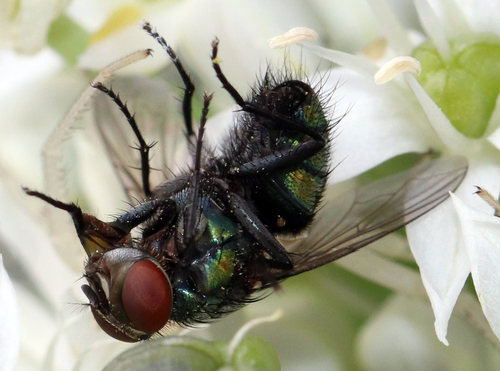
Lucilia illustris is 6–9 mm in length. Its bucca (cheeks) are colored black with slightly gray pollinose and black hairs. The first segment of the antenna is black; the second generally orange-tipped, and the third segment is about three times the length of the second... Wikipedia →