Schlegel's Japanese Gecko

Schlegel's Japanese Gecko

Gekko japonicus

Silhouette: Steven Traver · PhyloPic

LCLeast ConcernNTVUENCR
Daily sighting probability ~20% · Possible
at Wuhan

In 3 days ~60% in a week ~80%

12 Verified sightings at Wuhan
April Best month
☀️🌙 Day & Night When it's spotted

About the Schlegel's Japanese Gecko

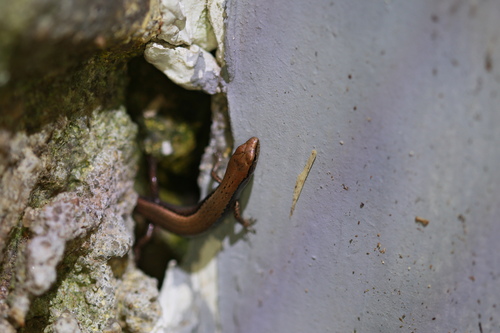
Schlegel's Japanese gecko (Gekko japonicus), also known as yamori in Japanese, is a species of gecko. G. japonicus was classified by Hermann Schlegel in 1836. The specific epithet, japonicus, is Modern Latin for Japan. Gekko japonicus occurs across the main islands of Japan, ranging from northern Honshu in the north and east to Kyushu in the south and west. It can also be found in eastern China and in South Korea.

Like other species of gecko, individuals of G. japonicus primarily eat insects. The species is capable of autotomy, and will separate its tail from its body to escape predators. While this process avoids bleeding, as blood vessels at the base of the tail close to prevent blood loss, the gecko does lose a supply of fat tissue, which it can use during periods where food is scarce.

In Japanese culture, seeing a gecko on one's home is associated with good luck. The animal's name, yamori, translates to home-protector. Wikipedia →
Global Distribution

Parks Where Found

# Park Country Daily sighting probability

More parks will be added in future updates.

Cities Where Found

# City Country Daily sighting probability
1 Nagoya 🇯🇵 Japan
~40%
2 Hefei 🇨🇳 China
~30%
3 Osaka 🇯🇵 Japan
~30%
4 Busan 🇰🇷 South Korea
~30%
5 Wuhan 🇨🇳 China
~20%
6 Tokyo 🇯🇵 Japan
~20%
7 Nanjing 🇨🇳 China
~20%
8 Fukuoka 🇯🇵 Japan
~20%
9 Hangzhou 🇨🇳 China
~10%
10 Shanghai 🇨🇳 China
~10%

Zoos & Centres Where Found

# Zoo / Centre Country
1 Ueno Zoological Gardens (West Garden) 🇯🇵 Japan In captivity
2 Port Moresby Nature Park 🇵🇬 Papua New Guinea In captivity

Before you go

What are the chances of seeing a Schlegel's Japanese Gecko in Wuhan?

Possible

About 20% of wildlife watchers report a Schlegel's Japanese Gecko sighting in Wuhan on a given day, based on 12 verified sightings from GBIF citizen-science data. Over three days the chance rises to about 60%, and over a week to about 80%, if each day is a fresh chance.

When is the best time to see a Schlegel's Japanese Gecko in Wuhan?

January, April–May and August–November

In those months about 30% of wildlife watchers report a Schlegel's Japanese Gecko in Wuhan on a given day, against under 5% in February–March, July and December, the lowest months.

What time of day is best to see a Schlegel's Japanese Gecko?

Between 8 and 11 pm

Across all the parks we cover, that three-hour window holds the most Schlegel's Japanese Gecko sightings with a recorded time, and about 7 in 10 of them come between 6 pm and 6 am: it is seen both by day and at night.

Is Wuhan the best place to see a Schlegel's Japanese Gecko?

5th of 10

Of the 10 cities where we can rate Schlegel's Japanese Gecko sightings, Wuhan ranks 5th at about 20%. The best odds are in Nagoya (Japan, about 40%), Hefei (China, about 30%) and Osaka (Japan, about 30%).

Where does the Schlegel's Japanese Gecko sighting chance come from?

GBIF citizen-science records

It is estimated from how often the Schlegel's Japanese Gecko is recorded against all the reptiles logged in Wuhan (12 verified sightings), calibrated against known sighting rates. Figures are rounded to the nearest 10% because citizen-science data supports honest approximations, not decimals, and months with records from fewer than five people show "—". How it works.

← Back to Wuhan