
Spotted Locust

Spotted Locust

Aularches miliaris

Daily sighting probability ~10% · With luck
at Yogyakarta

In 3 days ~30% in a week ~60%

5 Verified sightings at Yogyakarta
February Best month
☀️ Diurnal When it's spotted

About the Spotted Locust

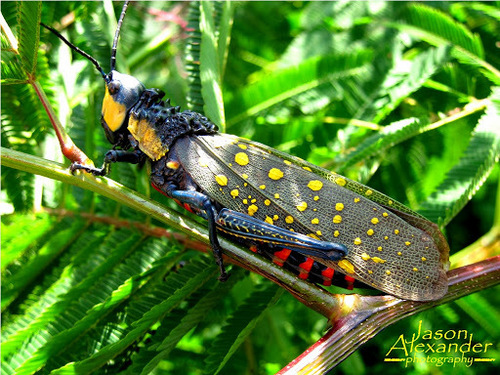
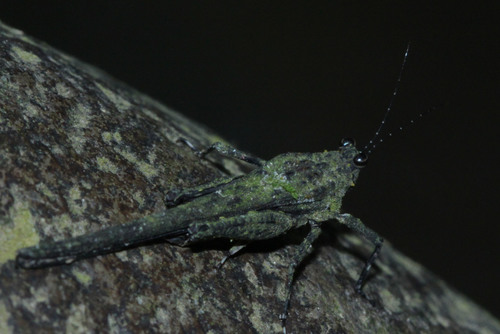
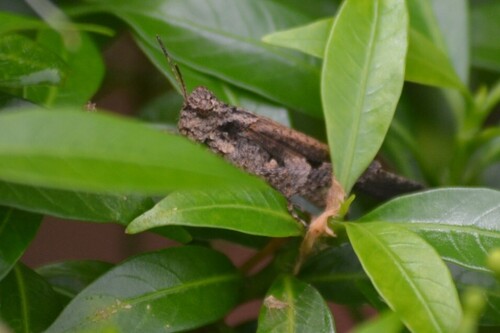
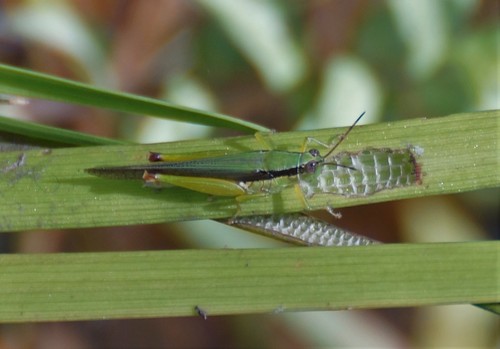
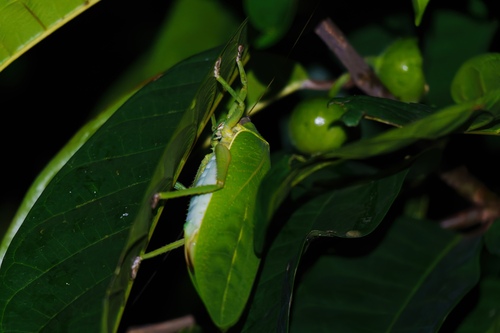
Aularches miliaris is a grasshopper species of the monotypic genus Aularches, belonging to the family Pyrgomorphidae. A native of South and Southeast Asia, the bright warning colours of this fairly large grasshopper keep away predators and their defense when disturbed includes the ejection of a toxic foam.

The insect has been called by a variety of names including coffee locust, ghost grasshopper, northern spotted grasshopper, and foam grasshopper, and enjoys some popularity as a pet insect. Adult males are typically 3.7–5.5 cm (1.5–2.2 in) long and females typically 4.7–6.9 cm (1.9–2.7 in). The head and thorax are dark green with a canary-yellow band on the side. The tegmina are green with many yellow spots; the legs are blue, with a yellow serrated pattern on the hind femora. The abdomen is black with bright red bands.

It is heavy and sluggish, able to make only short leaps, very visible on... Wikipedia →

Global Distribution

Parks Where Found

# Park Country Daily sighting probability

More parks will be added in future updates.

Cities Where Found

# City Country Daily sighting probability
1 Yogyakarta 🇮🇩 Indonesia
~10%

Before you go

What are the chances of seeing a Spotted Locust in Yogyakarta?

With luck

About 10% of wildlife watchers report a Spotted Locust sighting in Yogyakarta on a given day, based on 5 verified sightings from GBIF citizen-science data. It is the 122nd most-seen of the 141 insects we can rate there. Over three days the chance rises to about 30%, and over a week to about 60%, if each day is a fresh chance.

When is the best time to see a Spotted Locust in Yogyakarta?

January and February

In those months about 30% of wildlife watchers report a Spotted Locust in Yogyakarta on a given day, against under 5% in March–April and June–December, the lowest months. Those are among Yogyakarta's wettest months, with about 340 mm of rain a month against 30 mm in August.

What time of day is best to see a Spotted Locust?

Between 9 am and noon

Across all the parks we cover, that three-hour window holds the most Spotted Locust sightings with a recorded time, and about 9 in 10 of them come between 6 am and 6 pm: it is a daytime animal.

Where else can you see a Spotted Locust?

Only Yogyakarta, in our data

Yogyakarta is the only city on Wallace's Line with enough records to rate Spotted Locust sightings: about 10% of wildlife watchers there report one on a given day.

Where does the Spotted Locust sighting chance come from?

GBIF citizen-science records

It is estimated from how often the Spotted Locust is recorded against all the insects logged in Yogyakarta (5 verified sightings), calibrated against known sighting rates. Figures are rounded to the nearest 10% because citizen-science data supports honest approximations, not decimals, and months with records from fewer than five people show "—". How it works.

← Back to Yogyakarta