Fawn Darner

Fawn Darner

Boyeria vinosa

Daily sighting probability ~10% · With luck
at Congaree National Park

In 3 days ~30% in a week ~50%

7 Verified sightings at Congaree National Park From 2019 to 2026
7 In 1 park
September Best month
☀️ Diurnal When it's spotted

About the Fawn Darner

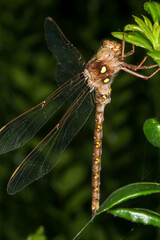
Boyeria vinosa, the fawn darner, is a species of dragonfly in the family Aeshnidae. It is found in south-eastern Canada and eastern USA. Its natural habitat is rivers. They are most active at dusk, and may be common but overlooked in an area due to only being active in low light conditions.

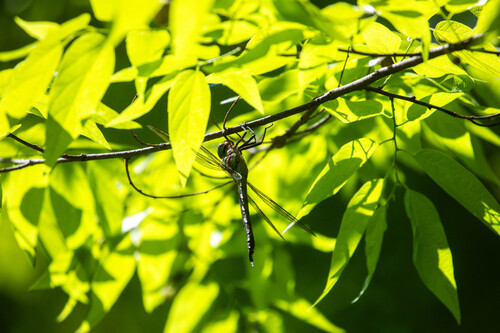
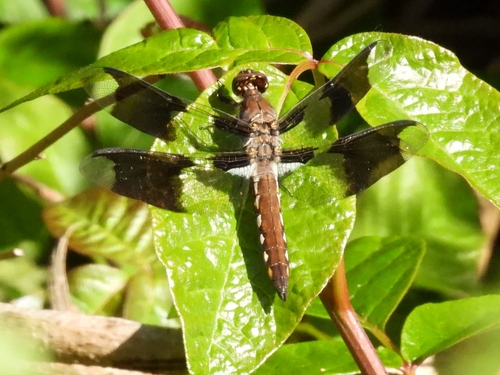
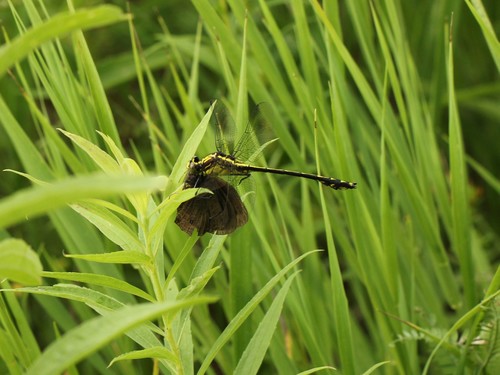
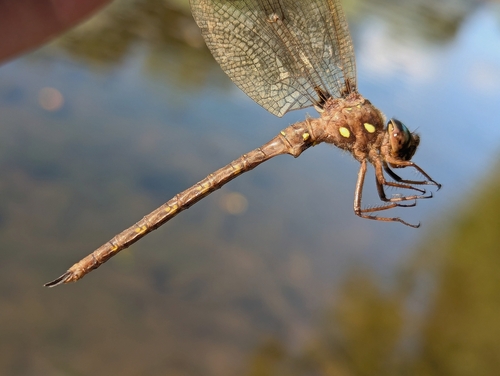
Fawn darner adults are brown and rather featureless except for two bold yellow/white spots on each side of the thorax. The abdomen is brown with faint yellow markings. The wings have small brown patches at their bases and become tinted brown with age. Sexes may be distinguished by eye color (some blue/green in males, all-brown in females), abdomen thickness, and cerci length.

The genus name Boyeria refers to the French entomologist E. L. J. H. Boyer de Fonscolombe. The specific epithet vinosa means "full of wine", which may refer to either the coloration or its sometime irregular flight. The common name "fawn darner" refers to the adult being brown with pale spots like a deer fawn, and being a member of the darner family Aeshnidae.

Fawn darners cruise or patrol clearings or over water to forage and look for mates, often in late afternoon or early... Wikipedia →
Global Distribution

Parks Where Found

# Park Country Daily sighting probability
1 Congaree National Park 🇺🇸 United States
~10%

More parks will be added in future updates.

Cities Where Found

# City Country Daily sighting probability
1 Toronto 🇨🇦 Canada
<5%

Before you go

What are the chances of seeing a Fawn Darner in Congaree National Park?

With luck

About 10% of wildlife watchers report a Fawn Darner sighting in Congaree National Park on a given day, based on 7 verified sightings from GBIF citizen-science data from 2019 to 2026. It is the 99th most-seen of the 145 insects we can rate there. Over three days the chance rises to about 30%, and over a week to about 50%, if each day is a fresh chance.

When is the best time to see a Fawn Darner in Congaree National Park?

September

In that month about 30% of wildlife watchers report a Fawn Darner in Congaree National Park on a given day, against under 5% in June–July and October–April, the lowest months.

What time of day is best to see a Fawn Darner?

Between 10 am and 1 pm

Across all the parks we cover, that three-hour window holds the most Fawn Darner sightings with a recorded time, and nearly all of them come between 6 am and 6 pm: it is a daytime animal.

Where else can you see a Fawn Darner?

Only Congaree National Park, in our data

Congaree National Park is the only park on Wallace's Line with enough records to rate Fawn Darner sightings: about 10% of wildlife watchers there report one on a given day.

Where does the Fawn Darner sighting chance come from?

GBIF citizen-science records

It is estimated from how often the Fawn Darner is recorded against all the insects logged in Congaree National Park (7 verified sightings from 2019 to 2026), calibrated against known sighting rates. Figures are rounded to the nearest 10% because citizen-science data supports honest approximations, not decimals, and months with records from fewer than five people show "—". How it works.

← Back to Congaree National Park