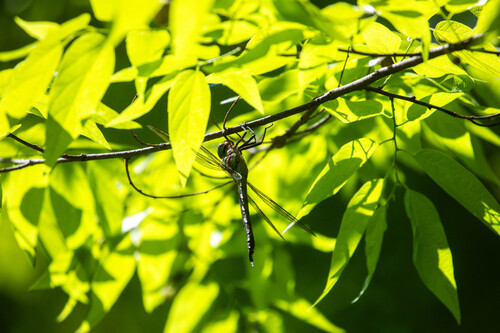
Blue Dasher

Blue Dasher

Pachydiplax longipennis

Daily sighting probability ~20% · Possible
at Congaree National Park

In 3 days ~50% in a week ~80%

23 Verified sightings at Congaree National Park From 2019 to 2026
785 In all 14 parks
June Best month
☀️ Diurnal When it's spotted

About the Blue Dasher

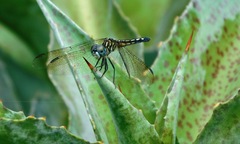
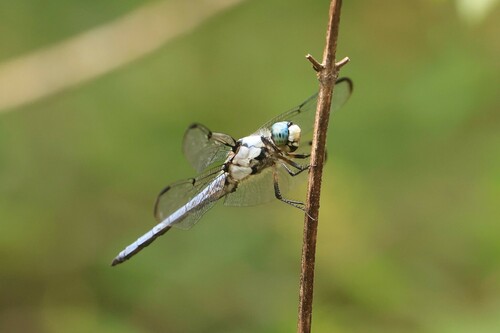
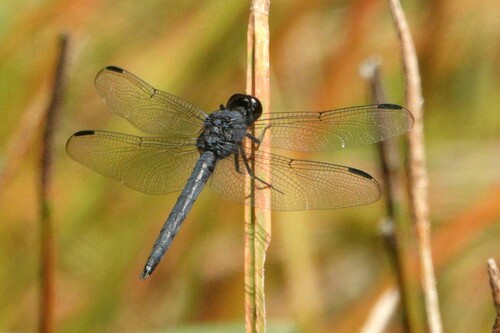
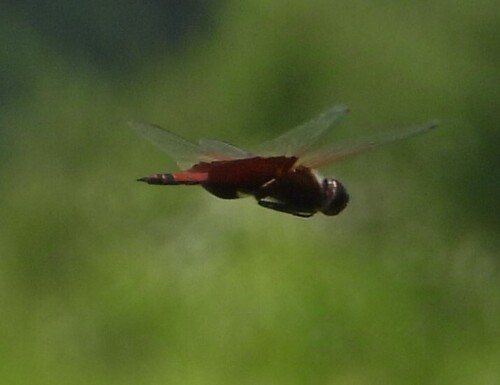
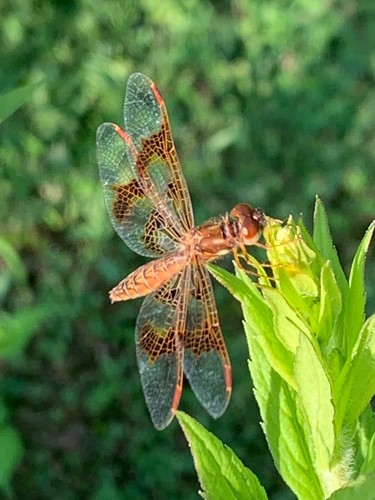
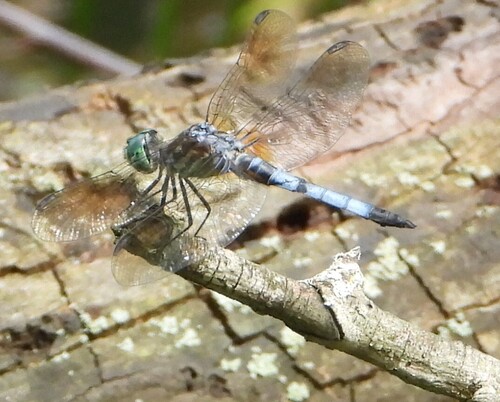
The blue dasher (Pachydiplax longipennis) is an insect of the skimmer family. It is the only species in the genus Pachydiplax. It is widely distributed throughout North America and into the Bahamas. Although the species name longipennis means "long wings", their wings are not substantially longer than those of related species. Females do, however, have a short abdomen that makes the wings appear longer in comparison. The blue dasher grows up to 25–43 millimeters (1.0–1.7 in) long.

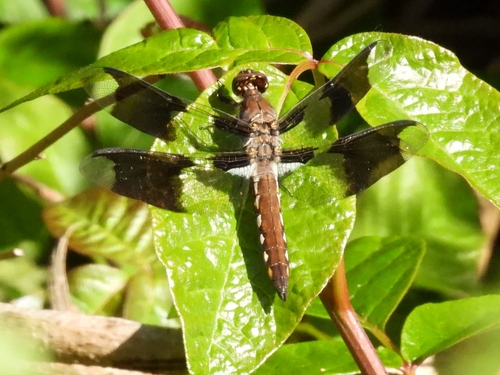
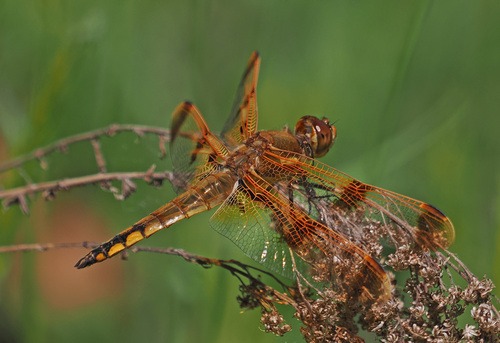
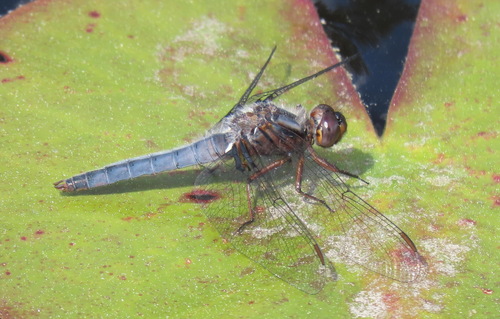
The males are easy to recognize with their vibrant blue color, yellow-striped thorax, and metallic green eyes. Females are somewhat less colorful than the male, an example of sexual dimorphism. While they have a matching yellow-striped thorax, their abdomen has a distinct brown and yellow striping that sets them apart from the male, along with contrasting red eyes. Both sexes develop a frosted color with age.

Pachydiplax longipennis exhibits aggression while finding mates and foraging, and they are not under any conservation threats. Pachydiplax longipennis is a commonly spotted dragonfly species in the United States, and this species is found in many types of habitats. These... Wikipedia →
Global Distribution

Parks Where Found

# Park Country Daily sighting probability
1 Big Cypress National Preserve 🇺🇸 United States
~40%
2 Everglades National Park 🇺🇸 United States
~30%
3 Point Pelee National Park 🇨🇦 Canada
~30%
4 Merritt Island National Wildlife Refuge 🇺🇸 United States
~20%
5 Congaree National Park 🇺🇸 United States
~20%
6 Big Bend National Park 🇺🇸 United States
~10%
7 Padre Island National Seashore 🇺🇸 United States
~10%
8 Shenandoah National Park 🇺🇸 United States
~10%
9 Death Valley National Park 🇺🇸 United States
~10%
10 Acadia National Park 🇺🇸 United States
~10%
11 Redwood National Park 🇺🇸 United States
~10%
12 Great Smoky Mountains National Park 🇺🇸 United States
<5%
13 Saguaro National Park 🇺🇸 United States
<5%
14 Yosemite National Park 🇺🇸 United States
<5%

Cities Where Found

# City Country Daily sighting probability
1 Houston 🇺🇸 United States
~30%
2 Austin 🇺🇸 United States
~20%
3 Boston 🇺🇸 United States
~20%
4 Dallas 🇺🇸 United States
~20%
5 Miami 🇺🇸 United States
~20%
6 Washington 🇺🇸 United States
~20%
7 New York City 🇺🇸 United States
~20%
8 Mesa 🇺🇸 United States
~20%
9 Orlando 🇺🇸 United States
~10%
10 Portland 🇺🇸 United States
~10%

Before you go

What are the chances of seeing a Blue Dasher in Congaree National Park?

Possible

About 20% of wildlife watchers report a Blue Dasher sighting in Congaree National Park on a given day, based on 23 verified sightings from GBIF citizen-science data from 2019 to 2026. It is the 47th most-seen of the 145 insects we can rate there. Over three days the chance rises to about 50%, and over a week to about 80%, if each day is a fresh chance.

When is the best time to see a Blue Dasher in Congaree National Park?

June and August

In those months about 40% of wildlife watchers report a Blue Dasher in Congaree National Park on a given day, against under 5% in October to March, the lowest months.

What time of day is best to see a Blue Dasher?

Between 1 and 4 pm

Across all the parks we cover, that three-hour window holds the most Blue Dasher sightings with a recorded time, and about 9 in 10 of them come between 6 am and 6 pm: it is a daytime animal.

Which relatives of the Blue Dasher live in Congaree National Park?

Same family: Libellulidae

The closest relatives of the Blue Dasher that you can see in Congaree National Park (family Libellulidae, Skimmers) are Great Blue Skimmer (about 50%), Common Whitetail (about 20%) and Eastern Pondhawk (about 20%), with each one's daily chance of a sighting.

Where does the Blue Dasher sighting chance come from?

GBIF citizen-science records

It is estimated from how often the Blue Dasher is recorded against all the insects logged in Congaree National Park (23 verified sightings from 2019 to 2026), calibrated against known sighting rates. Figures are rounded to the nearest 10% because citizen-science data supports honest approximations, not decimals, and months with records from fewer than five people show "—". How it works.

← Back to Congaree National Park