
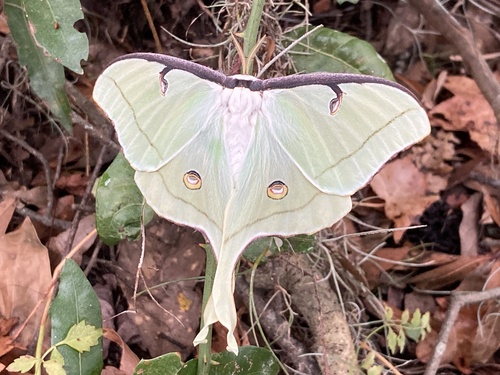
Zebra Swallowtail

Zebra Swallowtail

Protographium marcellus

Daily sighting probability ~40% · Likely
at Congaree National Park

In 3 days ~80% in a week >90%

73 Verified sightings at Congaree National Park From 2019 to 2026
160 In all 3 parks
August Best month
☀️ Diurnal When it's spotted

About the Zebra Swallowtail

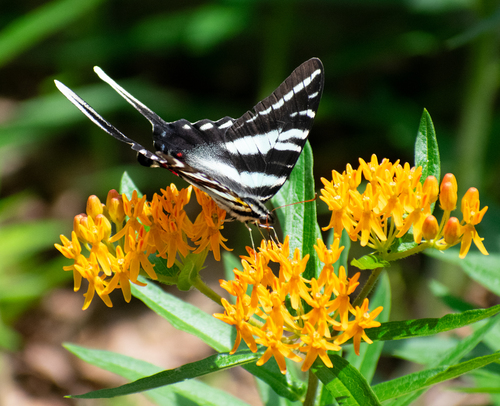
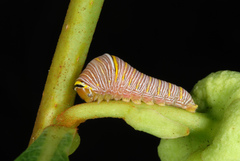
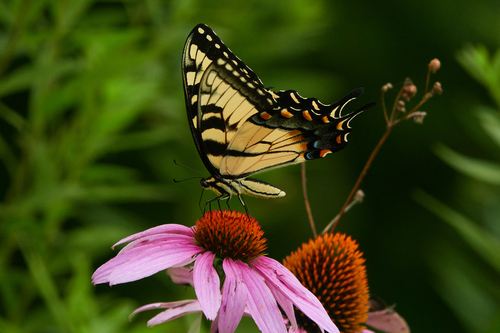
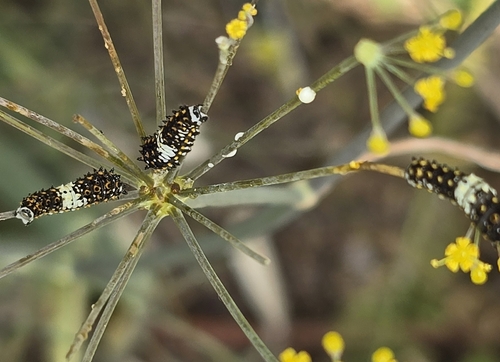
Eurytides marcellus, the zebra swallowtail (formerly listed under genera Protographium, Iphiclides, Graphium and Papilio by some authorities), is a swallowtail butterfly native to the eastern United States and south-eastern Canada. It is the state butterfly of Tennessee. Its distinctive wing shape and long tails make it easy to identify, and its black-and-white-striped pattern is reminiscent of a zebra. The butterflies are closely associated with pawpaws, and are rarely found far from these trees. The green or black caterpillars feed on the leaves of various pawpaw species, while the adults feed on flower nectar and minerals from damp soil.

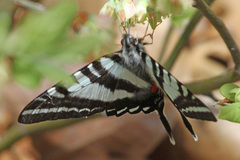
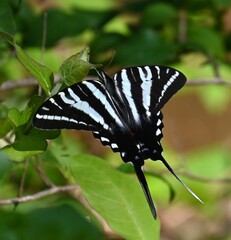
The zebra swallowtail has a wingspan of 6.4 to 10.4 cm (2.5 to 4.1 in). The triangular wings are white to greenish white with black longitudinal stripes. A pair of swordlike tails extend from the hindwings. The inner margin of the hindwing has two blue spots on the corner and a red spot near the body. A red stripe runs along the middle of the ventral hindwing. P. marcellus has two seasonal forms, one occurring in the spring and the other in the summer. Spring forms are smaller, more white, and have short, black tails with white... Wikipedia →

Global Distribution

Parks Where Found

# Park Country Daily sighting probability
1 Congaree National Park 🇺🇸 United States
~40%
2 Shenandoah National Park 🇺🇸 United States
~10%
3 Great Smoky Mountains National Park 🇺🇸 United States
~10%

Cities Where Found

# City Country Daily sighting probability
1 Washington 🇺🇸 United States
~10%
2 Baltimore 🇺🇸 United States
~10%
3 Miami 🇺🇸 United States
<5%

Before you go

What are the chances of seeing a Zebra Swallowtail in Congaree National Park?

Likely

About 40% of wildlife watchers report a Zebra Swallowtail sighting in Congaree National Park on a given day, based on 73 verified sightings from GBIF citizen-science data from 2019 to 2026. It is the 5th most-seen of the 145 insects we can rate there. Over three days the chance rises to about 80%, and over a week to over 90%, if each day is a fresh chance.

When is the best time to see a Zebra Swallowtail in Congaree National Park?

August

In that month about 60% of wildlife watchers report a Zebra Swallowtail in Congaree National Park on a given day, against under 5% in October to January, the lowest months.

What time of day is best to see a Zebra Swallowtail?

Between 11 am and 2 pm

Across all the parks we cover, that three-hour window holds the most Zebra Swallowtail sightings with a recorded time, and about 9 in 10 of them come between 6 am and 6 pm: it is a daytime animal.

Is Congaree National Park the best place to see a Zebra Swallowtail?

Yes

Of the 3 parks where we can rate Zebra Swallowtail sightings, Congaree National Park has the highest daily chance: about 40%. Next come Shenandoah National Park (United States, about 10%) and Great Smoky Mountains National Park (United States, about 10%).

Which relatives of the Zebra Swallowtail live in Congaree National Park?

Same family: Papilionidae

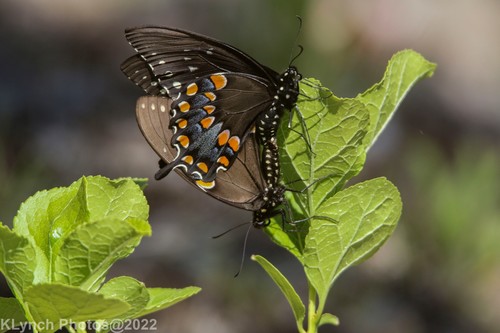
The closest relatives of the Zebra Swallowtail that you can see in Congaree National Park (family Papilionidae, Swallowtails and Parnassians) are Eastern Tiger Swallowtail (about 30%), Palamedes Swallowtail (about 20%) and Spicebush Swallowtail (about 10%), with each one's daily chance of a sighting.

Where does the Zebra Swallowtail sighting chance come from?

GBIF citizen-science records

It is estimated from how often the Zebra Swallowtail is recorded against all the insects logged in Congaree National Park (73 verified sightings from 2019 to 2026), calibrated against known sighting rates. Figures are rounded to the nearest 10% because citizen-science data supports honest approximations, not decimals, and months with records from fewer than five people show "—". How it works.

← Back to Congaree National Park