March's Palm Pit Viper

March's Palm Pit Viper

Bothriechis marchi

Silhouette: Steven Traver · PhyloPic

LCNTVUENEndangeredCR Endemic
Daily sighting probability ~20% · Possible
at Cusuco National Park

In 3 days ~50% in a week ~80%

43 Verified sightings at Cusuco National Park From 2019 to 2026
43 In 1 park
July Best month
☀️🌙 Day & Night When it's spotted

About the March's Palm Pit Viper

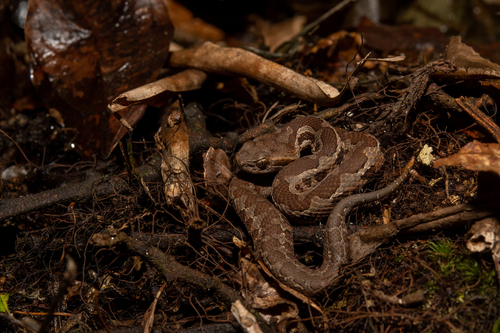
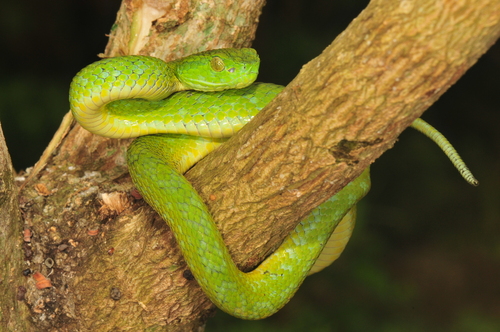
Bothriechis marchi, also known commonly as the Honduran palm pit viper and March's palm pit viper, is a species of pit viper, a venomous snake, in the subfamily Crotalinae of the family Viperidae. The species is native to Central America. There are no subspecies that are recognized as being valid.

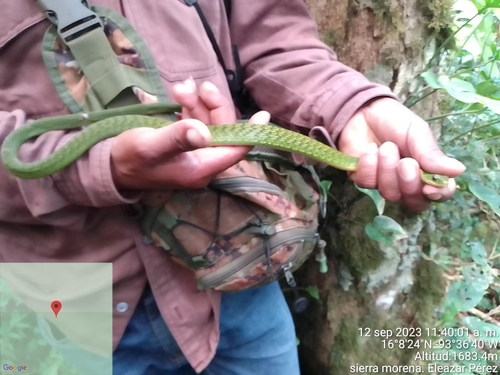
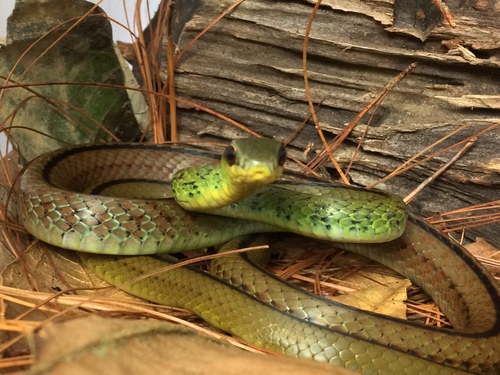
The specific name, marchi, is in honor of herpetologist Douglas H. March, who died from the bite of a fer-de-lance in 1939. Adults of Bothriechis marchi often grow to more than 80 centimetres (31 in) in total length (tail included). The largest specimen on record was 96.8 centimetres (38.1 in). March's palm pit viper is green and relatively slender with a prehensile tail.

Bothriechis marchi is found on the Atlantic versant of northwestern Honduras. Its range might extend into eastern Guatemala. Records from Nicaragua are probably in error. It occurs in mesic forest at elevations of 500–1,500 metres (1,600–4,900 ft) altitude. The type locality given is "the Gold Mines at Quimistan [probably El Oro, Municipio de Quimistán, in the Sierra de Espíritu Santo to the northwest of the town of Quimistán], [Departamento de] Santa Barbara, Honduras... Wikipedia →
Global Distribution

Parks Where Found

# Park Country Daily sighting probability
1 Cusuco National Park 🇭🇳 Honduras
~20%

More parks will be added in future updates.

Before you go

What are the chances of seeing a March's Palm Pit Viper in Cusuco National Park?

Possible

About 20% of wildlife watchers report a March's Palm Pit Viper sighting in Cusuco National Park on a given day, based on 43 verified sightings from GBIF citizen-science data from 2019 to 2026. It is the 14th most-seen of the 18 reptiles we can rate there. Over three days the chance rises to about 50%, and over a week to about 80%, if each day is a fresh chance.

When is the best time to see a March's Palm Pit Viper in Cusuco National Park?

June and July

In those months about 40% of wildlife watchers report a March's Palm Pit Viper in Cusuco National Park on a given day, against under 5% in January–May, August and October, the lowest months.

What time of day is best to see a March's Palm Pit Viper?

Between 9 pm and midnight

Across all the parks we cover, that three-hour window holds the most March's Palm Pit Viper sightings with a recorded time, and about half of them come between 6 pm and 6 am: it is seen both by day and at night.

Where else can you see a March's Palm Pit Viper?

Only Cusuco National Park, in our data

Cusuco National Park is the only park on Wallace's Line with enough records to rate March's Palm Pit Viper sightings: about 20% of wildlife watchers there report one on a given day.

Which relatives of the March's Palm Pit Viper live in Cusuco National Park?

Same family: Viperidae

The closest relatives of the March's Palm Pit Viper that you can see in Cusuco National Park (family Viperidae, Vipers) are Wilson's Montane Pitviper (about 40%) and Central American Jumping Pit Viper (about 30%), with each one's daily chance of a sighting.

Where does the March's Palm Pit Viper sighting chance come from?

GBIF citizen-science records

It is estimated from how often the March's Palm Pit Viper is recorded against all the reptiles logged in Cusuco National Park (43 verified sightings from 2019 to 2026), calibrated against known sighting rates. Figures are rounded to the nearest 10% because citizen-science data supports honest approximations, not decimals, and months with records from fewer than five people show "—". How it works.

← Back to Cusuco National Park