Brown-Banded Hunter Hawkmoth

Brown-Banded Hunter Hawkmoth

Theretra silhetensis

Daily sighting probability ~10% · With luck
at Daintree National Park

In 3 days ~30% in a week ~60%

20 Verified sightings at Daintree National Park From 2019 to 2026
20 In 1 park
March Best month
☀️🌙 Day & Night When it's spotted

About the Brown-Banded Hunter Hawkmoth

Theretra silhetensis, the brown-banded hunter hawkmoth, is a moth of the family Sphingidae described by Francis Walker in 1856. It lives in Indo-Australia, India, Sri Lanka, Papua New Guinea, East Australia, Solomon Islands, Fiji Islands, Vanuatu Islands.

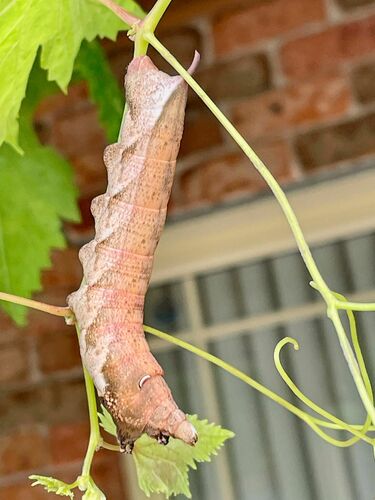
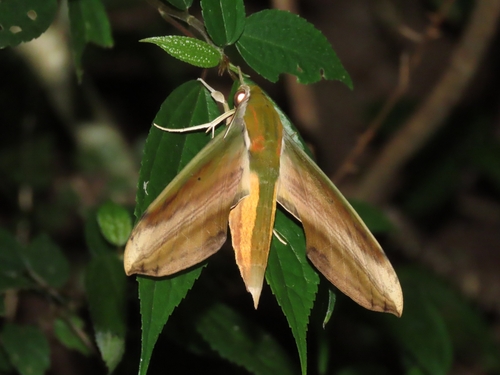
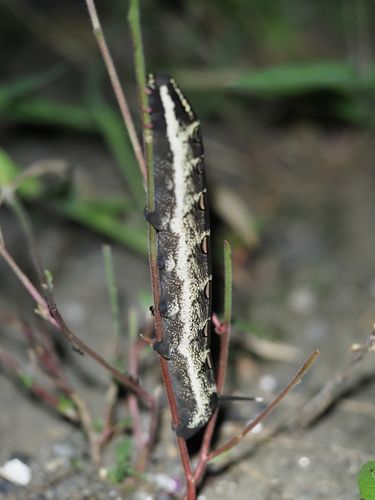
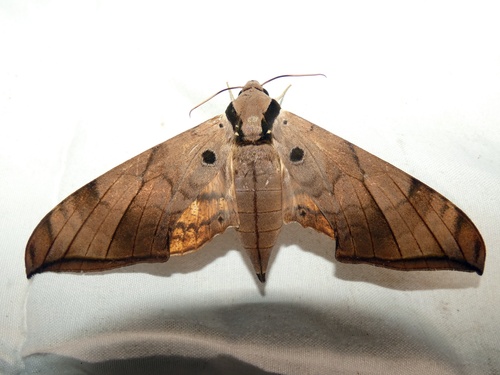
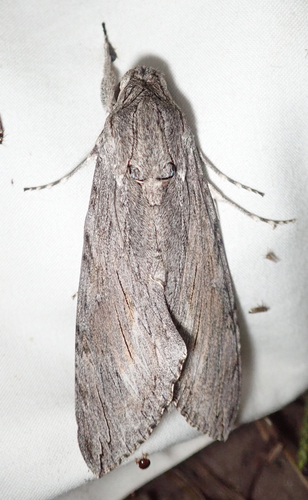
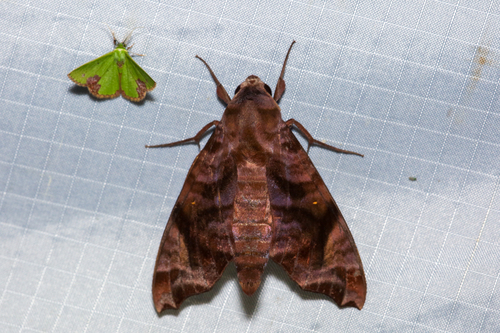
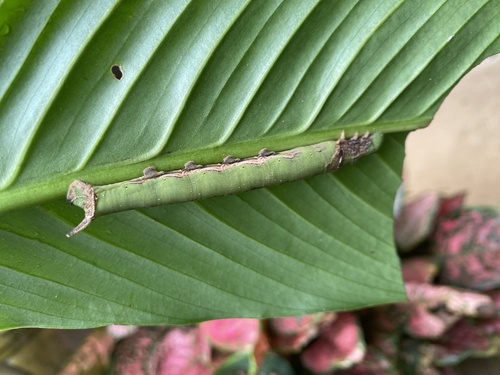
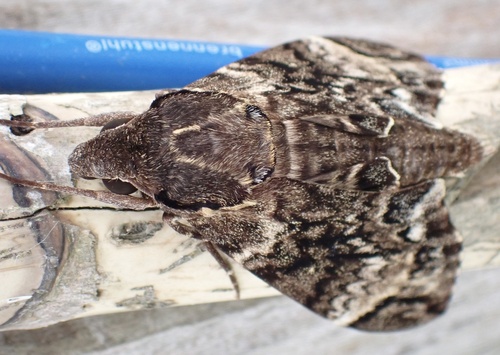
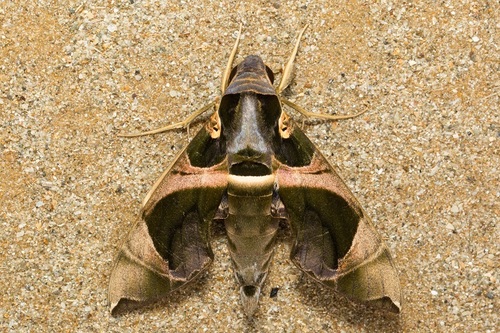
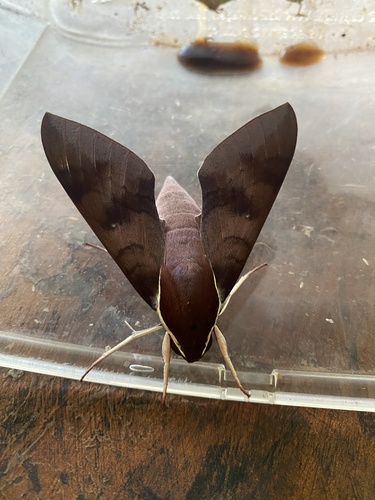
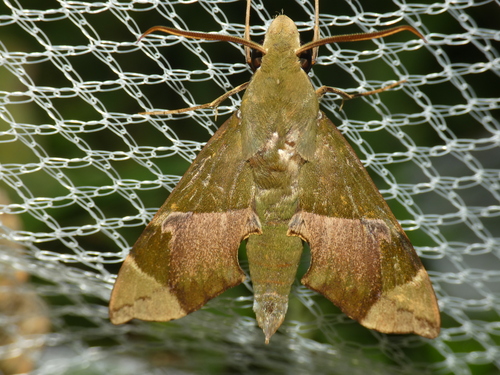
The wingspan is 60–72 mm. Not to be confused with Theretra oldenlandiae in being very much paler in color and with a white line down the center of the abdomen. The forewing has a silvery line beyond the oblique brown band. Other parts are ochreous. Larvae are exceedingly variable, from yellow green and green to brown or greyish black ones. But the commonly found color of larva is green with a reddish-brown dorsal area. There is a subdorsal paler line with equal-sized ocelli from 4th to 10th somites with green center. The horn is reddish brown as well.

Larvae have been recorded feeding on Colocasia antiquorum and Ludwigia species in southern China, Colocasia esculenta in Japan, Ludwigia repens and Boerhavia species in India and numerous other host plants from elsewhere, including Arum, Caladium, Pistia, Kochia, Ipomoea, Boerhavia, Ludwigia, Rosa and Trapa species.

Theretra silhetensis... Wikipedia →

Global Distribution

Parks Where Found

# Park Country Daily sighting probability
1 Daintree National Park 🇦🇺 Australia
~10%

More parks will be added in future updates.

Cities Where Found

# City Country Daily sighting probability
1 Ponnani 🇮🇳 India
~20%
2 Kochi 🇮🇳 India
~20%
3 Kolkata 🇮🇳 India
~10%
4 Mumbai 🇮🇳 India
<5%
5 Taipei 🇹🇼 Taiwan
<5%
6 Bengaluru 🇮🇳 India
<5%
7 Brisbane 🇦🇺 Australia
<5%
8 Bangkok 🇹🇭 Thailand
<5%

Before you go

What are the chances of seeing a Brown-Banded Hunter Hawkmoth in Daintree National Park?

With luck

About 10% of wildlife watchers report a Brown-Banded Hunter Hawkmoth sighting in Daintree National Park on a given day, based on 20 verified sightings from GBIF citizen-science data from 2019 to 2026. It is the 173rd most-seen of the 856 insects we can rate there. Over three days the chance rises to about 30%, and over a week to about 60%, if each day is a fresh chance.

When is the best time to see a Brown-Banded Hunter Hawkmoth in Daintree National Park?

March

In that month about 40% of wildlife watchers report a Brown-Banded Hunter Hawkmoth in Daintree National Park on a given day, against under 5% in October to February, the lowest months. That is one of Daintree National Park's wettest months, with about 330 mm of rain against 50 mm in September.

What time of day is best to see a Brown-Banded Hunter Hawkmoth?

Between 9 am and noon

Across all the parks we cover, that three-hour window holds the most Brown-Banded Hunter Hawkmoth sightings with a recorded time, and about 6 in 10 of them come between 6 pm and 6 am: it is seen both by day and at night.

Where else can you see a Brown-Banded Hunter Hawkmoth?

Only Daintree National Park, in our data

Daintree National Park is the only park on Wallace's Line with enough records to rate Brown-Banded Hunter Hawkmoth sightings: about 10% of wildlife watchers there report one on a given day.

Which relatives of the Brown-Banded Hunter Hawkmoth live in Daintree National Park?

Same genus: Theretra

The closest relatives of the Brown-Banded Hunter Hawkmoth that you can see in Daintree National Park (genus Theretra, Hunter Hawkmoths) are Pale Brown Hawkmoth (about 20%), Yam Hawkmoth (about 10%) and White-Banded Hunter Hawkmoth (about 10%), with each one's daily chance of a sighting.

Where does the Brown-Banded Hunter Hawkmoth sighting chance come from?

GBIF citizen-science records

It is estimated from how often the Brown-Banded Hunter Hawkmoth is recorded against all the insects logged in Daintree National Park (20 verified sightings from 2019 to 2026), calibrated against known sighting rates. Figures are rounded to the nearest 10% because citizen-science data supports honest approximations, not decimals, and months with records from fewer than five people show "—". How it works.

← Back to Daintree National Park