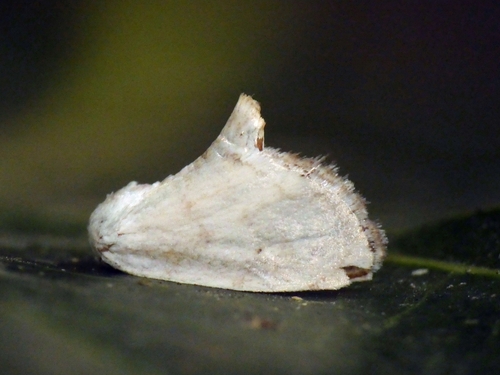
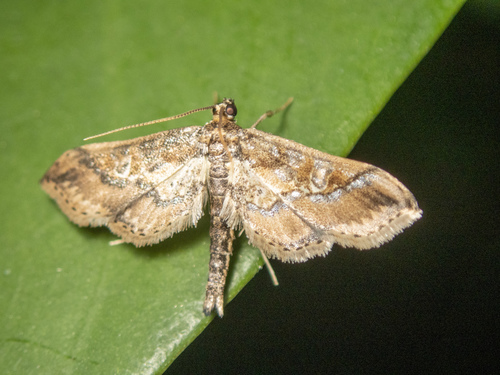
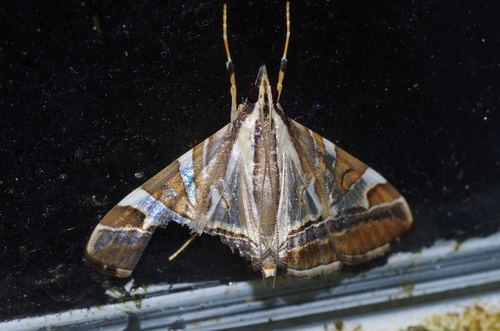
Cucumber Moth

Cucumber Moth

Diaphania indica

Daily sighting probability ~10% · With luck
at Daintree National Park

In 3 days ~20% in a week ~40%

7 Verified sightings at Daintree National Park From 2019 to 2026
30 In all 4 parks
June Best month
☀️🌙 Day & Night When it's spotted

About the Cucumber Moth

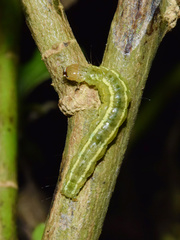
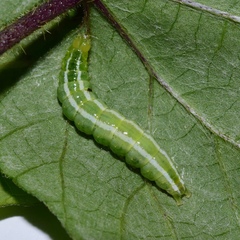
Diaphania indica, the cucumber moth or cotton caterpillar, is a widespread but mainly Old World moth species. It belongs to the grass moth family, and therein to the large subfamily Spilomelinae. This moth occurs in many tropical and subtropical regions outside the Americas, though it is native to southern Asia; it is occasionally a significant pest of cucurbits and some other plants.

This species was originally described by William Wilson Saunders in 1851 under the misspelled name Eudioptes indica (properly:Eudioptis), using specimens from Java. His syntypes are in the Hope Entomological Collections of the Oxford University Museum of Natural History.

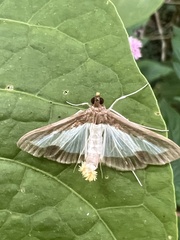
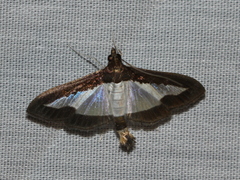
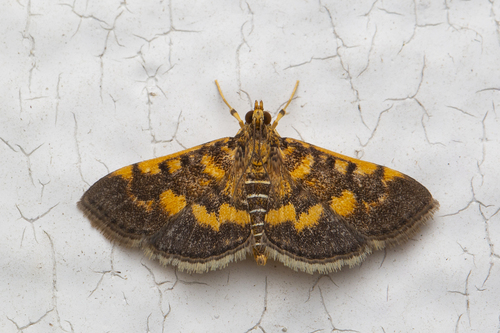
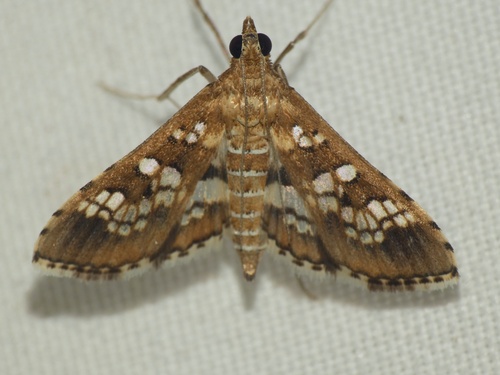
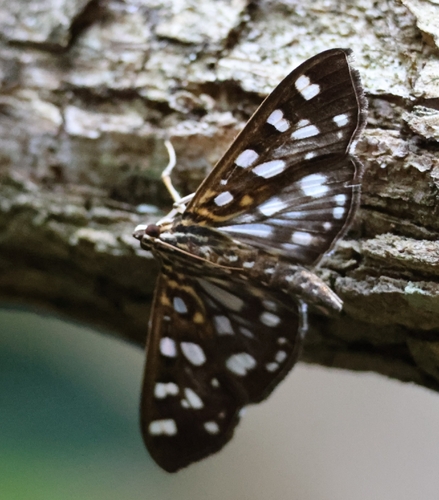
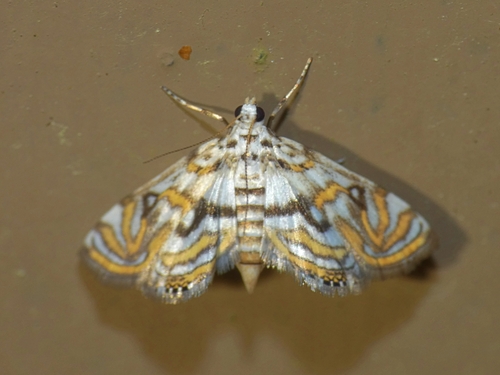
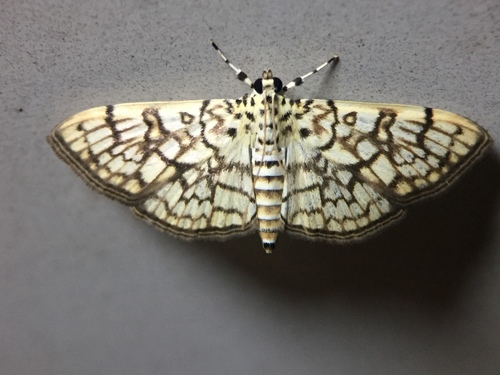
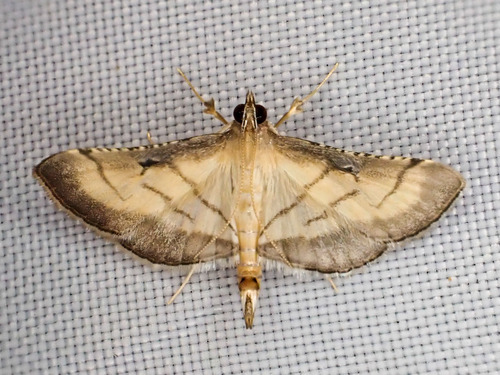
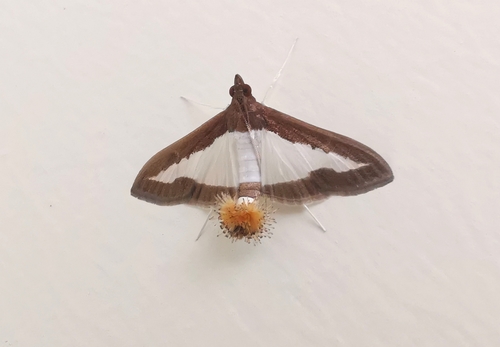
The wingspan is about 30 mm. Adults have translucent whitish wings with broad dark brown borders. The body is whitish below, and brown on top of head and thorax as well as the end of the abdomen. There is a tuft of light brown "hairs" on the tip of the abdomen, vestigial in the male but well developed in the female. It is formed by long scales which are carried in a pocket on each side of the 7th abdominal segment, from where they can be everted to form the tufts. Unfertilized females are often seen sitting around with... Wikipedia →
Global Distribution

Parks Where Found

# Park Country Daily sighting probability
1 Daintree National Park 🇦🇺 Australia
~10%
2 Namib-Naukluft National Park 🇳🇦 Namibia
~10%
3 Addo Elephant National Park 🇿🇦 South Africa
~10%
4 Kruger National Park 🇿🇦 South Africa
<5%

Cities Where Found

# City Country Daily sighting probability
1 Jamshedpur 🇮🇳 India
~30%
2 Vadodara 🇮🇳 India
~20%
3 Kathmandu 🇳🇵 Nepal
~20%
4 Thiruvananthapuram 🇮🇳 India
~10%
5 Kolkata 🇮🇳 India
~10%
6 Dehradun 🇮🇳 India
~10%
7 Ahmedabad 🇮🇳 India
~10%
8 Nairobi 🇰🇪 Kenya
~10%
9 Kochi 🇮🇳 India
~10%
10 Durban 🇿🇦 South Africa
~10%

Before you go

What are the chances of seeing a Cucumber Moth in Daintree National Park?

With luck

About 10% of wildlife watchers report a Cucumber Moth sighting in Daintree National Park on a given day, based on 7 verified sightings from GBIF citizen-science data from 2019 to 2026. It is the 567th most-seen of the 856 insects we can rate there. Over three days the chance rises to about 20%, and over a week to about 40%, if each day is a fresh chance.

When is the best time to see a Cucumber Moth in Daintree National Park?

June

In that month about 20% of wildlife watchers report a Cucumber Moth in Daintree National Park on a given day, against under 5% in May and September–February, the lowest months. That is one of Daintree National Park's driest months, with about 80 mm of rain against 380 mm in January.

What time of day is best to see a Cucumber Moth?

Between 7 and 10 pm

Across all the parks we cover, that three-hour window holds the most Cucumber Moth sightings with a recorded time, and about 6 in 10 of them come between 6 pm and 6 am: it is seen both by day and at night.

Is Daintree National Park the best place to see a Cucumber Moth?

Yes

Of the 4 parks where we can rate Cucumber Moth sightings, Daintree National Park has the highest daily chance: about 10%. Next come Namib-Naukluft National Park (Namibia, about 10%) and Addo Elephant National Park (South Africa, about 10%).

Which relatives of the Cucumber Moth live in Daintree National Park?

Same family: Crambidae

The closest relatives of the Cucumber Moth that you can see in Daintree National Park (family Crambidae, Crambid Snout Moths) are Tetrernia teminitis (about 20%), Bean Leafroller (about 20%) and Banded Pearl (about 20%), with each one's daily chance of a sighting.

Where does the Cucumber Moth sighting chance come from?

GBIF citizen-science records

It is estimated from how often the Cucumber Moth is recorded against all the insects logged in Daintree National Park (7 verified sightings from 2019 to 2026), calibrated against known sighting rates. Figures are rounded to the nearest 10% because citizen-science data supports honest approximations, not decimals, and months with records from fewer than five people show "—". How it works.

← Back to Daintree National Park