

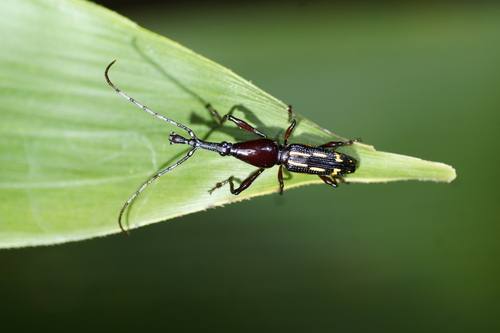
Maculate Ladybird

Maculate Ladybird

Harmonia octomaculata

Daily sighting probability ~10% · With luck
at Daintree National Park

In 3 days ~30% in a week ~50%

14 Verified sightings at Daintree National Park From 2019 to 2026
35 In all 2 parks
May Best month
🌙 Nocturnal When it's spotted

About the Maculate Ladybird

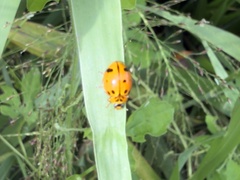
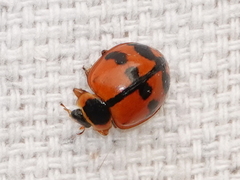
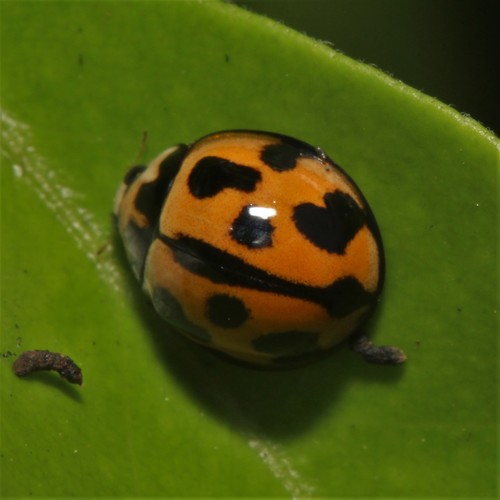
Harmonia octomaculata is a species of ladybird of the family Coccinellidae. It is found throughout India, Pakistan, Nepal, Bangladesh, Sri Lanka, Micronesia, and Australia. It is a rare species of ladybird which is about 8 mm long. Elytra is yellowish dark orange in color with black dots.

Adult female lays eggs singly or in cluster of 21 to 52 eggs on both surfaces of leaf, or sometimes on the dead aphid body. Eggs are yellowish, and oval shaped. With the development, the eggs turned to black and later become completely black before hatching. The length of eggs are about 1.25 to 1.37 mm. The incubation period varied from 3 to 4 days. After split open the eggs at the apical portion, grubs starts to wriggled out. The neonate grubs remained on egg case for some time and then moved towards prey for feeding. First instar larva is dark greyish and covered with spiny structures all over the body. Head with shiny dark head capsule. Legs are also darker in color which are comparatively longer and articulated with oval shaped body. Body length of the first instar is about 1.75 to 2.08 mm. Duration of first instar larva varies from 1 to 2 days.

Second instar larva is shining... Wikipedia →

Global Distribution

Parks Where Found

# Park Country Daily sighting probability
1 Lamington National Park 🇦🇺 Australia
~10%
2 Daintree National Park 🇦🇺 Australia
~10%

Cities Where Found

# City Country Daily sighting probability
1 Kolkata 🇮🇳 India
~10%
2 Hyderabad 🇮🇳 India
~10%
3 Mumbai 🇮🇳 India
~10%
4 Brisbane 🇦🇺 Australia
~10%
5 Taipei 🇹🇼 Taiwan
<5%

Before you go

What are the chances of seeing a Maculate Ladybird in Daintree National Park?

With luck

About 10% of wildlife watchers report a Maculate Ladybird sighting in Daintree National Park on a given day, based on 14 verified sightings from GBIF citizen-science data from 2019 to 2026. It is the 339th most-seen of the 856 insects we can rate there. Over three days the chance rises to about 30%, and over a week to about 50%, if each day is a fresh chance.

When is the best time to see a Maculate Ladybird in Daintree National Park?

May

In that month about 30% of wildlife watchers report a Maculate Ladybird in Daintree National Park on a given day, against under 5% in August to March, the lowest months.

What time of day is best to see a Maculate Ladybird?

Between 8 and 11 pm

Across all the parks we cover, that three-hour window holds the most Maculate Ladybird sightings with a recorded time, and about 7 in 10 of them come between 6 pm and 6 am: it is mostly seen at night.

Is Daintree National Park the best place to see a Maculate Ladybird?

Among the best

Of the 2 parks where we can rate Maculate Ladybird sightings, Daintree National Park ranks 2nd at about 10%, level with the leaders once rounded. The best odds are in Lamington National Park (Australia, about 10%).

Where does the Maculate Ladybird sighting chance come from?

GBIF citizen-science records

It is estimated from how often the Maculate Ladybird is recorded against all the insects logged in Daintree National Park (14 verified sightings from 2019 to 2026), calibrated against known sighting rates. Figures are rounded to the nearest 10% because citizen-science data supports honest approximations, not decimals, and months with records from fewer than five people show "—". How it works.

← Back to Daintree National Park