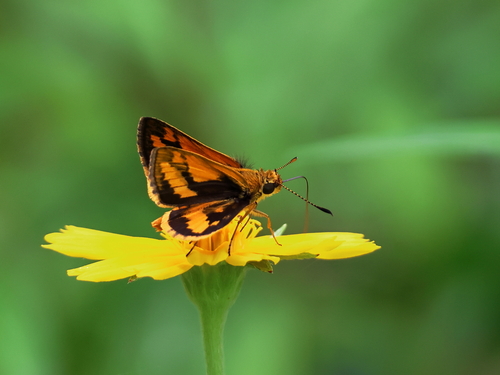
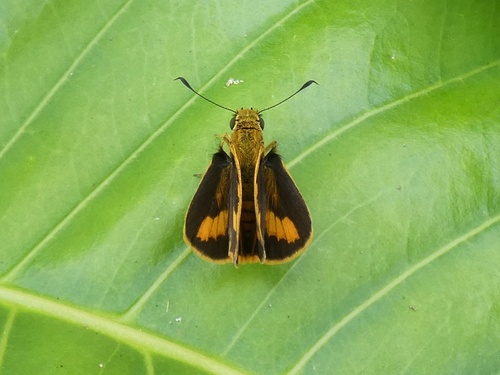
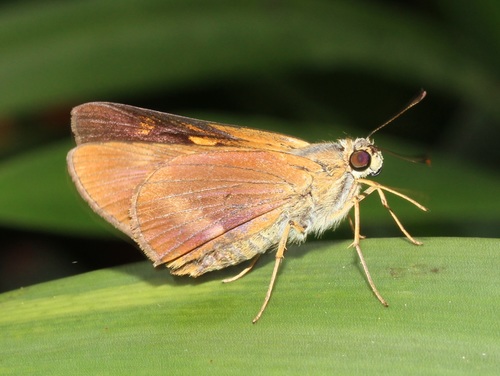
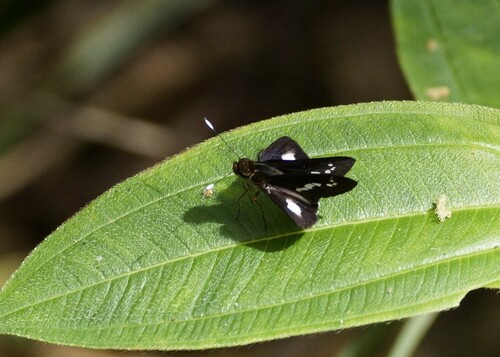
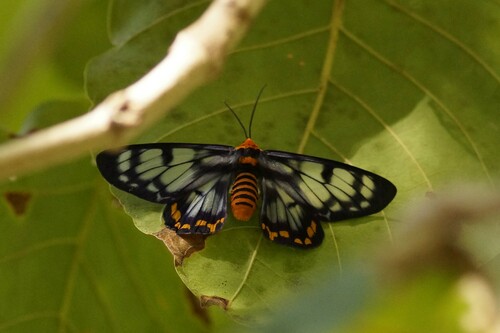
Pied Flat

Pied Flat

Tagiades japetus

Daily sighting probability ~10% · With luck
at Daintree National Park

In 3 days ~30% in a week ~60%

19 Verified sightings at Daintree National Park From 2019 to 2026
19 In 1 park
July Best month
☀️ Diurnal When it's spotted

About the Pied Flat

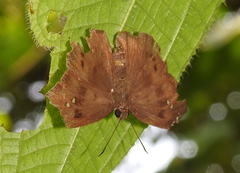
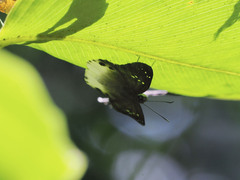
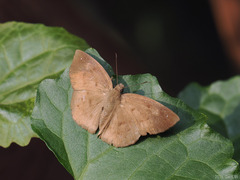
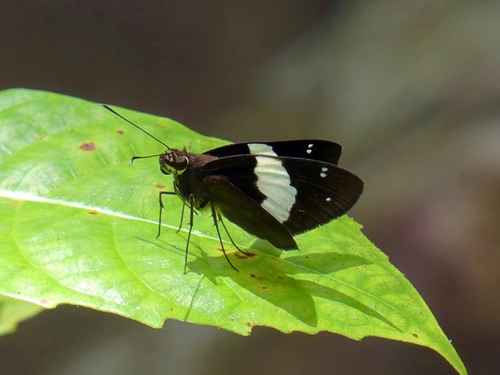
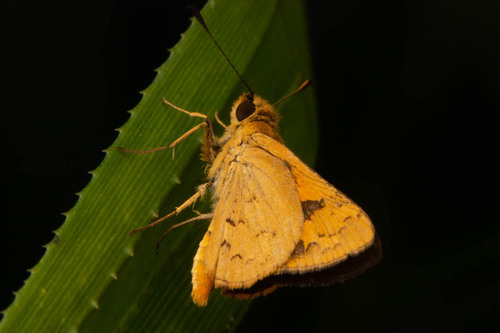
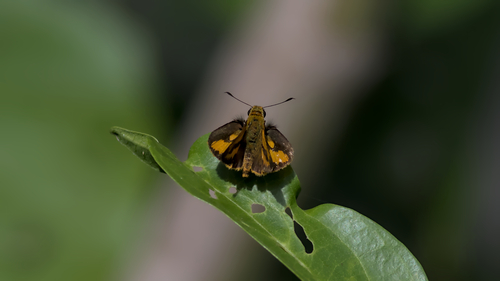
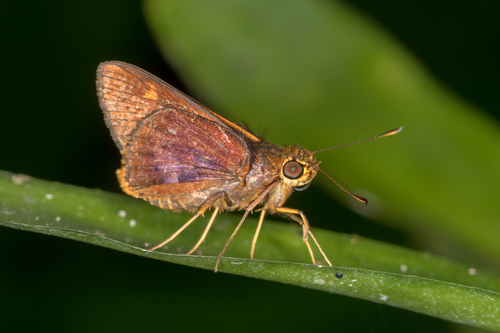
Tagiades japetus, commonly known as the pied flat or the common snow flat, is a species of spread-winged skipper butterfly belonging to the family Hesperiidae. It is widely distributed, being found from India, the Himalayas, Southeast Asia, to Australia. It contains several recognized subspecies.

Male. Upperside fuliginous-brown. Forewing with three minute subapical white dots, one of them, sometimes two of them, often absent; a minute dot at the end of the cell, another near the base of the second median interspace, and a third below it, in the middle of the first median interspace, sometimes one, sometimes two of them only present, sometimes all are wanting. Hindwing with indications of a curved discal series of spots darker than the ground colour, often altogether invisible. Cilia of both wings brown. Underside. Forewing paler than it is above, the hinder marginal area and a broad squarish patch at the hinder angle paler than the rest of the wing, the minute dots as above. Hindwing greyish-white, the costal and outer marginal areas somewhat suffused with brown; a curved series of dark brown discal spots, the lower ones usually mere dots, often invisible.

Female... Wikipedia →
Global Distribution

Parks Where Found

# Park Country Daily sighting probability
1 Daintree National Park 🇦🇺 Australia
~10%

More parks will be added in future updates.

Cities Where Found

# City Country Daily sighting probability
1 Chattogram 🇧🇩 Bangladesh
~20%
2 Guwahati 🇮🇳 India
~10%
3 Singapore 🇸🇬 Singapore
~10%
4 Bengaluru 🇮🇳 India
~10%
5 Colombo [Sri Jayawardenepura Kotte] 🇱🇰 Sri Lanka
~10%
6 Kolkata 🇮🇳 India
~10%
7 Kuala Lumpur 🇲🇾 Malaysia
~10%

Before you go

What are the chances of seeing a Pied Flat in Daintree National Park?

With luck

About 10% of wildlife watchers report a Pied Flat sighting in Daintree National Park on a given day, based on 19 verified sightings from GBIF citizen-science data from 2019 to 2026. It is the 208th most-seen of the 856 insects we can rate there. Over three days the chance rises to about 30%, and over a week to about 60%, if each day is a fresh chance.

When is the best time to see a Pied Flat in Daintree National Park?

July and August

In those months about 20% of wildlife watchers report a Pied Flat in Daintree National Park on a given day, against under 5% in January–February and October, the lowest months. Those are among Daintree National Park's driest months, with about 60 mm of rain a month against 380 mm in January.

What time of day is best to see a Pied Flat?

Between 9 am and noon

Across all the parks we cover, that three-hour window holds the most Pied Flat sightings with a recorded time, and about 8 in 10 of them come between 6 am and 6 pm: it is a daytime animal.

Where else can you see a Pied Flat?

Only Daintree National Park, in our data

Daintree National Park is the only park on Wallace's Line with enough records to rate Pied Flat sightings: about 10% of wildlife watchers there report one on a given day.

Which relatives of the Pied Flat live in Daintree National Park?

Same family: Hesperiidae

The closest relatives of the Pied Flat that you can see in Daintree National Park (family Hesperiidae, Skippers) are Banded Demon (about 30%), Wide-Brand Grass-Dart (about 20%) and Narrow-Brand Darter (about 20%), with each one's daily chance of a sighting.

Where does the Pied Flat sighting chance come from?

GBIF citizen-science records

It is estimated from how often the Pied Flat is recorded against all the insects logged in Daintree National Park (19 verified sightings from 2019 to 2026), calibrated against known sighting rates. Figures are rounded to the nearest 10% because citizen-science data supports honest approximations, not decimals, and months with records from fewer than five people show "—". How it works.

← Back to Daintree National Park