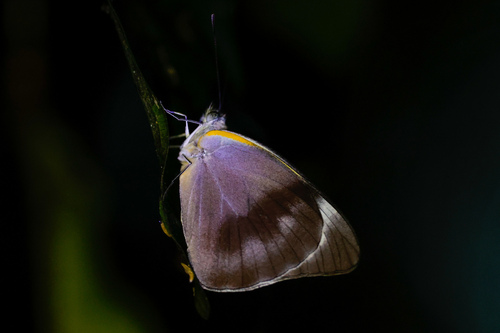
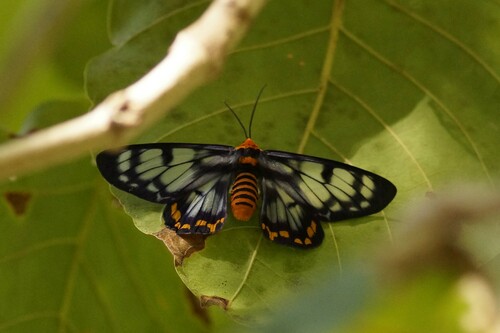
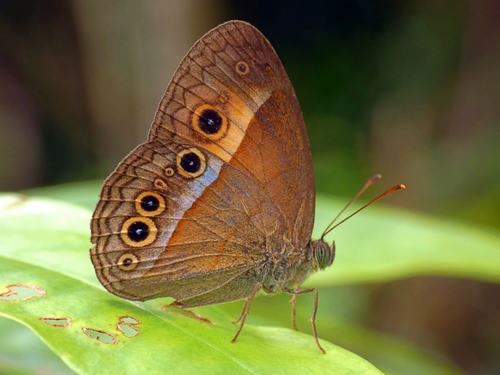
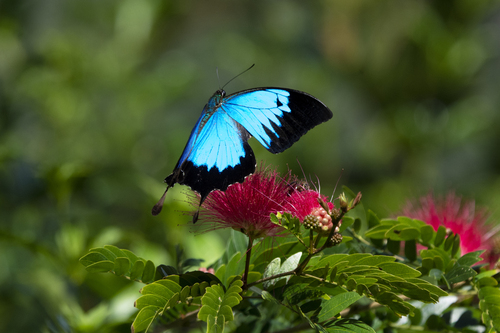
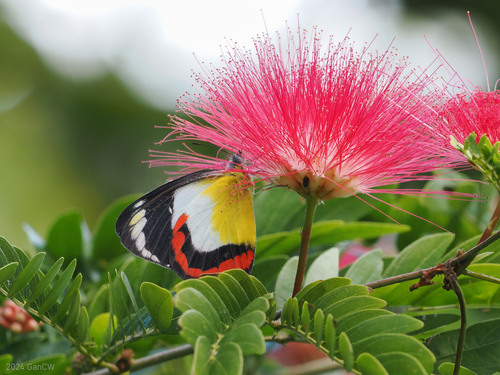
Red-Banded Jezebel

Red-Banded Jezebel

Delias mysis

Daily sighting probability ~20% · Possible
at Daintree National Park

In 3 days ~50% in a week ~80%

42 Verified sightings at Daintree National Park From 2019 to 2026
42 In 1 park
April Best month
☀️ Diurnal When it's spotted

About the Red-Banded Jezebel

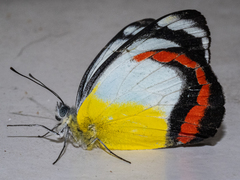
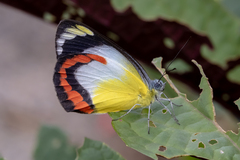
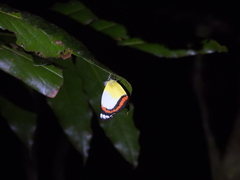
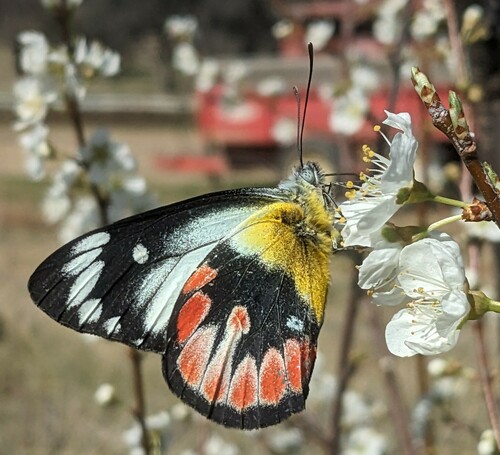
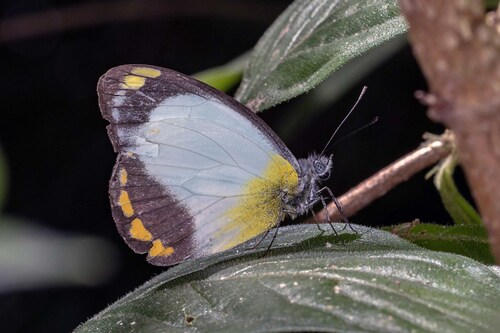
Delias mysis, the Union Jack or red-banded Jezebel, is a butterfly in the family Pieridae. It is endemic to northern Australia, New Guinea and neighbouring islands. The common name is a reference to the flag of the British Empire. The butterfly was given this name, because the patterns and colours on the underside of the wings of the males resembles the flag.The species has a wide variety in colours and patterns, hence a number of subspecies have been named.

D. mysis appears to replace the Indian hyparete in the Papuan region and shows the same tendency as the latter to local variation. The oldest form is well known from Australia. — mysis F. (54 c) is characterised by the most extended black margining of both wings and the row of white subapical patches on the forewing. A smaller, lighter-spotted dry-season-form was named aestiva by Butler. North Australia, Queensland. — nemea subsp. nov., from Merauke, Dutch South-West New Guinea, is essentially smaller and the males have beneath a strikingly narrow red submarginal band, which bisects a very broad deep blue-black border. — onca subsp. nov. from Milne Bay (British New Guinea), forms a transition to lara Bdv., from... Wikipedia →
Global Distribution

Parks Where Found

# Park Country Daily sighting probability
1 Daintree National Park 🇦🇺 Australia
~20%

More parks will be added in future updates.

Before you go

What are the chances of seeing a Red-Banded Jezebel in Daintree National Park?

Possible

About 20% of wildlife watchers report a Red-Banded Jezebel sighting in Daintree National Park on a given day, based on 42 verified sightings from GBIF citizen-science data from 2019 to 2026. It is the 55th most-seen of the 856 insects we can rate there. Over three days the chance rises to about 50%, and over a week to about 80%, if each day is a fresh chance.

When is the best time to see a Red-Banded Jezebel in Daintree National Park?

April

In that month about 40% of wildlife watchers report a Red-Banded Jezebel in Daintree National Park on a given day, against under 5% in October and November, the lowest months.

What time of day is best to see a Red-Banded Jezebel?

Between 2 and 5 pm

Across all the parks we cover, that three-hour window holds the most Red-Banded Jezebel sightings with a recorded time, and about 8 in 10 of them come between 6 am and 6 pm: it is a daytime animal.

Where else can you see a Red-Banded Jezebel?

Only Daintree National Park, in our data

Daintree National Park is the only park on Wallace's Line with enough records to rate Red-Banded Jezebel sightings: about 20% of wildlife watchers there report one on a given day.

Which relatives of the Red-Banded Jezebel live in Daintree National Park?

Same genus: Delias

The closest relatives of the Red-Banded Jezebel that you can see in Daintree National Park (genus Delias, Jezebels) are Scarlet Jezebel (about 10%) and Yellow-Banded Jezebel (about 10%), with each one's daily chance of a sighting.

Where does the Red-Banded Jezebel sighting chance come from?

GBIF citizen-science records

It is estimated from how often the Red-Banded Jezebel is recorded against all the insects logged in Daintree National Park (42 verified sightings from 2019 to 2026), calibrated against known sighting rates. Figures are rounded to the nearest 10% because citizen-science data supports honest approximations, not decimals, and months with records from fewer than five people show "—". How it works.

← Back to Daintree National Park