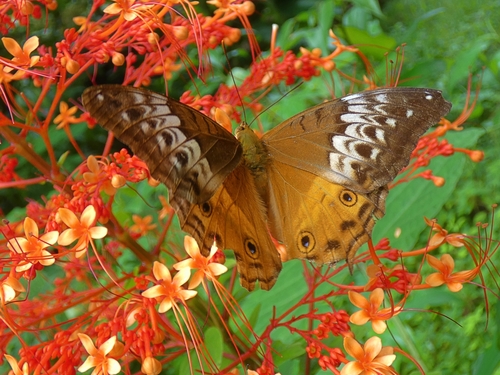
Red-Bodied Swallowtail

Red-Bodied Swallowtail

Pachliopta polydorus

Daily sighting probability ~10% · With luck
at Daintree National Park

In 3 days ~20% in a week ~40%

6 Verified sightings at Daintree National Park From 2019 to 2026
6 In 1 park
October Best month
☀️ Diurnal When it's spotted

About the Red-Bodied Swallowtail

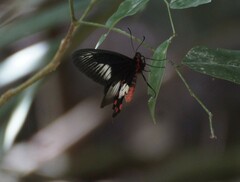
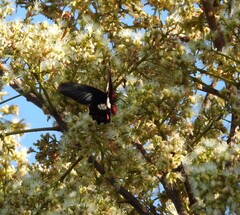
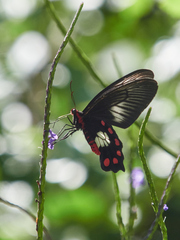
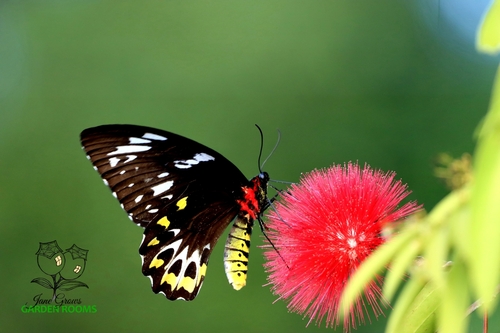
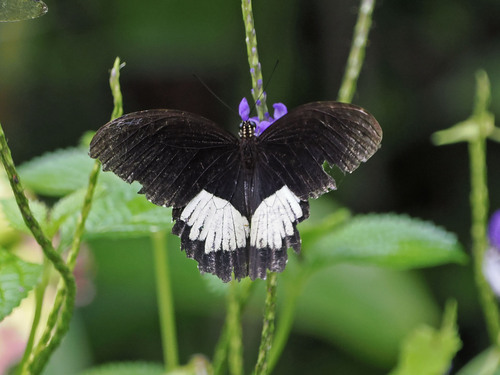
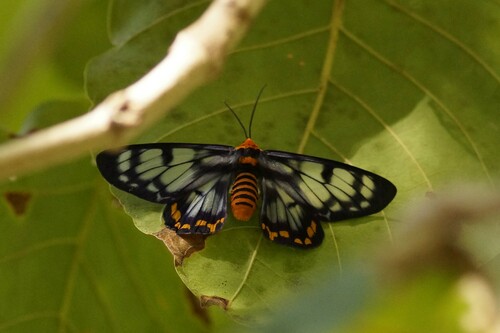
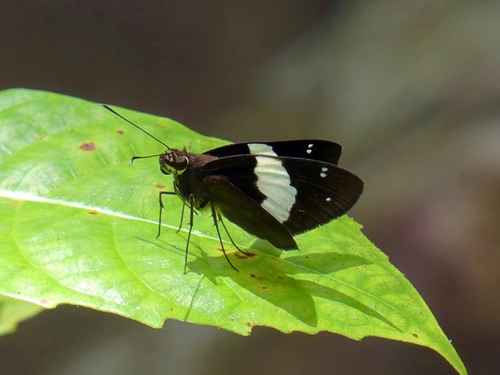
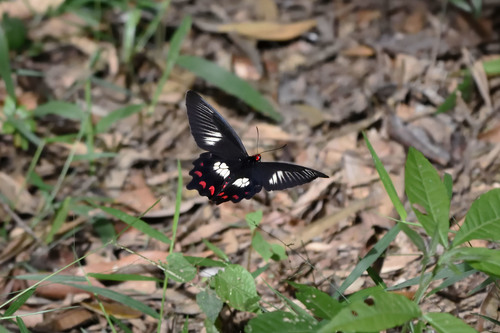
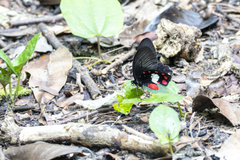
Pachliopta polydorus, the red-bodied swallowtail, is a butterfly from the family Papilionidae found in north-eastern Queensland, Australia and Papua New Guinea. The forewings are black, with white internervular shading. The hindwings have scalloped edges, are black and have no tails. The hindwing has a line of dark-red postdiscal spots. In the middle of wing there is a big white discal patch. The underside of both wings are the same as the above side, but the underside has brighter red spots. The body is black with a red abdomen. The sexes are alike. Average wingspan size is 72 mm for males and 76 mm for females.

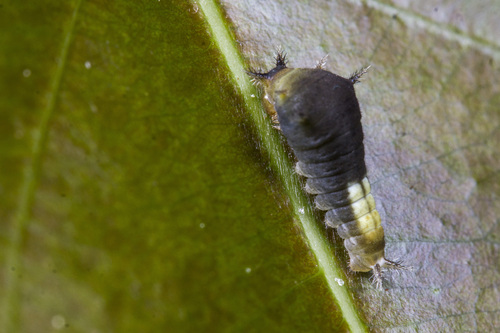
The larva is mottled brown with the rows of red and yellow fleshy tubercles typical of Troidini. The larval food plants are in the genus Aristolochia - Aristolochia chalmersii, Aristolochia indica, Aristolochia tagala, Aristolochia thozetii, Aristolochia australopithecurus, Aristolochia deltantha, Aristolochia linearifolia, Aristolochia peninsulensis.

The pupa is white with brown marks. The dorsum is concave, and there is a row of flanges along each side. The pupal length is 3 cm. Indonesia (Moluccas (not Morotai, but... Wikipedia →
Global Distribution

Parks Where Found

# Park Country Daily sighting probability
1 Daintree National Park 🇦🇺 Australia
~10%

More parks will be added in future updates.

Before you go

What are the chances of seeing a Red-Bodied Swallowtail in Daintree National Park?

With luck

About 10% of wildlife watchers report a Red-Bodied Swallowtail sighting in Daintree National Park on a given day, based on 6 verified sightings from GBIF citizen-science data from 2019 to 2026. It is the 653rd most-seen of the 856 insects we can rate there. Over three days the chance rises to about 20%, and over a week to about 40%, if each day is a fresh chance.

When is the best time to see a Red-Bodied Swallowtail in Daintree National Park?

January, June–July and October

In those months about 10% of wildlife watchers report a Red-Bodied Swallowtail in Daintree National Park on a given day, against under 5% in February–May, August–September and November–December, the lowest months.

What time of day is best to see a Red-Bodied Swallowtail?

Between 8 and 11 am

Across all the parks we cover, that three-hour window holds the most Red-Bodied Swallowtail sightings with a recorded time, and about 8 in 10 of them come between 6 am and 6 pm: it is a daytime animal.

Where else can you see a Red-Bodied Swallowtail?

Only Daintree National Park, in our data

Daintree National Park is the only park on Wallace's Line with enough records to rate Red-Bodied Swallowtail sightings: about 10% of wildlife watchers there report one on a given day.

Which relatives of the Red-Bodied Swallowtail live in Daintree National Park?

Same family: Papilionidae

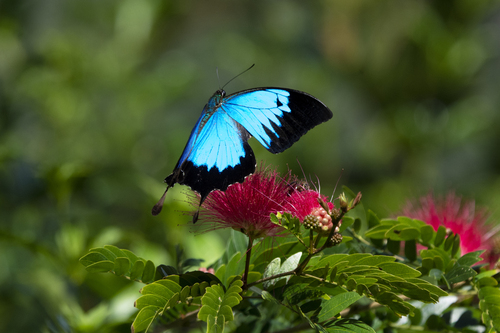
The closest relatives of the Red-Bodied Swallowtail that you can see in Daintree National Park (family Papilionidae, Swallowtails and Parnassians) are Ulysses Butterfly (about 30%), Cairns Birdwing (about 30%) and Tailed Jay (about 20%), with each one's daily chance of a sighting.

Where does the Red-Bodied Swallowtail sighting chance come from?

GBIF citizen-science records

It is estimated from how often the Red-Bodied Swallowtail is recorded against all the insects logged in Daintree National Park (6 verified sightings from 2019 to 2026), calibrated against known sighting rates. Figures are rounded to the nearest 10% because citizen-science data supports honest approximations, not decimals, and months with records from fewer than five people show "—". How it works.

← Back to Daintree National Park