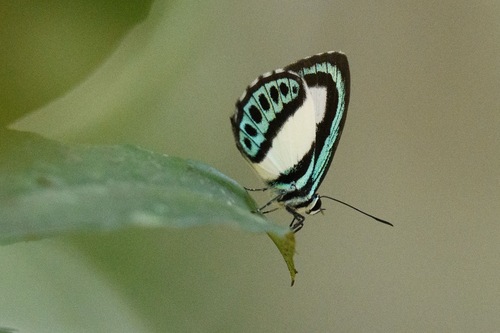
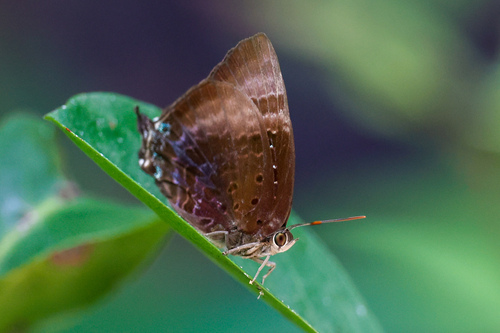
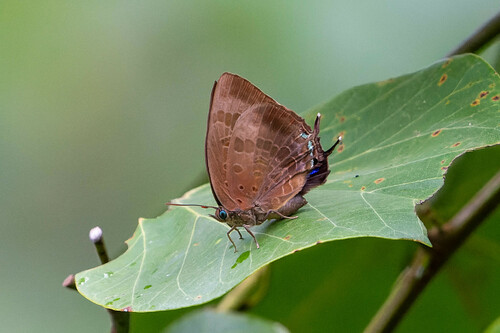
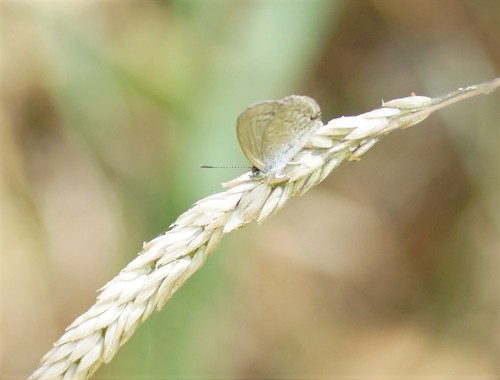
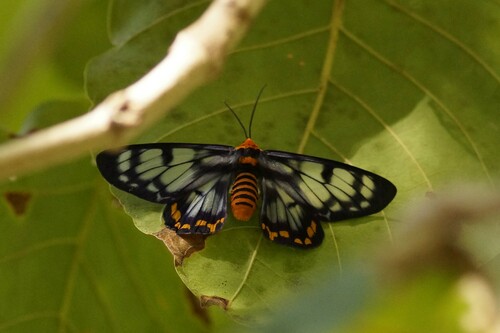
Sword-Tailed Flash

Sword-Tailed Flash

Bindahara phocides

Daily sighting probability ~10% · With luck
at Daintree National Park

In 3 days ~20% in a week ~40%

9 Verified sightings at Daintree National Park From 2019 to 2026
9 In 1 park
July Best month
☀️ Diurnal When it's spotted

About the Sword-Tailed Flash

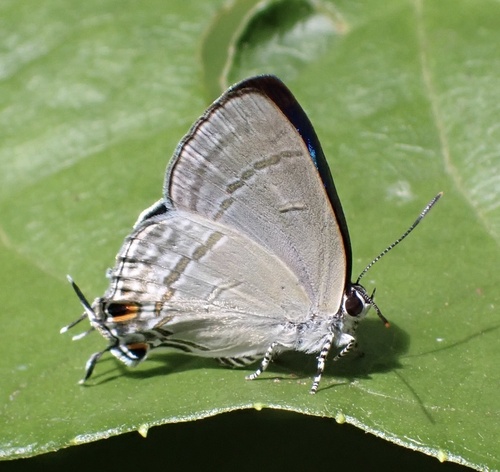
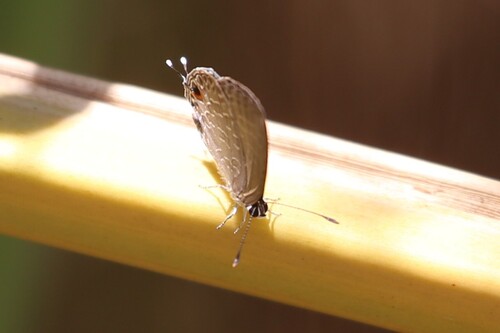
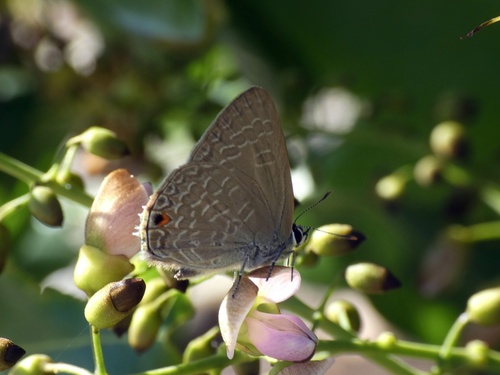
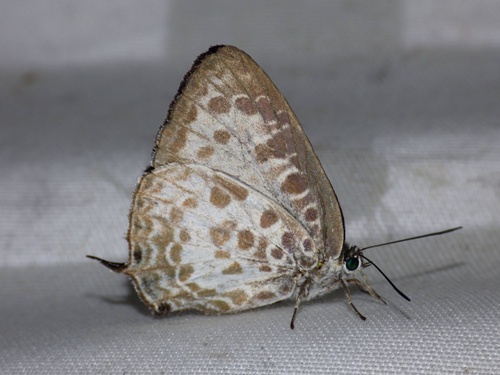
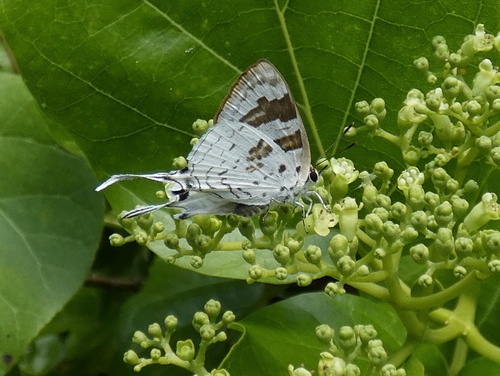
Bindahara phocides, the plane, is a small butterfly found Indomalayan (including Sri Lanka, India) and Australasian realms that belongs to the lycaenids or blues family. Male. Upperside dark fuliginous-brown. Forewing without markings. lllndwing with the tail, anal lobe, and a small anal patch dull ochreous; a small indistinct spot on the anal lobe. Underside pale ochreous-brown. Forewing, a black spot at the base of the cell, a dark brown, broad, outwardly curved band with irregular ochreous edges, from the costal nervure to a little below the median vein, crossing the cell somewhat beyond its middle, with pale indications of its continuation hindwards, a pale brown line, edged on both sides with ochreous at the end of the cell; a dark brown, broad discal band, from the costa to a little below the sub-median vein, composed of conjoined squarish spots, the first four outwardly oblique, the others commencing a little inwards nearly straight down the wing, narrowing gradually hindwards; indications of a pale brown, sub-marginal, double series of lunular marks. Hindwing with a basal blackish-brown spot, a larger one immediately below the costal vein, two smaller ones... Wikipedia →
Global Distribution

Parks Where Found

# Park Country Daily sighting probability
1 Daintree National Park 🇦🇺 Australia
~10%

More parks will be added in future updates.

Before you go

What are the chances of seeing a Sword-Tailed Flash in Daintree National Park?

With luck

About 10% of wildlife watchers report a Sword-Tailed Flash sighting in Daintree National Park on a given day, based on 9 verified sightings from GBIF citizen-science data from 2019 to 2026. It is the 567th most-seen of the 856 insects we can rate there. Over three days the chance rises to about 20%, and over a week to about 40%, if each day is a fresh chance.

When is the best time to see a Sword-Tailed Flash in Daintree National Park?

January–February and July–August

In those months about 10% of wildlife watchers report a Sword-Tailed Flash in Daintree National Park on a given day, against under 5% in March–June and September–December, the lowest months.

What time of day is best to see a Sword-Tailed Flash?

Between 9 am and noon

Across all the parks we cover, that three-hour window holds the most Sword-Tailed Flash sightings with a recorded time, and about 9 in 10 of them come between 6 am and 6 pm: it is a daytime animal.

Where else can you see a Sword-Tailed Flash?

Only Daintree National Park, in our data

Daintree National Park is the only park on Wallace's Line with enough records to rate Sword-Tailed Flash sightings: about 10% of wildlife watchers there report one on a given day.

Which relatives of the Sword-Tailed Flash live in Daintree National Park?

Same family: Lycaenidae

The closest relatives of the Sword-Tailed Flash that you can see in Daintree National Park (family Lycaenidae, Gossamer-winged Butterflies) are Tailed Green-Banded Line Blue (about 30%), Large Green-Banded Blue (about 20%) and Shining Oak-Blue (about 10%), with each one's daily chance of a sighting.

Where does the Sword-Tailed Flash sighting chance come from?

GBIF citizen-science records

It is estimated from how often the Sword-Tailed Flash is recorded against all the insects logged in Daintree National Park (9 verified sightings from 2019 to 2026), calibrated against known sighting rates. Figures are rounded to the nearest 10% because citizen-science data supports honest approximations, not decimals, and months with records from fewer than five people show "—". How it works.

← Back to Daintree National Park