Tropical Rockmaster

Tropical Rockmaster

Diphlebia euphoeoides

Endemic
Daily sighting probability ~20% · Possible
at Daintree National Park

In 3 days ~50% in a week ~80%

68 Verified sightings at Daintree National Park From 2019 to 2026
68 In 1 park
November Best month
☀️ Diurnal When it's spotted

About the Tropical Rockmaster

Diphlebia euphoeoides, sometimes spelled Diphlebia euphaeoides, known as the tropical rockmaster, is an Australian species of broad winged damselfly. It is one of a group known as the azure damselflies. It is found in Queensland (Australia) and Papua New Guinea. It typically occurs near lakes, waterfalls or streams at relatively low altitudes, and is occasionally seen near dry pools.

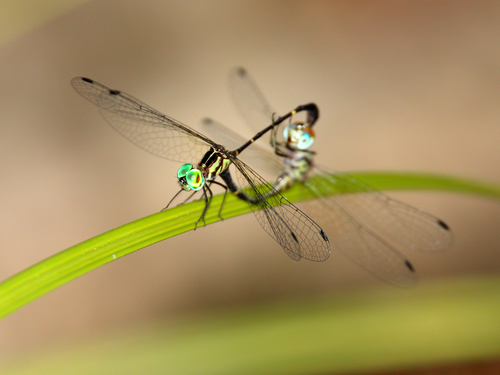
Unusually for damselflies, it is a relatively large insect with its wings outspread at rest. It is often confused with dragonflies, although like most damselflies, the form is not as robust as dragonflies, and the eyes do not meet as with most dragonflies. Larvae are wide and flat, with long saccoid gills to breathe underwater. The inner tooth of labial palps is elongated. The specific characters of the larvae are mid-ventral, distal width, basal width, and length of median lobe. Larval motor patterns were similar to larvae in the Coenagrionidae.

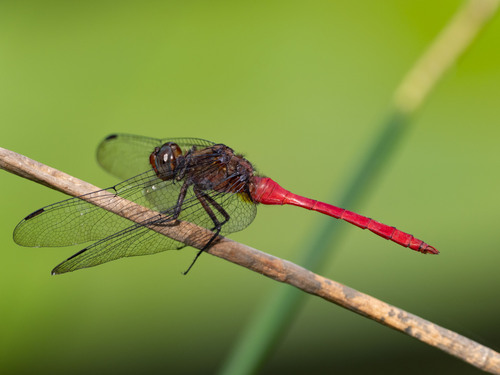
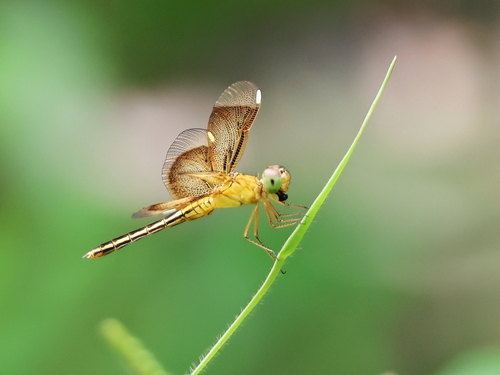
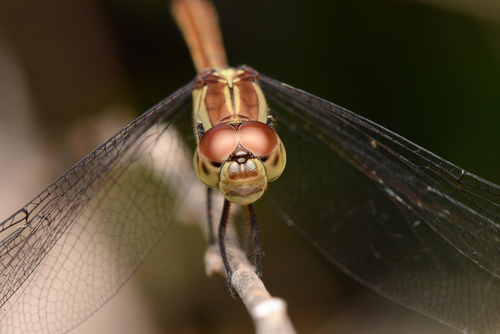
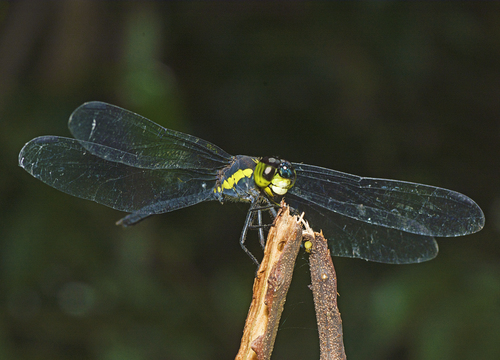
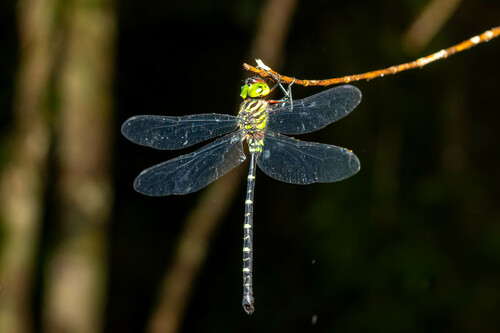
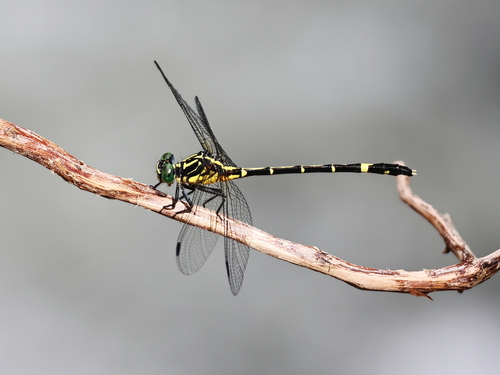
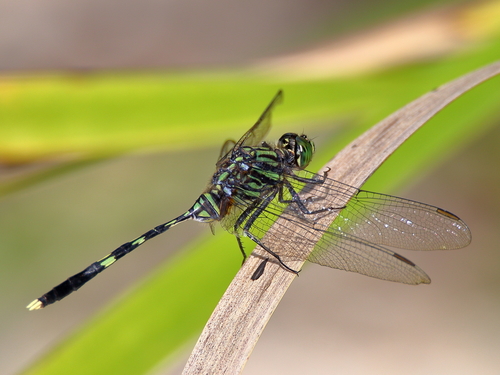
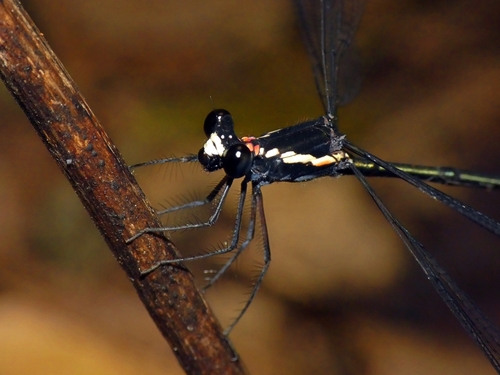
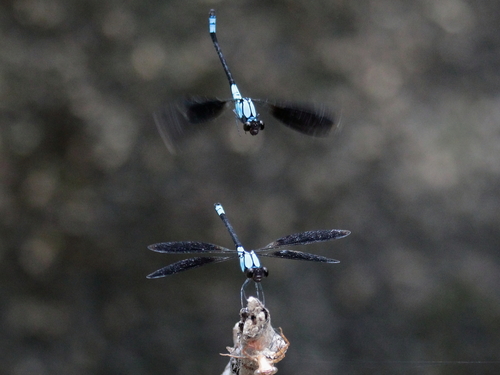
The male tropical rockmaster has a bright blue and black body with dark wings. It can be distinguished from the sapphire rockmaster (Diphlebia coerulescens) by the smaller size of blue markings at the base (front end) and underside of terga 4 to 6. Its abdomen is otherwise black. Its wings are the widest in the genus, and the hindwings are wider than the forewings. The legs are brownish black. The female tropical rockmaster is predominantly brown and yellow-green, and also has smoky-coloured wings.

The transformation from egg to adult is through an incomplete metamorphosis. Like the adult form, the nymph is also a predator. Eggs are laid underwater on moss and reeds around November. The nymphal phase lasts for approximately one year. Adults usually emerge in September and October. It is an uncommon species, though not considered under threat. It was described in 1907 by a young English-born entomologist, Robin Tillyard. He had collected the lectotype at Mervyn Creek in Queensland in January 1905. Friedrich Förster collected what is now classified as the same species from around Port Moresby in New Guinea in 1910 and named it Diphlebia reinholdi. Wikipedia →
Global Distribution

Parks Where Found

# Park Country Daily sighting probability
1 Daintree National Park 🇦🇺 Australia
~20%

More parks will be added in future updates.

Before you go

What are the chances of seeing a Tropical Rockmaster in Daintree National Park?

Possible

About 20% of wildlife watchers report a Tropical Rockmaster sighting in Daintree National Park on a given day, based on 68 verified sightings from GBIF citizen-science data from 2019 to 2026. It is the 32nd most-seen of the 856 insects we can rate there. Over three days the chance rises to about 50%, and over a week to about 80%, if each day is a fresh chance.

When is the best time to see a Tropical Rockmaster in Daintree National Park?

November

In that month about 40% of wildlife watchers report a Tropical Rockmaster in Daintree National Park on a given day, against under 5% in March and April, the lowest months. That is one of Daintree National Park's driest months, with about 65 mm of rain against 380 mm in January.

What time of day is best to see a Tropical Rockmaster?

Between 11 am and 2 pm

Across all the parks we cover, that three-hour window holds the most Tropical Rockmaster sightings with a recorded time, and about 9 in 10 of them come between 6 am and 6 pm: it is a daytime animal.

Where else can you see a Tropical Rockmaster?

Only Daintree National Park, in our data

Daintree National Park is the only park on Wallace's Line with enough records to rate Tropical Rockmaster sightings: about 20% of wildlife watchers there report one on a given day.

Which relatives of the Tropical Rockmaster live in Daintree National Park?

Same order: Odonata

The closest relatives of the Tropical Rockmaster that you can see in Daintree National Park (order Odonata, Dragonflies and Damselflies) are Fiery Skimmer (about 30%), Painted Grasshawk (about 30%) and Asian Blood Tail (about 20%), with each one's daily chance of a sighting.

Where does the Tropical Rockmaster sighting chance come from?

GBIF citizen-science records

It is estimated from how often the Tropical Rockmaster is recorded against all the insects logged in Daintree National Park (68 verified sightings from 2019 to 2026), calibrated against known sighting rates. Figures are rounded to the nearest 10% because citizen-science data supports honest approximations, not decimals, and months with records from fewer than five people show "—". How it works.

← Back to Daintree National Park