



Completed



Dall Sheep
Ovis dalli
Silhouette: Scott Hartman · PhyloPic
- KingdomAnimalia (Animals)
- PhylumChordata (Chordates)
- ClassMammalia (Mammals)
- OrderArtiodactyla (Even-toed Ungulates and Cetaceans)
- FamilyBovidae (Bovids)
- GenusOvis (Sheep)
- SpeciesOvis dalli (Dall Sheep)
In 3 days >90%
210 Verified sightings at Denali National Park From 2019 to 2026
286 In all 3 parks
May Best month
☀️ Diurnal When it's spotted
About the Dall Sheep
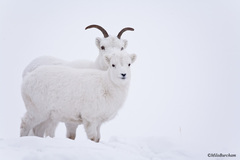
Dall sheep or thinhorn sheep (Ovis dalli), is a species of wild sheep native to northwestern North America. O. dalli live in mountainous alpine habitats distributed across northwestern British Columbia, the Yukon, Northwest Territories and Alaska. They browse a variety of plants, such as grasses, sedges and even shrubs, such as willow, during different times of the year. They also acquire minerals to supplement their diet from mineral licks. Like other Ovis species, the rams engage in dominance contests with their horns.
The specific name dalli, is derived from William Healey Dall (1845–1927), an American naturalist. The common name, Dall's sheep or Dall sheep is often used to refer to the nominate subspecies, O. d. dalli. The other subspecies, O. d. stonei, is called the Stone sheep.
However, the pelage-based designations have been shown to be questionable. Complete colour intergradation occurs in both O. dalli sheep subspecies (i.e., Dall's and Stone's), ranging between white and dark morphs of the species. Intermediately coloured populations, called... Wikipedia →
Recent sightings of Dall Sheep in Denali National Park
LIVEiNaturalistGlobal Distribution
Parks Where Found
| # | Park | Country | Daily sighting probability |
|---|---|---|---|
| 1 | Kluane National Park | 🇨🇦 Canada | |
| 2 | Denali National Park | 🇺🇸 United States | |
| 3 | Nahanni National Park | 🇨🇦 Canada |
Zoos & Centres Where Found
| # | Zoo / Centre | Country | |
|---|---|---|---|
| 1 | Zoo Pilsen | 🇨🇿 Czechia | |
| 2 | Yukon Wildlife Preserve | 🇨🇦 Canada | |
| 3 | Seoul Zoo | 🇰🇷 South Korea | |
| 4 | Shubenacadie Wildlife Park | 🇨🇦 Canada | |
| 5 | Bear Country USA | 🇺🇸 United States | |
| 6 | Novosibirsk Zoo | 🇷🇺 Russia | |
| 7 | Krefelder Zoo | 🇩🇪 Germany | |
| 8 | Alaska Zoo | 🇺🇸 United States | |
| 9 | Como Park Zoo and Conservatory | 🇺🇸 United States | |
| 10 | Como Zoo | 🇺🇸 United States | |
| 11 | Lincoln Park Zoo | 🇺🇸 United States |
Closest Relatives at Denali National Park







Before you go
What are the chances of seeing a Dall Sheep in Denali National Park?
Very likely
About 70% of wildlife watchers report a Dall Sheep sighting in Denali National Park on a given day, based on 210 verified sightings from GBIF citizen-science data from 2019 to 2026. It is the 6th most-seen of the 19 mammals we can rate there. Over three days the chance rises to over 90%, if each day is a fresh chance.
When is the best time to see a Dall Sheep in Denali National Park?
May
In that month about 80% of wildlife watchers report a Dall Sheep in Denali National Park on a given day, against about 20% in April, the lowest month. November to February have too few records to rate.
What time of day is best to see a Dall Sheep?
Between 2 and 5 pm
Across all the parks we cover, that three-hour window holds the most Dall Sheep sightings with a recorded time, and about 7 in 10 of them come between 6 am and 6 pm: it is a daytime animal.
Is Denali National Park the best place to see a Dall Sheep?
Among the best
Of the 3 parks where we can rate Dall Sheep sightings, Denali National Park ranks 2nd at about 70%, level with the leaders once rounded. The best odds are in Kluane National Park (Canada, about 70%).
Which relatives of the Dall Sheep live in Denali National Park?
Same order: Artiodactyla
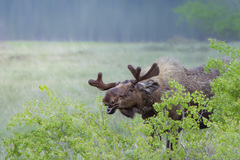
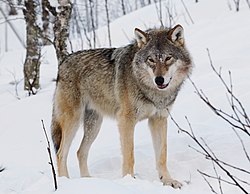
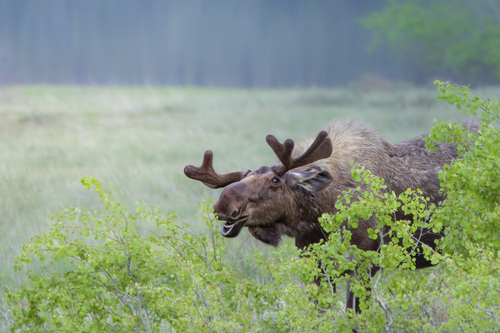
The closest relatives of the Dall Sheep that you can see in Denali National Park (order Artiodactyla, Even-toed Ungulates and Cetaceans) are Moose (about 90%) and Caribou (about 90%), with each one's daily chance of a sighting.
Where does the Dall Sheep sighting chance come from?
GBIF citizen-science records
It is estimated from how often the Dall Sheep is recorded against all the mammals logged in Denali National Park (210 verified sightings from 2019 to 2026), calibrated against known sighting rates. Figures are rounded to the nearest 10% because citizen-science data supports honest approximations, not decimals, and months with records from fewer than five people show "—". How it works.
