About the Large Heath
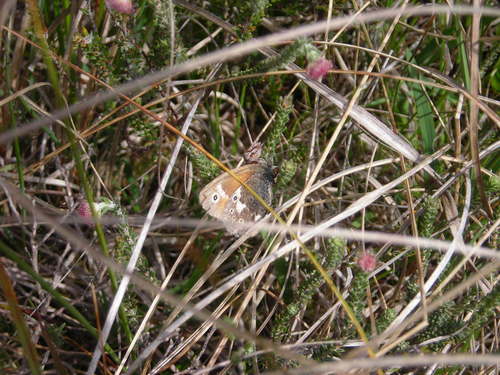
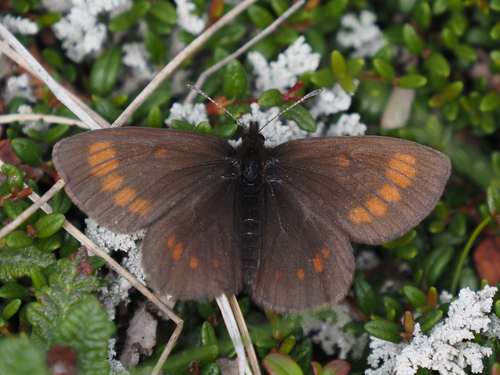
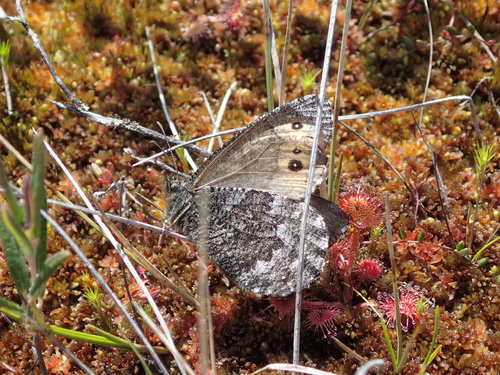
Coenonympha tullia, the large heath or common ringlet, is a butterfly in the family Nymphalidae. It flies in a variety of grassy habitats, including roadsides, woodland edges and clearings, prairies, bogs, and arctic and alpine taiga and tundra. It is a poor flyer, but can sometimes be found along ditches seeking new grounds. It is a holarctic species found in northern Europe, east across the Palearctic and across North America. The species was first described by Otto Friedrich Müller in 1764.
Successful reintroductions of the species to North West England took place in 2020, 2022 and 2023. C. tiphon Rott. (— davus F., tullia Hbn.) (48h). Upperside sandy yellow, similar to Coenonympha symphita, rather duller; male without markings, female with the ocelli shining through. On the underside of the hindwing whitish smears are joined forming a more or less incomplete median band, beyond which there are some ocelli in the male and often a complete row in the female. In Central Europe, especially in the Alps, Central and Southern Germany and the Danube countries. — philoxenus Esp. (= rothliebi Stgr.) (48 h) is a rather large northern form, dulled with grey above... Wikipedia →