Pyrops clavatus
Daily sighting probability ~20% · Possible
at Doi Inthanon National Park

In 3 days ~40% in a week ~70%

17 Verified sightings at Doi Inthanon National Park From 2019 to 2026
17 In 1 park
June Best month
☀️ Diurnal When it's spotted

About the Pyrops clavatus

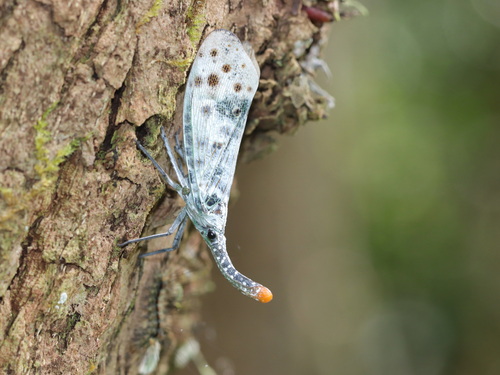
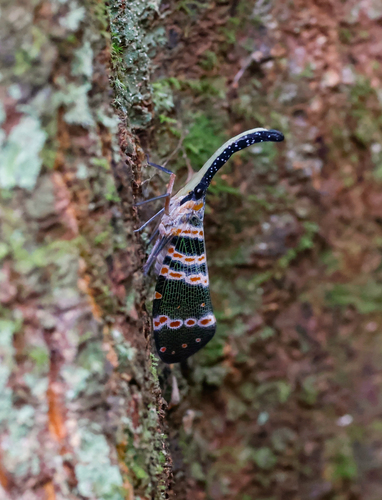
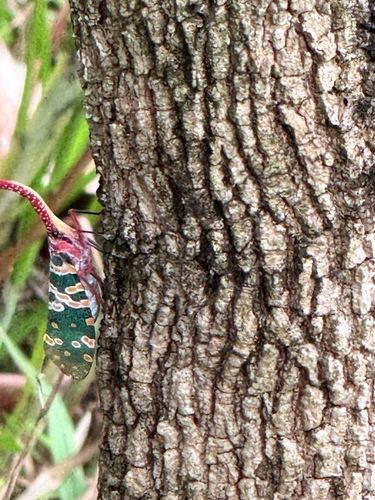
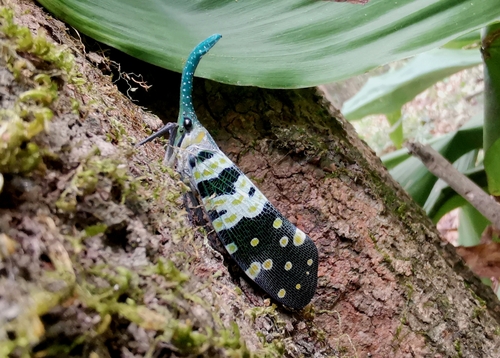
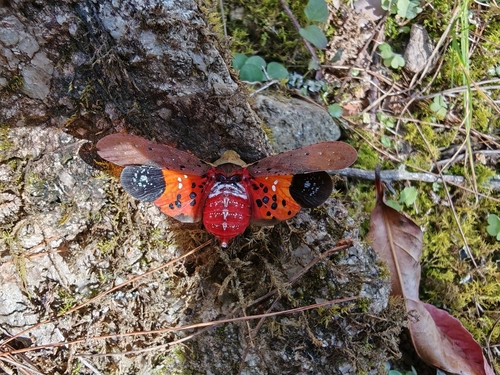
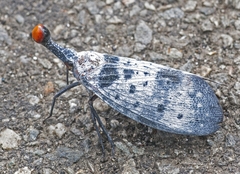
Pyrops clavatus is a species of true bug in the family Fulgoridae, in the genus Pyrops which are sometimes called "lanternflies". This species is found in parts of northern and northeastern India, Myanmar, northern Thailand, southern China and northern Vietnam. The tip of the elongated head capsule is spheroidal, shiny and chestnut in colour while the remainder of the process is black with fine white spotting. The forewing has a variable patterning of black, grey and white. The hindwing is purplish white with the apical half black. Specimens have been obtained along the Himalayas west to Mussoorie (a specimen of which had the entire cephalic process dull red) but more often in Assam, Sikkim, Shillong and the Khasi Hills.

The species was described by John Obadiah Westwood in 1839 in the Transactions of the Linnean Society under the genus Fulgora. The type specimen came from Assam through the collections of Theodore Edward Cantor based on which Westwood described the key features in Latin, noting specifically the upward curve of the cephalic process with its enlarged and rounded dull-brick-red tip, "apiceque adscendente, et in globum subrotundum, subpellucidum, laete testaceum terminato". He also illustrated the specimen in black and white. The middle segment of the upperside of the thorax has a black spot on each side. The underside of the abdomen is reddish. Arthur Gardiner Butler described the tip of the rostrum as bearing a "ludicrous resemblance to a "vesuvian" cigar-light" (a kind of early matchstick used to light cigars).

A paler form which was described as a subspecies mizunumai (Sato & Nagai, 1994) is not considered valid. Wikipedia →

Global Distribution

Parks Where Found

# Park Country Daily sighting probability
1 Doi Inthanon National Park 🇹🇭 Thailand
~20%

More parks will be added in future updates.

Before you go

What are the chances of seeing a Pyrops clavatus in Doi Inthanon National Park?

Possible

About 20% of wildlife watchers report a Pyrops clavatus sighting in Doi Inthanon National Park on a given day, based on 17 verified sightings from GBIF citizen-science data from 2019 to 2026. It is the 31st most-seen of the 153 insects we can rate there. Over three days the chance rises to about 40%, and over a week to about 70%, if each day is a fresh chance.

When is the best time to see a Pyrops clavatus in Doi Inthanon National Park?

May and June

In those months about 40% of wildlife watchers report a Pyrops clavatus in Doi Inthanon National Park on a given day, against under 5% in August to April, the lowest months. Those are among Doi Inthanon National Park's wettest months, with about 280 mm of rain a month against 20 mm in February.

What time of day is best to see a Pyrops clavatus?

Between 11 am and 2 pm

Across all the parks we cover, that three-hour window holds the most Pyrops clavatus sightings with a recorded time, and about 7 in 10 of them come between 6 am and 6 pm: it is a daytime animal.

Where else can you see a Pyrops clavatus?

Only Doi Inthanon National Park, in our data

Doi Inthanon National Park is the only park on Wallace's Line with enough records to rate Pyrops clavatus sightings: about 20% of wildlife watchers there report one on a given day.

Which relatives of the Pyrops clavatus live in Doi Inthanon National Park?

Same genus: Pyrops

The closest relatives of the Pyrops clavatus that you can see in Doi Inthanon National Park (genus Pyrops, Pyrops Lanternflies) are Pyrops lathburii (about 20%), Dark-Horned Lanternfly (about 20%) and Litchi Lantern Bug (about 10%), with each one's daily chance of a sighting.

Where does the Pyrops clavatus sighting chance come from?

GBIF citizen-science records

It is estimated from how often the Pyrops clavatus is recorded against all the insects logged in Doi Inthanon National Park (17 verified sightings from 2019 to 2026), calibrated against known sighting rates. Figures are rounded to the nearest 10% because citizen-science data supports honest approximations, not decimals, and months with records from fewer than five people show "—". How it works.

← Back to Doi Inthanon National Park