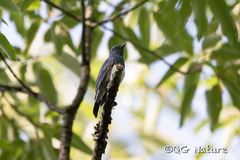
Zappey's Flycatcher

Zappey's Flycatcher

Cyanoptila cumatilis

Silhouette: Martin Bulla, based on François Desbordes' illustration · PhyloPic

LCNTNear ThreatenedVUENCR
Daily sighting probability <5% · Rare
at Doi Inthanon National Park

In 3 days <5% in a week ~10%

40 Verified sightings at Doi Inthanon National Park From 2019 to 2026
57 In all 2 parks
April Best month
☀️ Diurnal When it's spotted

About the Zappey's Flycatcher

Zappey's flycatcher (Cyanoptila cumatilis) is a songbird in the Old World flycatcher family Muscicapidae. It is migratory, breeding in central China from central Sichuan northeast to the mountains west of Beijing, and wintering south to the Malay Peninsula, Sumatra, and Java. It closely similar to, and was formerly considered to be conspecific with, the blue-and-white flycatcher, which breeds further east from northeastern China east to Japan.

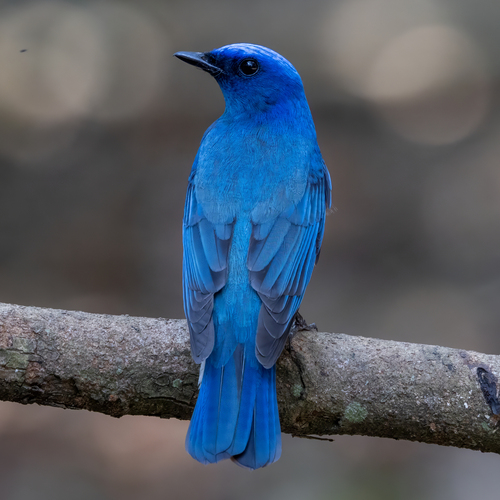
It is a large flycatcher, 17 cm long. The males have slightly greenish turquoise-blue upperparts, greenish-black face and upper breast, and pure white underparts, faintly greyish on the flanks; the tail is similar colour to the back, with two small white patches on the sides at the base of the tail. Zappey's flycatcher differs from blue-and-white flycatcher in the greener-toned blue and black, compared to the more intense dark blue and black of its relative.

The females are similar pattern, but greyish-brown rather than blue, and have a white throat. Immature (yearling) males are intermediate, with blue wings, rump, and tail like adult males, but grey-brown head and mantle and white throat like females. The bill and legs are dark grey to black, and the eyes brown. Wikipedia →
Sounds

Song1:02

China · 2026

© Peter Boesman · XC1147431 · CC BY-NC-ND 4.0

Song0:59

China · 2026

© 混沌牛Zhen niu · XC1140235 · CC BY-NC-SA 4.0

Song1:21

China · 2021

© Zhen niu · XC652937 · CC BY-NC-SA 4.0

Global Distribution

Parks Where Found

# Park Country Daily sighting probability
1 Khao Sok National Park 🇹🇭 Thailand
<5%
2 Doi Inthanon National Park 🇹🇭 Thailand
<5%

Before you go

What are the chances of seeing a Zappey's Flycatcher in Doi Inthanon National Park?

Rare

Under 5% of wildlife watchers report a Zappey's Flycatcher sighting in Doi Inthanon National Park on a given day, based on 40 verified sightings from GBIF citizen-science data from 2019 to 2026. It is the 267th most-seen of the 367 birds we can rate there. Over three days the chance rises to under 5%, and over a week to about 10%, if each day is a fresh chance.

When is the best time to see a Zappey's Flycatcher in Doi Inthanon National Park?

April

In that month about 20% of wildlife watchers report a Zappey's Flycatcher in Doi Inthanon National Park on a given day, against under 5% in May to March, the lowest months.

What time of day is best to see a Zappey's Flycatcher?

Between 9 am and noon

Across all the parks we cover, that three-hour window holds the most Zappey's Flycatcher sightings with a recorded time, and about 8 in 10 of them come between 6 am and 6 pm: it is a daytime animal.

Is Doi Inthanon National Park the best place to see a Zappey's Flycatcher?

Among the best

Of the 2 parks where we can rate Zappey's Flycatcher sightings, Doi Inthanon National Park ranks 2nd at under 5%, level with the leaders once rounded. The best odds are in Khao Sok National Park (Thailand, under 5%).

Which relatives of the Zappey's Flycatcher live in Doi Inthanon National Park?

Same family: Muscicapidae

The closest relatives of the Zappey's Flycatcher that you can see in Doi Inthanon National Park (family Muscicapidae, Old World Flycatchers, Robins, and Chats) are Blue Whistling-Thrush (about 60%), White-browed Shortwing (about 40%) and Large Niltava (about 30%), with each one's daily chance of a sighting.

Where does the Zappey's Flycatcher sighting chance come from?

GBIF citizen-science records

It is estimated from how often the Zappey's Flycatcher is recorded against all the birds logged in Doi Inthanon National Park (40 verified sightings from 2019 to 2026), calibrated against known sighting rates. Figures are rounded to the nearest 10% because citizen-science data supports honest approximations, not decimals, and months with records from fewer than five people show "—". How it works.

← Back to Doi Inthanon National Park