Setina aurita
Daily sighting probability ~10% · With luck
at Ecrins National Park

In 3 days ~20% in a week ~40%

22 Verified sightings at Ecrins National Park From 2019 to 2026
103 In all 3 parks
December Best month
☀️ Diurnal When it's spotted

About the Setina aurita

Setina aurita is a moth of the family Erebidae. It was first described by Eugenius Johann Christoph Esper in 1787. Setina aurita aurita Setina aurita imbuta (Hübner, [1803]) Setina aurita pfisteri Burmann et Tarmann, 1985

Setina aurita teriolensis (Burmann, 1955) This species is only found in central Europe (Austria, France, Germany, Italy, Romania and Switzerland), in part of the Alps between 1,000 and 3,000 meters above sea level. These moths inhabit stony alpine grasslands, rocky slope and sunny meadows.

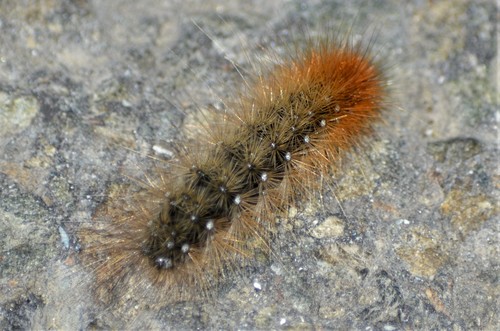
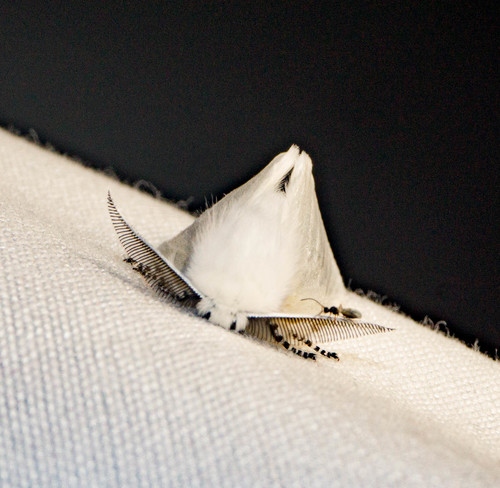
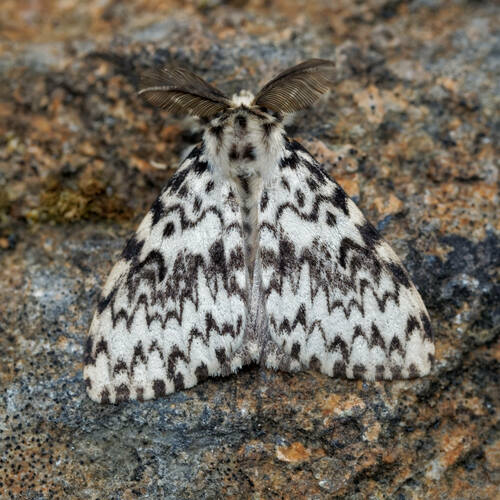
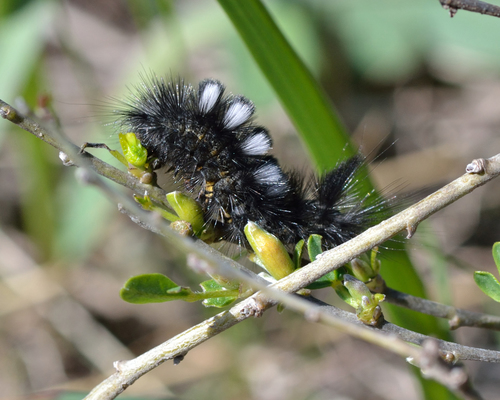
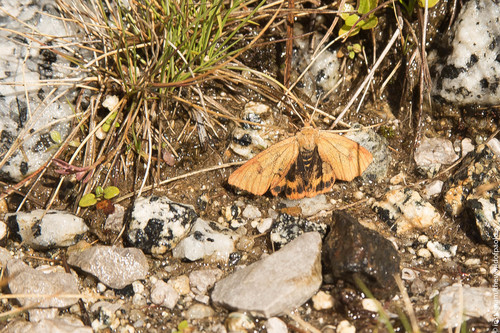
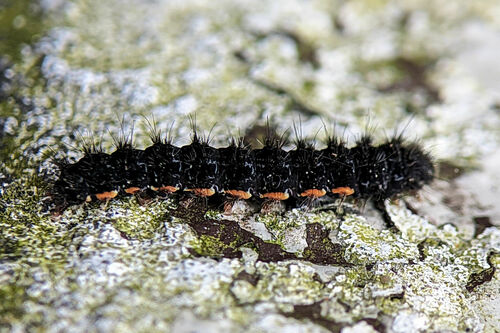
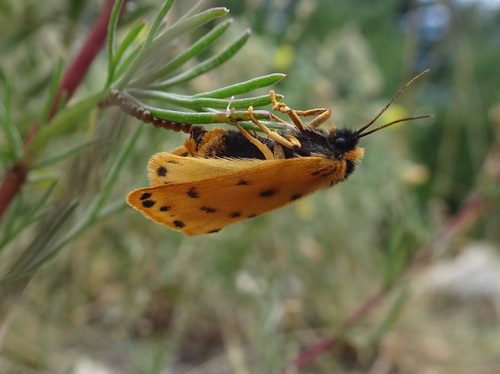
The wingspan of Setina aurita can reach 25–32 mm. These small moths have whitish-yellow to orange-yellow forewings with longitudinal dark brown stripes reaching the wings' margins, where there are black dots. In some specimens only black dots are present on the entire wings. The wing drawing is strongly dependent on the altitude. Usually the moths living at more than 2,000 meters show stripes, while at lower elevation they are more dotted. Caterpillars can reach a length of about 22 millimetres (0.87 in). They are exceptionally long haired, yellow, with five longitudinal grayish-black stripes and grayish-black warts... Wikipedia →
Global Distribution

Parks Where Found

# Park Country Daily sighting probability
1 Vanoise National Park 🇫🇷 France
~10%
2 Ecrins National Park 🇫🇷 France
~10%
3 Mercantour National Park 🇫🇷 France
~10%

Before you go

What are the chances of seeing a Setina aurita in Ecrins National Park?

With luck

About 10% of wildlife watchers report a Setina aurita sighting in Ecrins National Park on a given day, based on 22 verified sightings from GBIF citizen-science data from 2019 to 2026. It is the 249th most-seen of the 251 insects we can rate there. Over three days the chance rises to about 20%, and over a week to about 40%, if each day is a fresh chance.

When is the best time to see a Setina aurita in Ecrins National Park?

December

In that month about 20% of wildlife watchers report a Setina aurita in Ecrins National Park on a given day, against under 5% in January–May and September–November, the lowest months. That is one of Ecrins National Park's wettest months, with about 160 mm of rain against 50 mm in July.

What time of day is best to see a Setina aurita?

Between noon and 3 pm

Across all the parks we cover, that three-hour window holds the most Setina aurita sightings with a recorded time, and about 9 in 10 of them come between 6 am and 6 pm: it is a daytime animal.

Is Ecrins National Park the best place to see a Setina aurita?

Among the best

Of the 3 parks where we can rate Setina aurita sightings, Ecrins National Park ranks 2nd at about 10%, level with the leaders once rounded. The best odds are in Vanoise National Park (France, about 10%).

Which relatives of the Setina aurita live in Ecrins National Park?

Same family: Erebidae

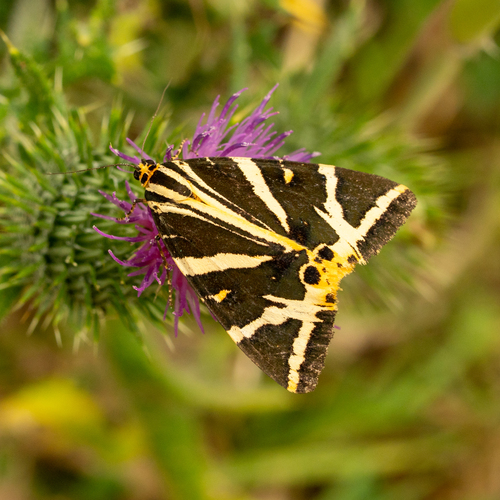
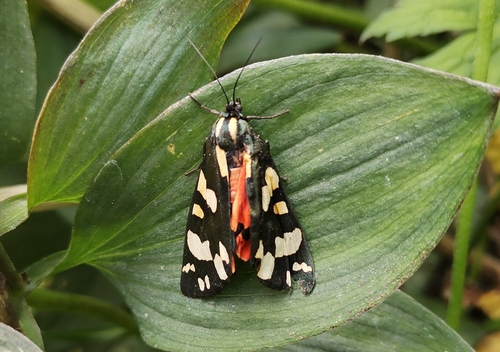
The closest relatives of the Setina aurita that you can see in Ecrins National Park (family Erebidae, Underwing, Tiger, Tussock, and Allied Moths) are Jersey Tiger (about 20%), Scarlet Tiger (about 10%) and Garden Tiger (about 10%), with each one's daily chance of a sighting.

Where does the Setina aurita sighting chance come from?

GBIF citizen-science records

It is estimated from how often the Setina aurita is recorded against all the insects logged in Ecrins National Park (22 verified sightings from 2019 to 2026), calibrated against known sighting rates. Figures are rounded to the nearest 10% because citizen-science data supports honest approximations, not decimals, and months with records from fewer than five people show "—". How it works.

← Back to Ecrins National Park