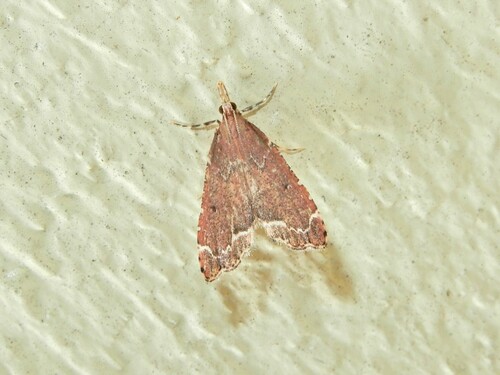
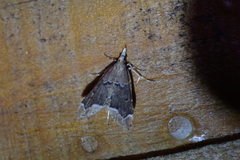
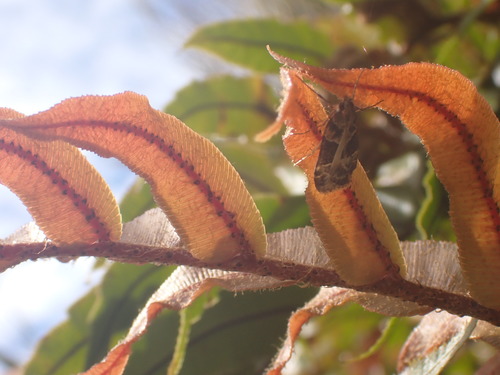
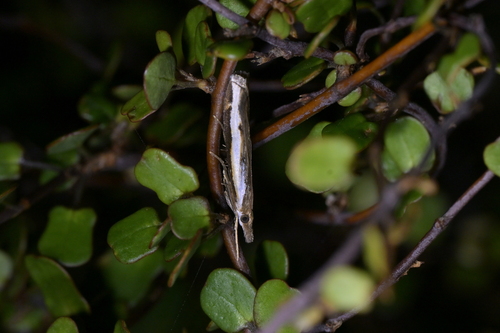
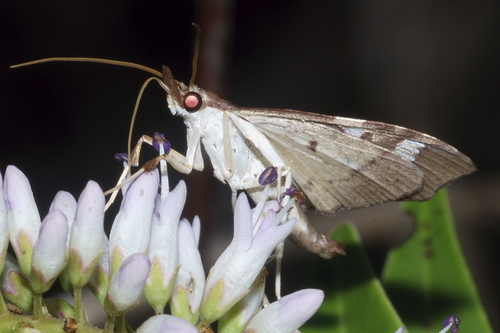
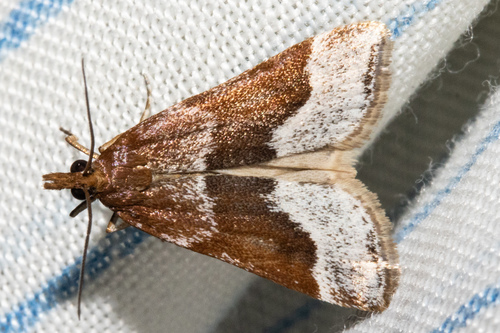
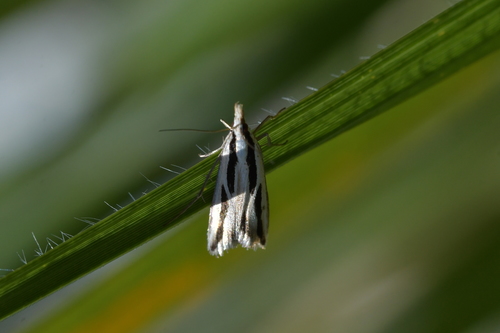
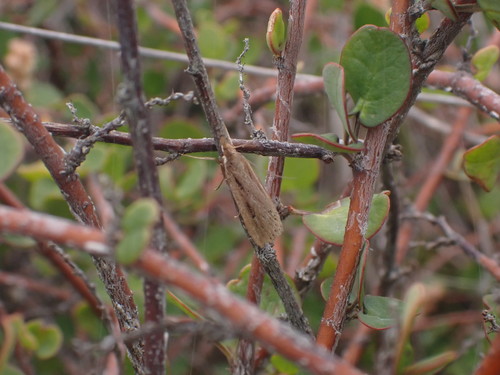
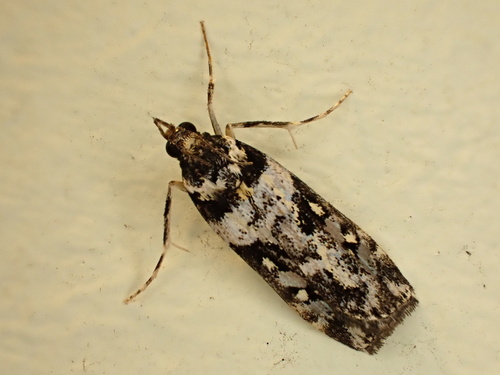
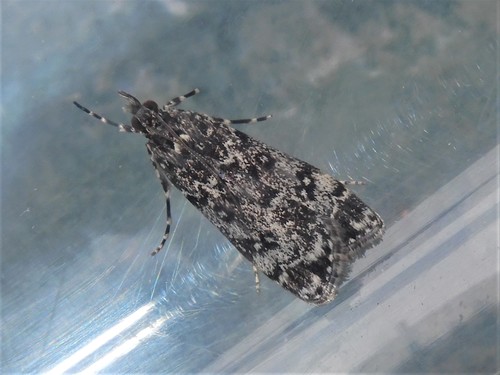
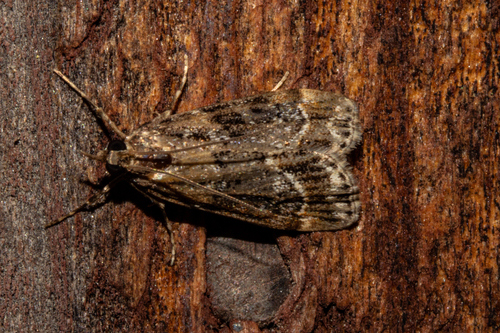
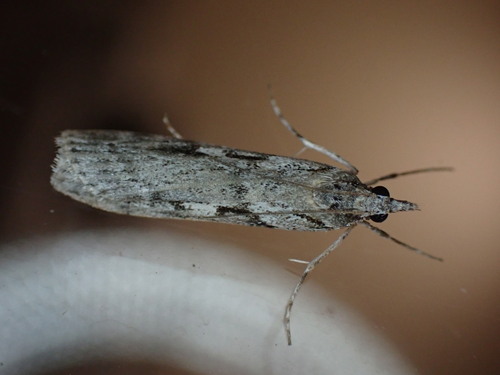
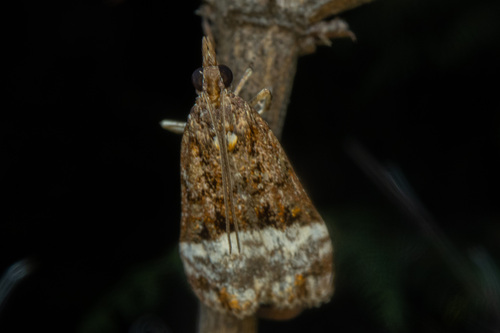
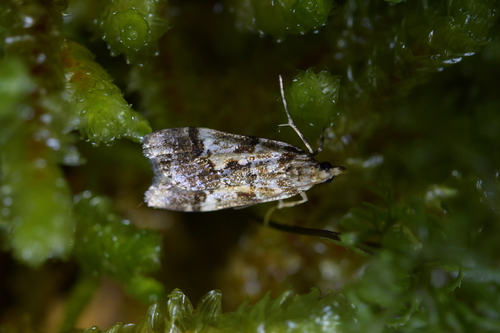
Eastern Black Tabby

Eastern Black Tabby

Diplopseustis perieresalis

Daily sighting probability ~10% · With luck
at Egmont National Park

In 3 days ~20% in a week ~50%

5 Verified sightings at Egmont National Park From 2019 to 2026
16 In all 2 parks
February Best month
🌙 Nocturnal When it's spotted

About the Eastern Black Tabby

Diplopseustis perieresalis is a species of moth in the family Crambidae. It is widespread in the Oriental region, Australia and New Zealand, but was introduced to the Western Palaearctic realm, where it quickly expanded its range, and where it is now found in Great Britain, the Netherlands, Belgium, Germany, France, Switzerland, Spain, Portugal and the Canary Islands. In the Afrotropics, a single female specimen has been collected in 1904 in Sudan.

The wingspan is about 15 mm. The larvae very likely feed on some part of the New Zealand endemic sedge makura (Carex secta), based on observations in Central Otago. Wikipedia →

Global Distribution

Parks Where Found

# Park Country Daily sighting probability
1 Rakiura National Park 🇳🇿 New Zealand
~10%
2 Egmont National Park 🇳🇿 New Zealand
~10%

Cities Where Found

# City Country Daily sighting probability
1 Auckland 🇳🇿 New Zealand
~10%
2 Brisbane 🇦🇺 Australia
<5%
3 Melbourne 🇦🇺 Australia
<5%
4 Sydney 🇦🇺 Australia
<5%

Before you go

What are the chances of seeing an Eastern Black Tabby in Egmont National Park?

With luck

About 10% of wildlife watchers report an Eastern Black Tabby sighting in Egmont National Park on a given day, based on 5 verified sightings from GBIF citizen-science data from 2019 to 2026. It is the 153rd most-seen of the 191 insects we can rate there. Over three days the chance rises to about 20%, and over a week to about 50%, if each day is a fresh chance.

When is the best time to see an Eastern Black Tabby in Egmont National Park?

February

In that month about 20% of wildlife watchers report an Eastern Black Tabby in Egmont National Park on a given day, against under 5% in March and May–December, the lowest months.

What time of day is best to see an Eastern Black Tabby?

Between 8 and 11 pm

Across all the parks we cover, that three-hour window holds the most Eastern Black Tabby sightings with a recorded time, and about 9 in 10 of them come between 6 pm and 6 am: it is mostly seen at night.

Is Egmont National Park the best place to see an Eastern Black Tabby?

Among the best

Of the 2 parks where we can rate Eastern Black Tabby sightings, Egmont National Park ranks 2nd at about 10%, level with the leaders once rounded. The best odds are in Rakiura National Park (New Zealand, about 10%).

Which relatives of the Eastern Black Tabby live in Egmont National Park?

Same family: Crambidae

The closest relatives of the Eastern Black Tabby that you can see in Egmont National Park (family Crambidae, Crambid Snout Moths) are Eudonia melanaegis (about 10%), Common Grass Moth (about 10%) and Clematis Triangle (about 10%), with each one's daily chance of a sighting.

Where does the Eastern Black Tabby sighting chance come from?

GBIF citizen-science records

It is estimated from how often the Eastern Black Tabby is recorded against all the insects logged in Egmont National Park (5 verified sightings from 2019 to 2026), calibrated against known sighting rates. Figures are rounded to the nearest 10% because citizen-science data supports honest approximations, not decimals, and months with records from fewer than five people show "—". How it works.

← Back to Egmont National Park