Gray's Sticky-toed Gecko

Gray's Sticky-toed Gecko

Mokopirirakau granulatus

Silhouette: Beth Reinke · PhyloPic

LCNTVUVulnerableENCR Endemic
Daily sighting probability ~10% · With luck
at Egmont National Park

In 3 days ~30% in a week ~50%

10 Verified sightings at Egmont National Park From 2019 to 2026
10 In 1 park
March Best month
☀️🌙 Day & Night When it's spotted

About the Gray's Sticky-toed Gecko

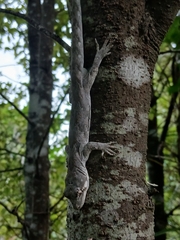
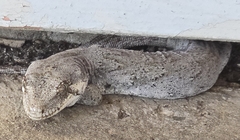
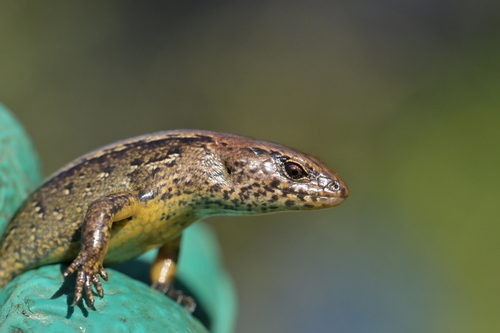
The forest gecko (Mokopirirakau granulatus) is a species of gecko that is endemic to New Zealand. Its Māori name is moko pirirākau ("lizard that clings to trees"). It is found in much of the north and central North Island, and the north and upper west of the South Island. It is a protected species under the Wildlife Act 1953.

The species was first described by John Edward Gray in 1845, based on a holotype found in the British Museum. He named it Naultinus granulatus, or the granular naultinus. Granulatus refers to the granular texture of the skin. By the 1880s the forest gecko had been recombined as a member of the genus Hoplodactylus.

In 2011 the genus Mokopirirakau was established due to a phylogenetic analysis of New Zealand lizard genera. The forest gecko was placed within this genus, and became the type species. The rare Cupola gecko of the Nelson Lakes National Park was suspected to be a separate species, until DNA testing in 2021 showed it to be the forest gecko.

Their backs are brown-grey with bright w-shaped splotches, resembling tree bark. Geckos in the southern end of their range often have brighter shades of red and orange. They can rapidly... Wikipedia →

Global Distribution

Parks Where Found

# Park Country Daily sighting probability
1 Egmont National Park 🇳🇿 New Zealand
~10%

More parks will be added in future updates.

Zoos & Centres Where Found

# Zoo / Centre Country
1 Orana Wildlife Park 🇳🇿 New Zealand In captivity
2 Chongqing Zoo 🇨🇳 China In captivity
3 National Zoo of Malaysia 🇲🇾 Malaysia In captivity
4 Auckland Zoo 🇳🇿 New Zealand In captivity
5 Wellington Zoo 🇳🇿 New Zealand In captivity
6 Kiwi Valley Farm Park 🇳🇿 New Zealand In captivity
7 Willowbank Wildlife Reserve 🇳🇿 New Zealand In captivity
8 West Lynn Garden 🇳🇿 New Zealand In captivity
9 Ōtorohanga Kiwi House 🇳🇿 New Zealand In captivity
10 Wingspan National Bird of Prey Centre 🇳🇿 New Zealand In captivity
11 Penang Bird Park 🇲🇾 Malaysia In captivity
12 Island Bay Marine Education Centre 🇳🇿 New Zealand In captivity
13 Kamo Wildlife Sanctuary 🇳🇿 New Zealand In captivity

Before you go

What are the chances of seeing a Gray's Sticky-toed Gecko in Egmont National Park?

With luck

About 10% of wildlife watchers report a Gray's Sticky-toed Gecko sighting in Egmont National Park on a given day, based on 10 verified sightings from GBIF citizen-science data from 2019 to 2026. Over three days the chance rises to about 30%, and over a week to about 50%, if each day is a fresh chance.

When is the best time to see a Gray's Sticky-toed Gecko in Egmont National Park?

February–March and November

In those months about 20% of wildlife watchers report a Gray's Sticky-toed Gecko in Egmont National Park on a given day, against under 5% in April to October, the lowest months.

What time of day is best to see a Gray's Sticky-toed Gecko?

Between 1 and 4 pm

Across all the parks we cover, that three-hour window holds the most Gray's Sticky-toed Gecko sightings with a recorded time, and about 6 in 10 of them come between 6 am and 6 pm: it is seen both by day and at night.

Where else can you see a Gray's Sticky-toed Gecko?

Only Egmont National Park, in our data

Egmont National Park is the only park on Wallace's Line with enough records to rate Gray's Sticky-toed Gecko sightings: about 10% of wildlife watchers there report one on a given day.

Where does the Gray's Sticky-toed Gecko sighting chance come from?

GBIF citizen-science records

It is estimated from how often the Gray's Sticky-toed Gecko is recorded against all the reptiles logged in Egmont National Park (10 verified sightings from 2019 to 2026), calibrated against known sighting rates. Figures are rounded to the nearest 10% because citizen-science data supports honest approximations, not decimals, and months with records from fewer than five people show "—". How it works.

← Back to Egmont National Park