Hemiandrus pallitarsis

Hemiandrus pallitarsis

Hemiandrus pallitarsis

Endemic
Daily sighting probability ~20% · Possible
at Egmont National Park

In 3 days ~50% in a week ~80%

29 Verified sightings at Egmont National Park From 2019 to 2026
29 In 1 park
January Best month
🌙 Nocturnal When it's spotted

About the Hemiandrus pallitarsis

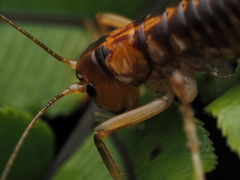
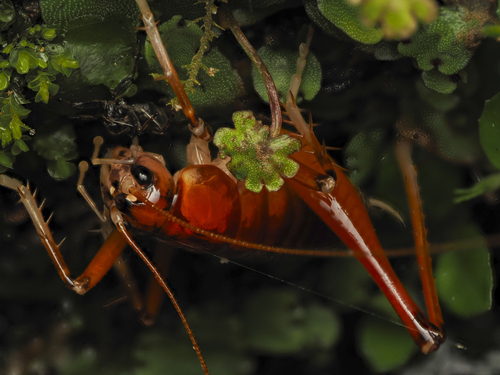
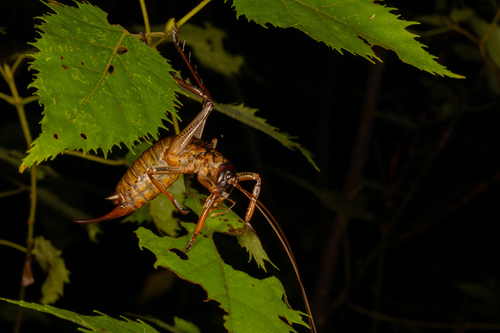
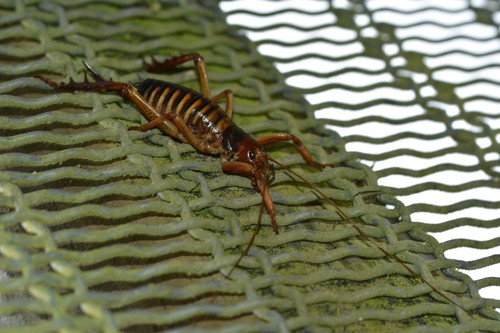
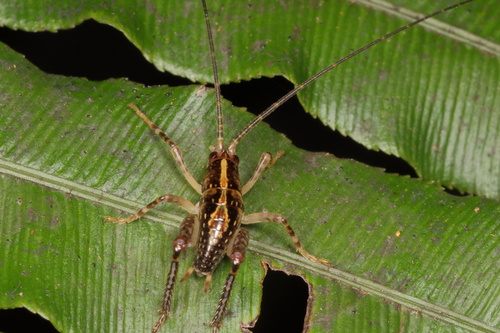
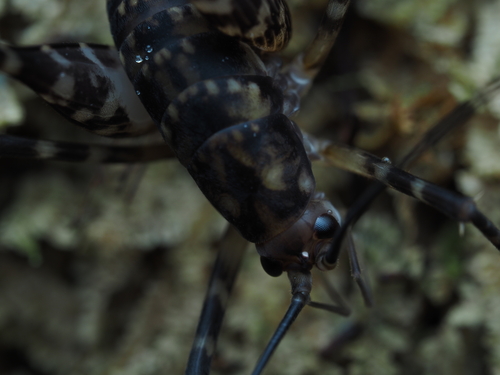
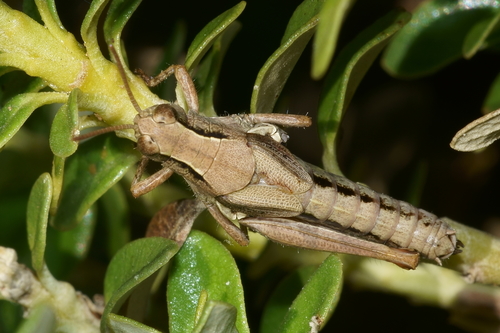
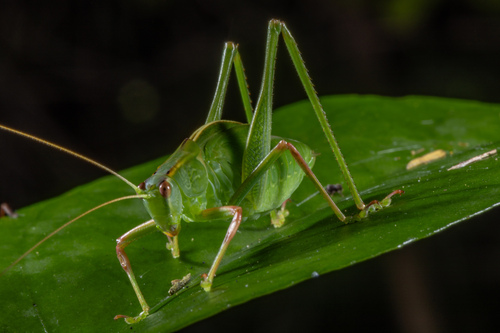
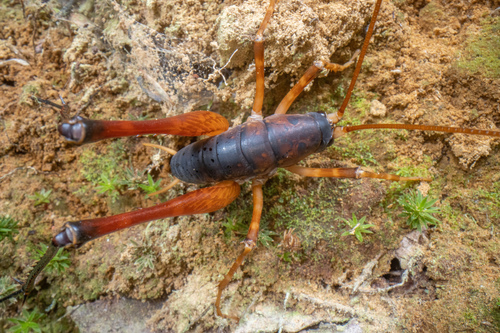
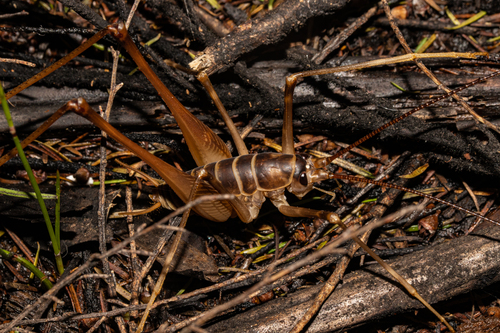
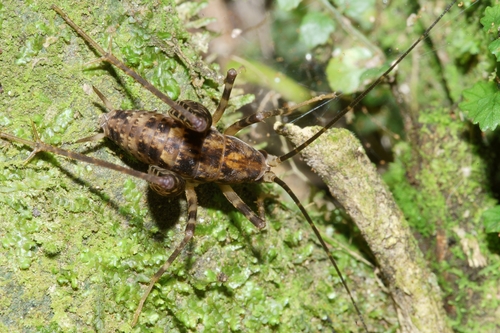
Hemiandrus pallitarsis is a species of ground weta endemic to New Zealand. This nocturnal species hides in burrows during the day, and can be an important food for kiwi. They can be identified by a single foretibial spine, three prolateral spines, and four retrolateral spines on the mesotibia, and their tibia lacks a tympanal membrane (they hear only through vibrations in the ground). The female has an unusual appendage on her abdomen, and the male has blackened hooks on his last tergite. They have a two-year life cycle, and their diet is largely unknown. Unusually for an insect, the female shows maternal care towards her eggs and nymphs.

Hemiandrus pallitarsis was first described by Francis Walker in 1871 in the genus Libanasa, and in 1906 W. F. Kirby moved it to the genus Ceuthophilus. In 1938, Kjell Ander erected the genus Hemiandrus, and moved this species to it, under the species name furcifer. This species is therefore synonymous with both Libanasa pallitarsis Walker and Hemiandrus furcifer Ander.

Hemiandrus pallitarsis is endemic to the North Island of New Zealand. They are widespread throughout this distribution and are relatively abundant... Wikipedia →
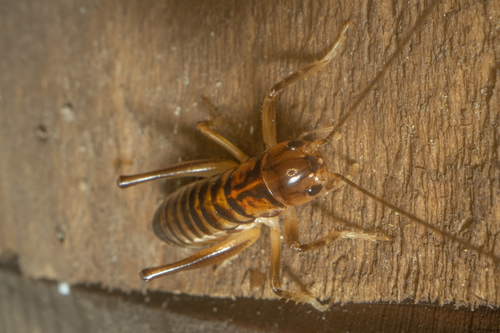
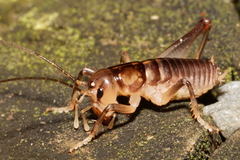
Global Distribution

Parks Where Found

# Park Country Daily sighting probability
1 Egmont National Park 🇳🇿 New Zealand
~20%

More parks will be added in future updates.

Cities Where Found

# City Country Daily sighting probability
1 Auckland 🇳🇿 New Zealand
<5%

Closest Relatives at Egmont National Park

Before you go

What are the chances of seeing a Hemiandrus pallitarsis in Egmont National Park?

Possible

About 20% of wildlife watchers report a Hemiandrus pallitarsis sighting in Egmont National Park on a given day, based on 29 verified sightings from GBIF citizen-science data from 2019 to 2026. It is the 11th most-seen of the 191 insects we can rate there. Over three days the chance rises to about 50%, and over a week to about 80%, if each day is a fresh chance.

When is the best time to see a Hemiandrus pallitarsis in Egmont National Park?

January

In that month about 40% of wildlife watchers report a Hemiandrus pallitarsis in Egmont National Park on a given day, against under 5% in May–September and November, the lowest months.

What time of day is best to see a Hemiandrus pallitarsis?

Between 8 and 11 pm

Across all the parks we cover, that three-hour window holds the most Hemiandrus pallitarsis sightings with a recorded time, and about 9 in 10 of them come between 6 pm and 6 am: it is mostly seen at night.

Where else can you see a Hemiandrus pallitarsis?

Only Egmont National Park, in our data

Egmont National Park is the only park on Wallace's Line with enough records to rate Hemiandrus pallitarsis sightings: about 20% of wildlife watchers there report one on a given day.

Where does the Hemiandrus pallitarsis sighting chance come from?

GBIF citizen-science records

It is estimated from how often the Hemiandrus pallitarsis is recorded against all the insects logged in Egmont National Park (29 verified sightings from 2019 to 2026), calibrated against known sighting rates. Figures are rounded to the nearest 10% because citizen-science data supports honest approximations, not decimals, and months with records from fewer than five people show "—". How it works.

← Back to Egmont National Park