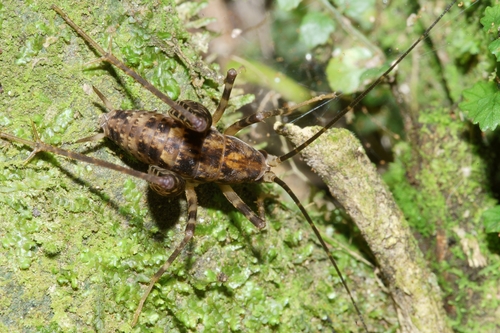
Wellington Tree Wētā

Wellington Tree Wētā

Hemideina crassidens

Endemic
Daily sighting probability ~10% · With luck
at Egmont National Park

In 3 days ~30% in a week ~50%

10 Verified sightings at Egmont National Park From 2019 to 2026
48 In all 2 parks
January Best month
☀️🌙 Day & Night When it's spotted

About the Wellington Tree Wētā

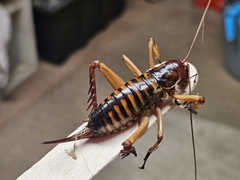
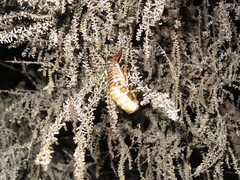
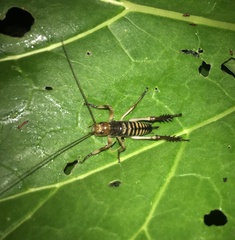
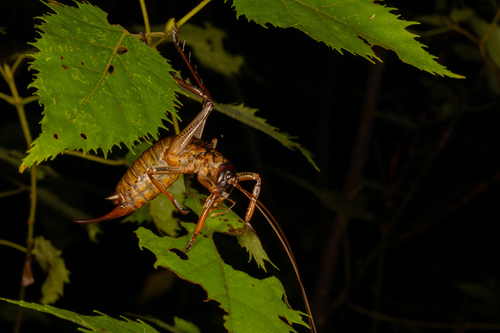
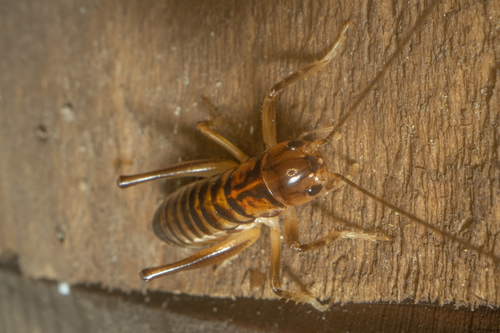
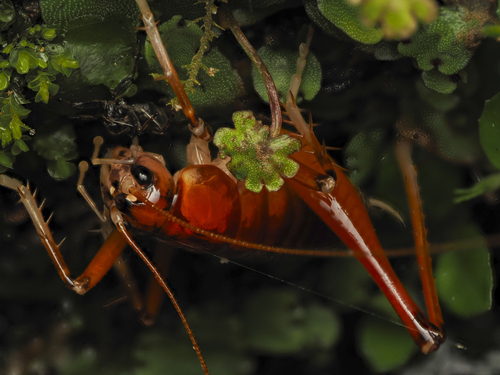
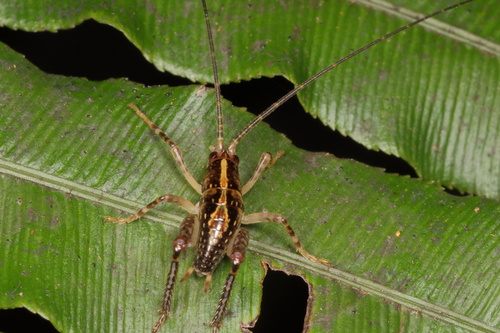
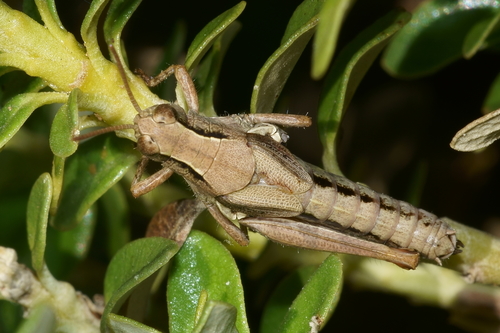
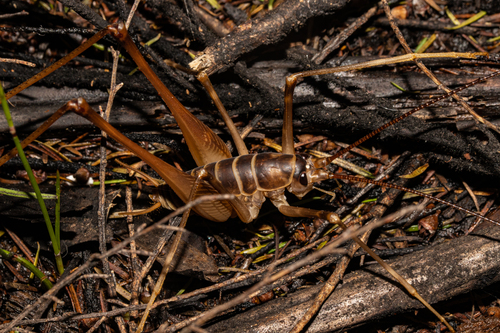
Hemideina crassidens, commonly known as the Wellington tree wētā, is a large, flightless, nocturnal insect in the family Anostostomatidae. This wētā species is endemic to New Zealand and populates regions in the southern half of North Island/Te Ika a Maui and the north-west of the South Island/Te Wai Pounamu. They forage arboreally during the night and are most likely polyphagous. There is obvious sexual dimorphism in adults. Individuals are reliant on tree cavities for refuge, social interactions and mating.

The conservation status of H. crassidens is "not threatened". This species was first described as Anostostoma crassidens in 1851 by Émile Blanchard. Although Hemideina crassidens is endemic to New Zealand, the first known specimen was collected in Chile, presumably by Claude Gay. It has been suggested that this species was accidentally introduced to Chile due to trade routes (although no more specimens have been found). In 1935, it was recognized as belonging to Hemideina by Heinrich Hugo Karny and subsequently moved to this genus.

There have been eleven previous descriptions of H. crassidens that were later synonymized. Of these, eight were in the Hemideina and... Wikipedia →
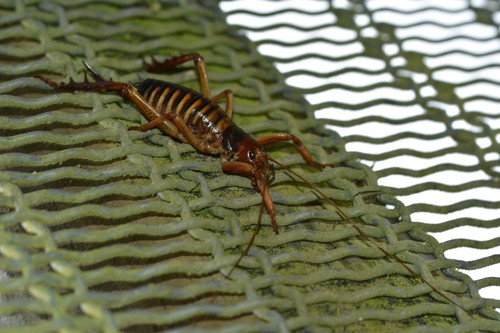
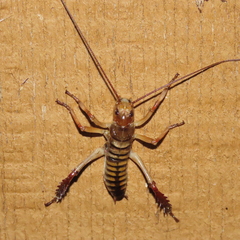
Global Distribution

Parks Where Found

# Park Country Daily sighting probability
1 Abel Tasman National Park 🇳🇿 New Zealand
~30%
2 Egmont National Park 🇳🇿 New Zealand
~10%

Closest Relatives at Egmont National Park

Before you go

What are the chances of seeing a Wellington Tree Wētā in Egmont National Park?

With luck

About 10% of wildlife watchers report a Wellington Tree Wētā sighting in Egmont National Park on a given day, based on 10 verified sightings from GBIF citizen-science data from 2019 to 2026. It is the 79th most-seen of the 191 insects we can rate there. Over three days the chance rises to about 30%, and over a week to about 50%, if each day is a fresh chance.

When is the best time to see a Wellington Tree Wētā in Egmont National Park?

January–March and May

In those months about 20% of wildlife watchers report a Wellington Tree Wētā in Egmont National Park on a given day, against under 5% in April and June–December, the lowest months.

What time of day is best to see a Wellington Tree Wētā?

Between 8 and 11 pm

Across all the parks we cover, that three-hour window holds the most Wellington Tree Wētā sightings with a recorded time, and about half of them come between 6 pm and 6 am: it is seen both by day and at night.

Is Egmont National Park the best place to see a Wellington Tree Wētā?

2nd of 2

Of the 2 parks where we can rate Wellington Tree Wētā sightings, Egmont National Park ranks 2nd at about 10%. The best odds are in Abel Tasman National Park (New Zealand, about 30%).

Where does the Wellington Tree Wētā sighting chance come from?

GBIF citizen-science records

It is estimated from how often the Wellington Tree Wētā is recorded against all the insects logged in Egmont National Park (10 verified sightings from 2019 to 2026), calibrated against known sighting rates. Figures are rounded to the nearest 10% because citizen-science data supports honest approximations, not decimals, and months with records from fewer than five people show "—". How it works.

← Back to Egmont National Park