Lemon Tree Borer

Lemon Tree Borer

Oemona hirta

Endemic
Daily sighting probability ~10% · With luck
at Egmont National Park

In 3 days ~30% in a week ~60%

9 Verified sightings at Egmont National Park From 2019 to 2026
9 In 1 park
January Best month
🌙 Nocturnal When it's spotted

About the Lemon Tree Borer

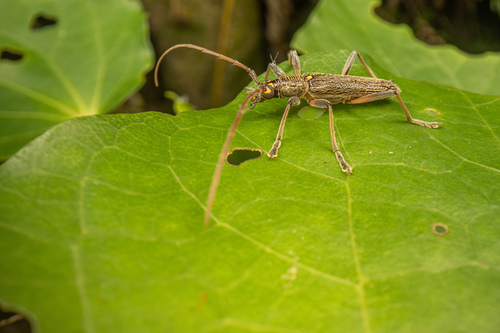
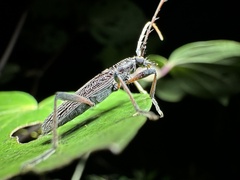
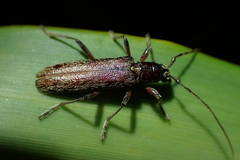
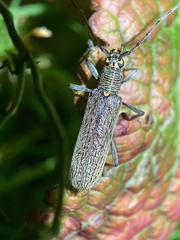
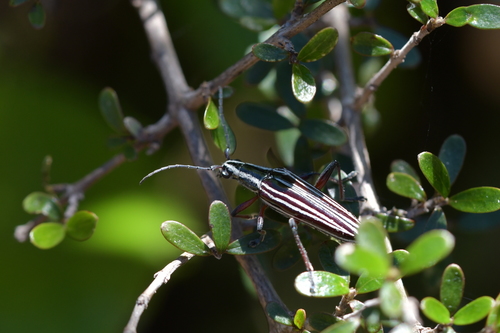
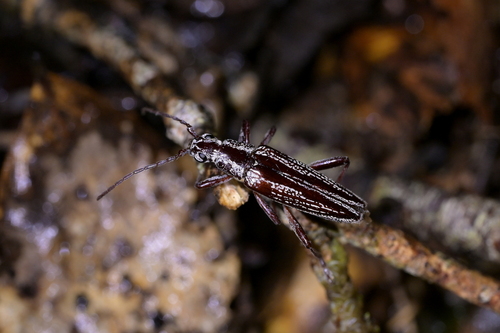
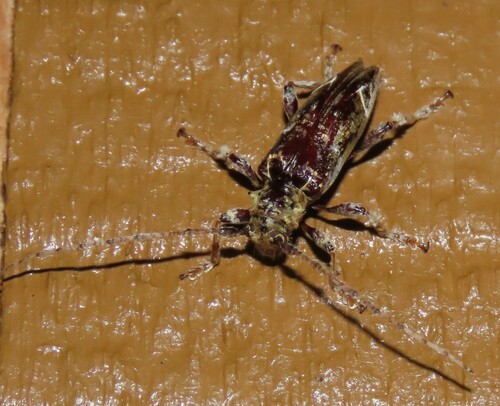
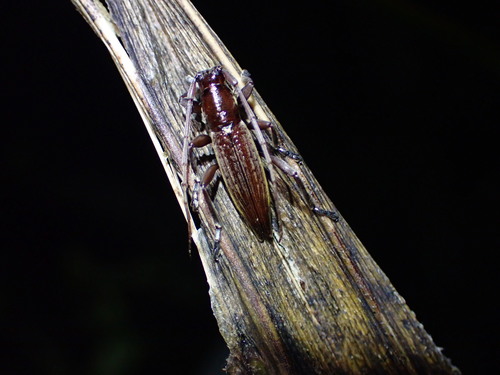
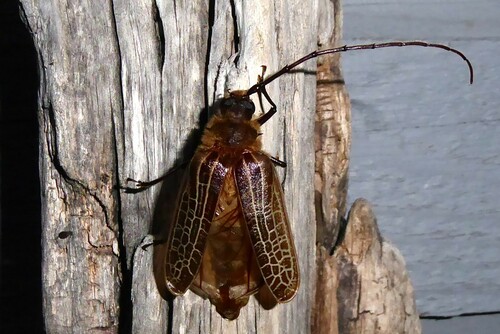
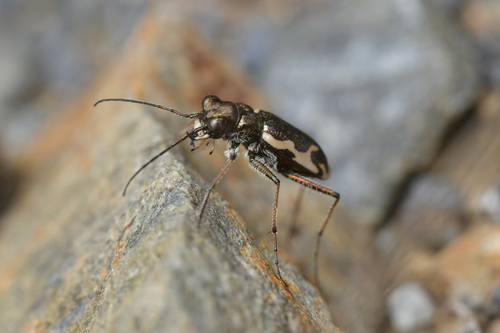
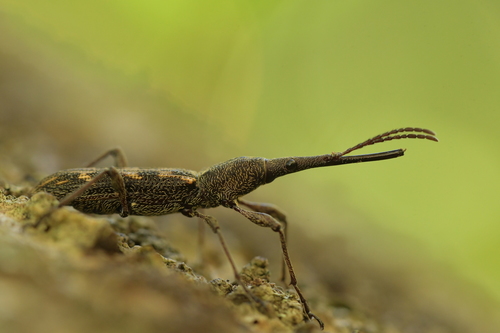
Oemona hirta, the lemon tree borer, also known as the whistling beetle or the singing beetle, is a longhorn beetle endemic to New Zealand. Its larvae are generalist feeders, boring into the wood of a wide variety of trees, native and introduced. When citrus orchards were first established in New Zealand, this beetle started inflicting serious damage, and so gained the name "lemon tree borer". Four species within the genus Oemona have been identified, suggesting that more species could be found. When disturbed by predators or humans, the adult beetle stridulates creating a "rasp" or "squeak" sound by rubbing its thorax and head together against an area of thin ridges. Māori would eat a liquid called "pia manuka", which was produced by manuka trees when its wood was damaged by the larvae. When Captain Cook first arrived in NZ, his naturalists, Banks and Solander, collected a lemon tree borer in their first collection between 1769 and 1771. This oldest collected specimen can be found in the British Museum. A few years after the first collection, the species would be first described by the Danish naturalist Fabricius in 1775.

Adults: The lemon tree borer is a plain looking... Wikipedia →

Global Distribution

Parks Where Found

# Park Country Daily sighting probability
1 Egmont National Park 🇳🇿 New Zealand
~10%

More parks will be added in future updates.

Cities Where Found

# City Country Daily sighting probability
1 Auckland 🇳🇿 New Zealand
~10%

Before you go

What are the chances of seeing a Lemon Tree Borer in Egmont National Park?

With luck

About 10% of wildlife watchers report a Lemon Tree Borer sighting in Egmont National Park on a given day, based on 9 verified sightings from GBIF citizen-science data from 2019 to 2026. It is the 69th most-seen of the 191 insects we can rate there. Over three days the chance rises to about 30%, and over a week to about 60%, if each day is a fresh chance.

When is the best time to see a Lemon Tree Borer in Egmont National Park?

January

In that month about 30% of wildlife watchers report a Lemon Tree Borer in Egmont National Park on a given day, against under 5% in April to December, the lowest months.

What time of day is best to see a Lemon Tree Borer?

Between 8 and 11 pm

Across all the parks we cover, that three-hour window holds the most Lemon Tree Borer sightings with a recorded time, and about 8 in 10 of them come between 6 pm and 6 am: it is mostly seen at night.

Where else can you see a Lemon Tree Borer?

Only Egmont National Park, in our data

Egmont National Park is the only park on Wallace's Line with enough records to rate Lemon Tree Borer sightings: about 10% of wildlife watchers there report one on a given day.

Which relatives of the Lemon Tree Borer live in Egmont National Park?

Same family: Cerambycidae

The closest relatives of the Lemon Tree Borer that you can see in Egmont National Park (family Cerambycidae, Longhorn Beetles) are New Zealand Striped Longhorn (about 20%), Coptomma sticticum (about 10%) and Hissing Longhorn (about 10%), with each one's daily chance of a sighting.

Where does the Lemon Tree Borer sighting chance come from?

GBIF citizen-science records

It is estimated from how often the Lemon Tree Borer is recorded against all the insects logged in Egmont National Park (9 verified sightings from 2019 to 2026), calibrated against known sighting rates. Figures are rounded to the nearest 10% because citizen-science data supports honest approximations, not decimals, and months with records from fewer than five people show "—". How it works.

← Back to Egmont National Park