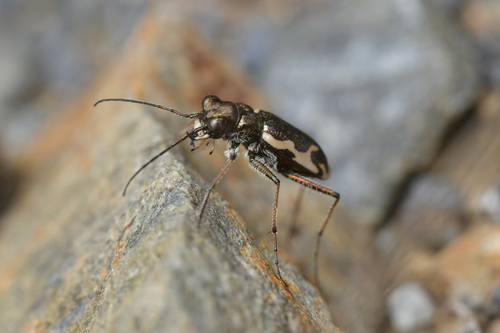
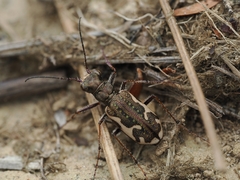
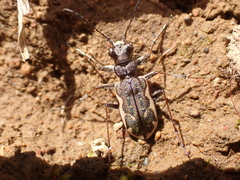
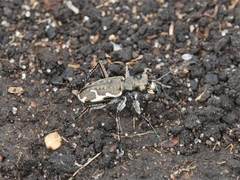
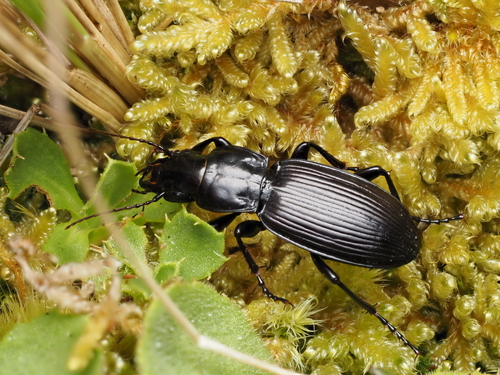
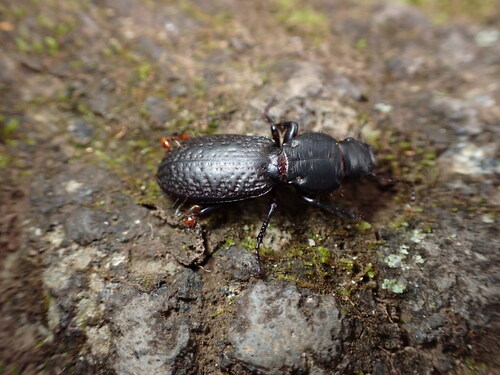
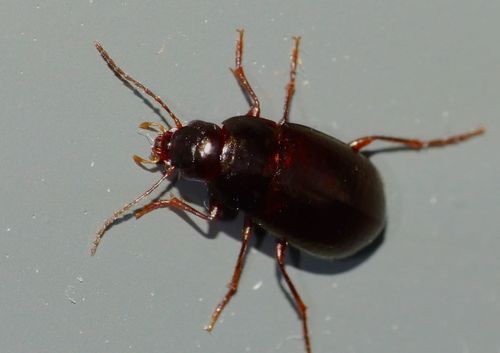
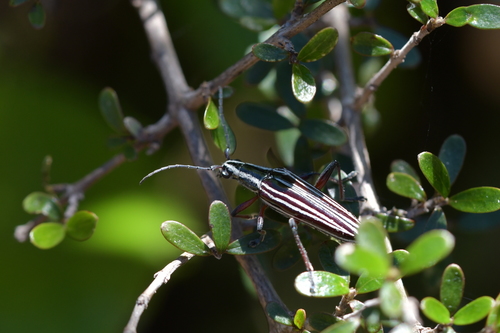
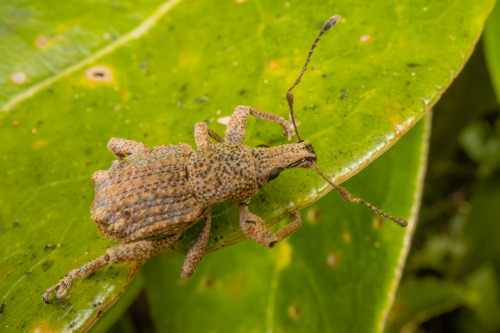
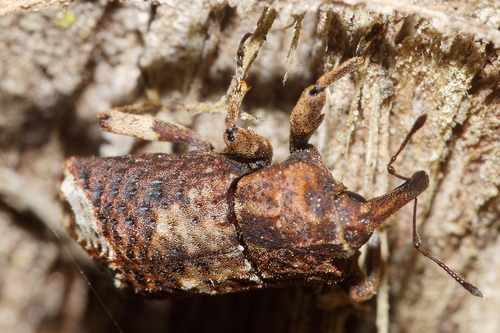
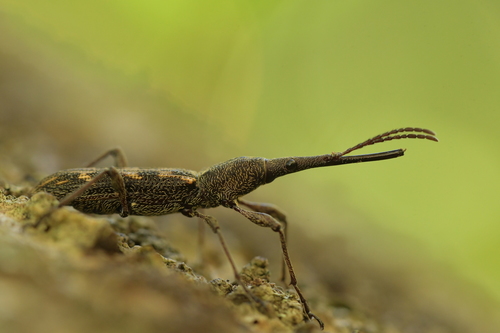
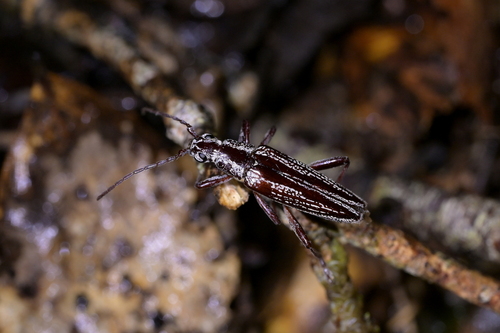
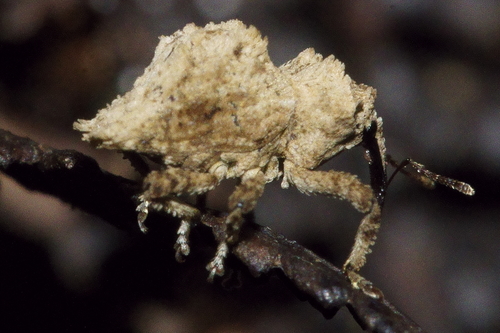

New Zealand Common Tiger Beetle

New Zealand Common Tiger Beetle

Neocicindela tuberculata

Endemic
Daily sighting probability ~10% · With luck
at Egmont National Park

In 3 days ~40% in a week ~70%

17 Verified sightings at Egmont National Park From 2019 to 2026
34 In all 2 parks
March Best month
☀️ Diurnal When it's spotted

About the New Zealand Common Tiger Beetle

Neocicindela tuberculata is a species of tiger beetle endemic to New Zealand and is sometimes referred to as the tuberculate tiger beetle or the common tiger beetle. It was first described in 1775 by Johan Christian Fabricius from specimens collected during Captain Cook's first voyage, making it the first ground beetle to be described from New Zealand. The species has been suggested to be roughly 0.92 million years old. It can be distinguished from other species in Neocicindela by the colour pattern of its elytra. It is widespread throughout most of New Zealand, and occurs as adults from September to July. As larvae, they live in burrows in dry clay banks. Both the adult and the larvae are predators that eat other insects. In the Māori language they are sometimes referred to as moeone, among other names.

This tiger beetle was first described as Cicindela tuberculata in 1775 by Johan Christian Fabricius in his first major publication, Systema entomologiae. The type specimens were collected by naturalists during Captain Cook's first voyage, which was the first time naturalists collected specimens from New Zealand. As such, this species is regarded as the first description... Wikipedia →

Global Distribution

Parks Where Found

# Park Country Daily sighting probability
1 Abel Tasman National Park 🇳🇿 New Zealand
~20%
2 Egmont National Park 🇳🇿 New Zealand
~10%

Cities Where Found

# City Country Daily sighting probability
1 Auckland 🇳🇿 New Zealand
<5%

Before you go

What are the chances of seeing a New Zealand Common Tiger Beetle in Egmont National Park?

With luck

About 10% of wildlife watchers report a New Zealand Common Tiger Beetle sighting in Egmont National Park on a given day, based on 17 verified sightings from GBIF citizen-science data from 2019 to 2026. It is the 36th most-seen of the 191 insects we can rate there. Over three days the chance rises to about 40%, and over a week to about 70%, if each day is a fresh chance.

When is the best time to see a New Zealand Common Tiger Beetle in Egmont National Park?

March

In that month about 30% of wildlife watchers report a New Zealand Common Tiger Beetle in Egmont National Park on a given day, against under 5% in April–October and December, the lowest months.

What time of day is best to see a New Zealand Common Tiger Beetle?

Between 10 am and 1 pm

Across all the parks we cover, that three-hour window holds the most New Zealand Common Tiger Beetle sightings with a recorded time, and about 9 in 10 of them come between 6 am and 6 pm: it is a daytime animal.

Is Egmont National Park the best place to see a New Zealand Common Tiger Beetle?

2nd of 2

Of the 2 parks where we can rate New Zealand Common Tiger Beetle sightings, Egmont National Park ranks 2nd at about 10%. The best odds are in Abel Tasman National Park (New Zealand, about 20%).

Which relatives of the New Zealand Common Tiger Beetle live in Egmont National Park?

Same family: Carabidae

The closest relatives of the New Zealand Common Tiger Beetle that you can see in Egmont National Park (family Carabidae, Ground Beetles) are Plocamostethus planiusculus (about 20%), Mecodema crenicolle (about 10%) and Amarotypus edwardsii (about 10%), with each one's daily chance of a sighting.

Where does the New Zealand Common Tiger Beetle sighting chance come from?

GBIF citizen-science records

It is estimated from how often the New Zealand Common Tiger Beetle is recorded against all the insects logged in Egmont National Park (17 verified sightings from 2019 to 2026), calibrated against known sighting rates. Figures are rounded to the nearest 10% because citizen-science data supports honest approximations, not decimals, and months with records from fewer than five people show "—". How it works.

← Back to Egmont National Park