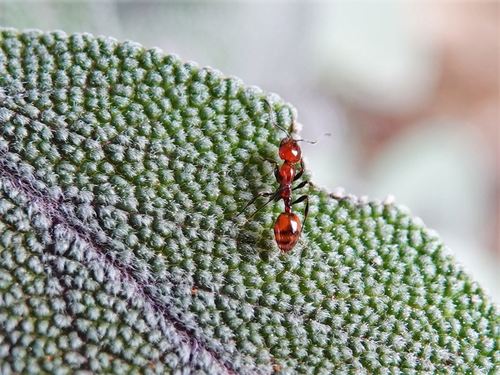
Southern Ant

Southern Ant

Monomorium antarcticum

Daily sighting probability ~10% · With luck
at Egmont National Park

In 3 days ~30% in a week ~50%

7 Verified sightings at Egmont National Park From 2019 to 2026
24 In all 3 parks
March Best month
☀️ Diurnal When it's spotted

About the Southern Ant

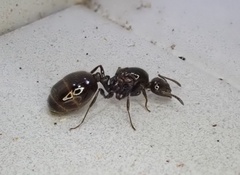
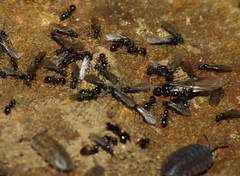
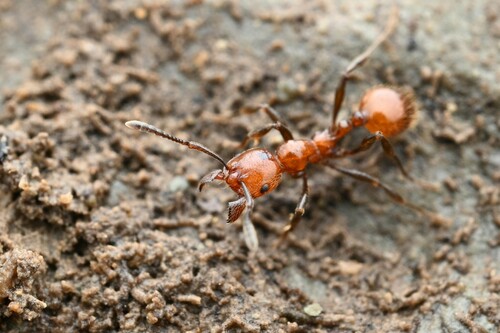
Chelaner antarcticus, also known as the southern ant, is a species of ant endemic to New Zealand. It was first described in 1858 by British entomologist Frederick Smith and has undergone numerous taxonomic revisions. The ant is highly variable in size and colour, which has led scientists to suspect that it is in fact several species. It is widespread throughout New Zealand, even being found in the Kermadec Islands, and has also been observed in the Austral Islands. Colonies can be formed in a wide range of habitats such as native forest, grasslands and horticultural zones. The nest is constructed either under stones or under logs. It has a generalist diet that includes small arthropods, seeds and it also farms mealybugs for their secretions. C. antarcticus rarely co-occurs with several other species of ant, such as Prolasius advenus and the invasive argentine ant, with the reasons for this being a topic of research. The larva is known to be preyed upon by the larva of Helosciomyza subalpina, a species of fly.

This species was first described in 1858 by British entomologist Frederick Smith as Atta antarctica. In 1886, it was placed in the large and extremely diverse genus... Wikipedia →

Global Distribution

Parks Where Found

# Park Country Daily sighting probability
1 Arthur's Pass National Park 🇳🇿 New Zealand
~20%
2 Egmont National Park 🇳🇿 New Zealand
~10%
3 Fiordland National Park 🇳🇿 New Zealand
~10%

Cities Where Found

# City Country Daily sighting probability
1 Auckland 🇳🇿 New Zealand
<5%

Before you go

What are the chances of seeing a Southern Ant in Egmont National Park?

With luck

About 10% of wildlife watchers report a Southern Ant sighting in Egmont National Park on a given day, based on 7 verified sightings from GBIF citizen-science data from 2019 to 2026. It is the 99th most-seen of the 191 insects we can rate there. Over three days the chance rises to about 30%, and over a week to about 50%, if each day is a fresh chance.

When is the best time to see a Southern Ant in Egmont National Park?

March and November

In those months about 20% of wildlife watchers report a Southern Ant in Egmont National Park on a given day, against under 5% in February, May–October and December, the lowest months.

What time of day is best to see a Southern Ant?

Between 11 am and 2 pm

Across all the parks we cover, that three-hour window holds the most Southern Ant sightings with a recorded time, and about 8 in 10 of them come between 6 am and 6 pm: it is a daytime animal.

Is Egmont National Park the best place to see a Southern Ant?

2nd of 3

Of the 3 parks where we can rate Southern Ant sightings, Egmont National Park ranks 2nd at about 10%. The best odds are in Arthur's Pass National Park (New Zealand, about 20%).

Where does the Southern Ant sighting chance come from?

GBIF citizen-science records

It is estimated from how often the Southern Ant is recorded against all the insects logged in Egmont National Park (7 verified sightings from 2019 to 2026), calibrated against known sighting rates. Figures are rounded to the nearest 10% because citizen-science data supports honest approximations, not decimals, and months with records from fewer than five people show "—". How it works.

← Back to Egmont National Park